

[Ed note: This post originally appeared in Amber Grewal’s Talent Transformed newsletter on LinkedIn.]
Today’s organizations face a stark paradox: 92% of executives say some teams have more people than work, while 94% struggle with critical skill shortages elsewhere, according to the World Economic Forum. Too many employees for yesterday’s jobs and not enough expertise for tomorrow’s.
This isn’t a distant problem; it’s a daily reality.
While most organizations dabble with generative AI creating job descriptions, summarizing feedback, or automating learning content, very few are rearchitecting the way work actually gets done. The true transformation lies not in adopting tools, but in redesigning how intelligence flows among people, systems, and agents.
That is the essence of becoming an Agent-First Talent Organization™.
Why this shift is urgent
The old playbook — hire, train, retain — is no longer enough. Skills now expire faster than organizations can develop them. Productivity growth has stalled, and disruption outpaces even the best teams.
Simply adding more people is no longer the answer. The bold new question is: How do we multiply the intelligence of our current workforce?
In the emerging agentic era, every employee whether recruiter, manager, or engineer will have intelligent agents as thinking, acting, and collaborating partners.
Related content: Learn how AI leaders are making progress in their transformation journey thanks to one key C-suite relationship.
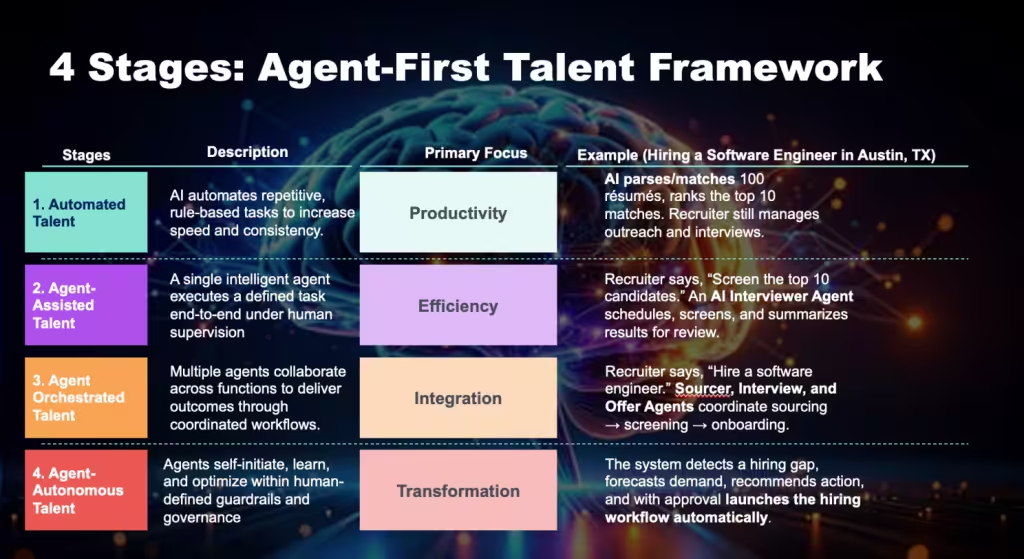
Four phases of agentic maturity
Every organization traverses four phases of agentic evolution, each building readiness for the next. Most are currently between Automated and Agent-Assisted.
Early adopters are piloting agent-orchestrated workflows. True agent autonomy lies on the horizon a decade away for most.
Technology and organizational readiness
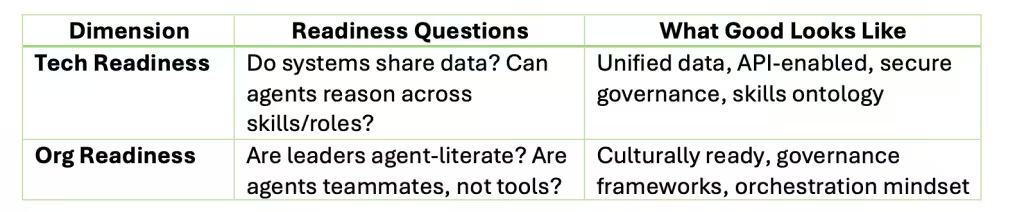
Agentic maturity demands both technical readiness and organizational readiness. Technology alone without adoption stalls progress; adoption without high-quality, unified data collapses quickly.
Assessing your agentic journey
Consider these diagnostic questions:
- Is there any workflow where AI already completes 50% of manual handoffs?
- Do managers or recruiters trust, and act on, agent recommendations?
- Is your data structured enough for agents to reason across systems?
If your answer is no, you are early in this journey and so is most of the industry.
Entering the Agentic Breakthrough Zone
Reaching Phase 3, the Agentic Breakthrough Zone, requires more than patching AI onto current processes. Most organizations fail here by automating legacy workflows instead of reinventing them.
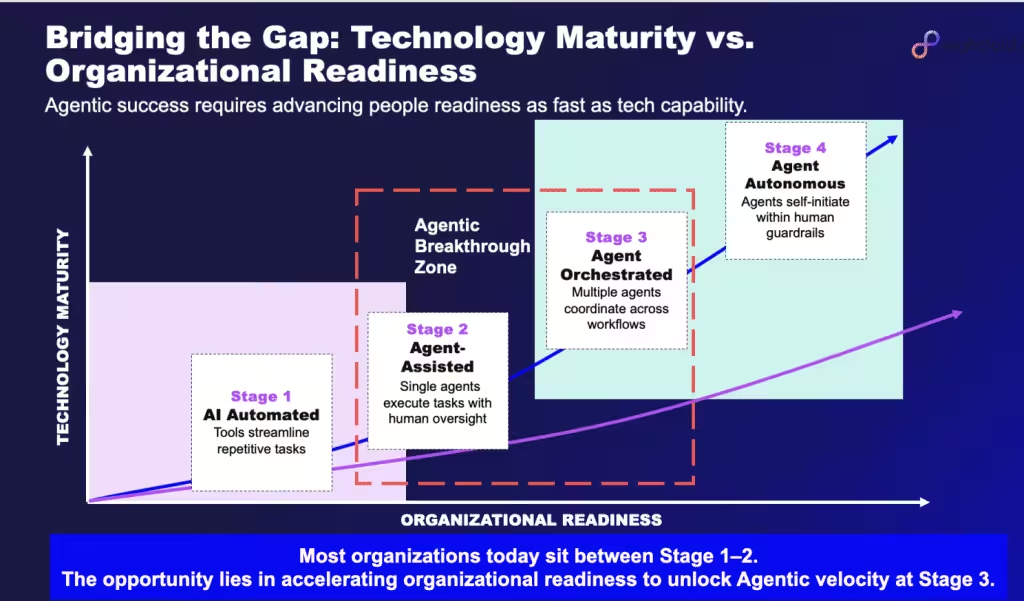
Agentic velocity depends on redesigning the flow of work enabling agents to coordinate in parallel, not simply automate isolated steps.
Recruiting, before and after agentic redesign
- Before (even with AI): Source → Screen → Schedule → Interview → Offer. A stepwise, human-driven march.
- After (Agentic): Sourcer agent finds matches → Interviewer agent screens and summarizes → Offer agent drafts compensation → Agents act in parallel; recruiter receives curated outcomes.
This leap from task automation to workflow orchestration lifts productivity about 50% in Stage 3, rising to 70–75% as agents autonomously optimize processes.
What agentic looks like in practice
- IBM: Their AskHR tool handles 2.1 million annual HR conversations, automating 80+ tasks, slashing HR costs by 40%. Born as a basic chatbot, it evolved into proactive orchestration.
- BMW Group: Their procurement system uses agent ecosystems to support 1,800 users—automating supplier analysis and risk monitoring. The assistant has become a decision partner.
- Life at Coca-Cola Europacific Partners: Built a unified, AI-powered platform with Eightfold AI, connecting recruiting, learning, and workforce planning and enabling true talent mobility.
All three showcase one truth: Agentic transformation doesn’t come from layering on AI. It requires re-architecting the work itself.
The five design levers of agent-first organizations

As these levers mature, the capacity to sense, decide, and act grows exponentially.
The measured impact
Agent-first enterprises are already achieving remarkable results:
- 30–50% faster hiring speeds
- $5M–$30M in annual savings
- 40% growth in internal mobility
- 70% workforce adoption of new talent platforms
- HR’s role evolving — from process custodian to enterprise intelligence architect
Closing thought
Becoming an agent-first talent organization is not a technology project. It’s a reimagining of how human and artificial intelligence scale together. The future won’t belong to those with the most AI, but to those with the most intelligence in motion.
Experience how our AI Interviewer orchestrates recruiting at scale — autonomously conducting, analyzing, and recommending top candidates so your team focuses on decisions, not tasks.