

- Agentic AI operates autonomously, managing multi-step recruiting processes with human oversight, not just individual tasks like generative AI.
- AI agents continuously learn and adapt, becoming more effective over time with limited human oversight or intervention.
- Organizations using advanced AI can see up to 3x higher revenue growth, according to PwC, and watch talent planning go from reactive to proactive by strategically planning for and filling roles critical to the business.
Picture this: Instead of spending hours crafting job descriptions, manually screening résumés, and coordinating interview schedules, you could have a team of AI agents handling these time-consuming tasks while you focus on building stronger relationships with top candidates and helping your leadership team make more strategic hiring decisions.
This isn’t science fiction — it’s the reality that agentic AI is creating for forward-thinking organizations today.
The shift from gen AI to agentic AI represents more than a technological upgrade. It’s a complete reimagining of how recruiting works. While gen AI has certainly made waves in HR — with 92% of organizations planning to increase AI investments — agentic AI can help you take these capabilities to a new level by introducing agents into your everyday recruiting functions.

Understanding the difference: Gen AI vs. agentic AI
To appreciate why agentic AI represents such a significant leap forward for your recruiting efforts, it’s essential to understand how it differs from the gen AI tools you may currently use.
Gen AI excels at creating content based on prompts and patterns it has learned from training data. In your recruiting contexts, this means generating job descriptions, crafting personalized outreach messages, or creating interview questions.
While traditional AI offers you an exciting new way to recognize patterns and analyze data, gen AI can create new patterns and content like text, images, video, audio, or software code. However, gen AI remains fundamentally reactive — it responds to specific prompts and requires your oversight at every step.
Agentic AI represents a paradigm shift toward true autonomy. Agentic AI can go into another computer system and solve the problem, unlike gen AI that can generate step-by-step instructions for you to solve a problem yourself. More importantly, agentic AI systems can shift paths, reflect on outcomes, and redirect without manual intervention.
This distinction becomes particularly powerful in recruiting, where your success often depends on managing complex, multi-step processes that require adaptive decision-making. Unlike traditional AI, which often requires your explicit instructions for each task, agentic AI can handle multi-step processes and make decisions based on its understanding of the overall goal.
Related content: AI is changing how organizations find, evaluate, and hire talent. Learn more about how it works.
Strategic advantages of agentic AI in recruiting
1. True process automation, not just task assistance
The most significant advantage agentic AI brings to recruiting is its ability to own entire processes rather than simply assisting with individual tasks. Think of AI agents as autonomous colleagues that can take on time-consuming tasks, allowing you to focus on more strategic hiring decisions.
Where gen AI might help you write a better job description, agentic AI can identify your hiring need, research market conditions, create the job posting, publish it across multiple platforms, screen incoming applications, conduct initial assessments, schedule interviews with qualified candidates, and provide detailed recommendations — with your ability to check in at any point in the process.
This level of autonomy transforms your recruiting from a series of discrete tasks requiring constant input into a streamlined, intelligent process that operates continuously in the background.
2. Adaptive decision-making in real-time
Traditional recruiting tools you use, including most gen AI applications, follow predetermined rules and workflows. Agentic AI, however, can adapt its approach based on real-time feedback and changing circumstances. If your initial candidate outreach isn’t yielding results, an agentic AI system can automatically adjust messaging strategies, explore different sourcing channels, or modify screening criteria — all while learning from each interaction to improve your future performance.
This adaptive capability is particularly valuable in today’s dynamic job market, where job listings were almost 10 times more likely to ask specifically for AI skills in 2024 than a decade earlier, indicating rapidly evolving skill requirements that demand flexible recruiting approaches on your part.
3. Continuous learning and optimization
While gen AI models are trained on historical data and remain static until the next update, agentic AI systems continuously learn from each interaction and outcome. This means your recruiting AI agent becomes more effective over time, developing a deeper understanding of what makes candidates successful in your specific organization and refining its approach accordingly.
4. Scalable relationship management
One of the most compelling aspects of agentic AI in your recruiting is its ability to maintain personalized relationships at scale. The opportunity is real and exciting for you, especially when it comes to freeing you up to spend more time on relationship building and widening your talent pools.
By handling routine interactions and follow-ups, agentic AI ensures that every candidate receives timely, personalized communication while allowing you as a human recruiter to focus on high-value relationship building with your top prospects and hiring managers.
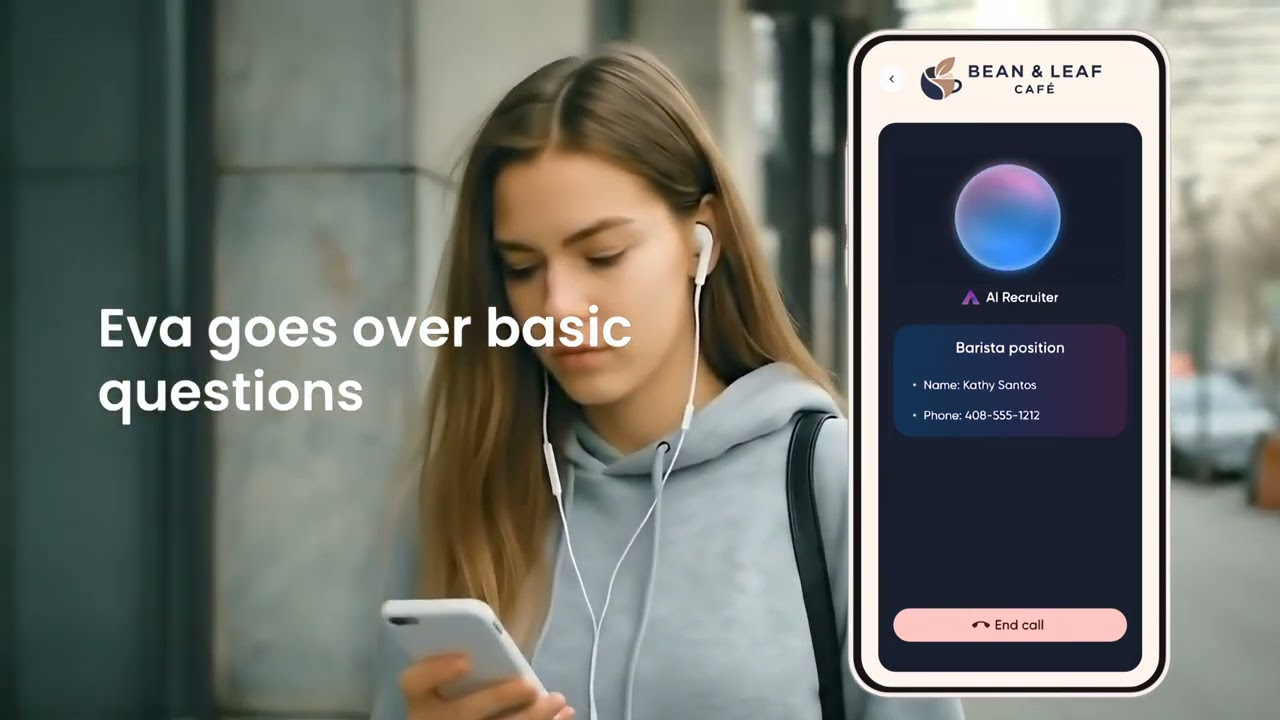
Agentic AI can help with one of the toughest challenges recruiters face: hiring at scale.
Transforming key recruiting functions
Intelligent sourcing and pipeline development
Agentic AI doesn’t just search for candidates; it builds and nurtures your talent pipelines proactively. These systems can identify emerging skill trends, monitor talent movements across industries, and engage with potential candidates long before your specific hiring needs arise.
This proactive approach ensures that when positions open, you already have warm relationships with qualified prospects.
Dynamic screening and assessment
Rather than applying static screening criteria, agentic AI can dynamically adjust evaluation parameters based on your market conditions, role requirements, and organizational priorities. If certain skills become more critical or market availability changes, the system can adapt its screening approach without requiring your manual reconfiguration.
Orchestrated interview processes
Agentic AI can manage more complex interview workflows involving multiple stakeholders, automatically handling scheduling conflicts, rescheduling when necessary, and ensuring all parties have the information they need.
More advanced implementations, like Eightfold AI Interviewer, can even conduct preliminary interviews, asking follow-up questions based on candidate responses and providing detailed assessments to you as the human interviewer.
Predictive candidate experience management
By analyzing interaction patterns and feedback, agentic AI can predict potential friction points in your candidate journey and proactively address those issues. This might involve adjusting communication frequency, providing additional information, or escalating to you as a human recruiter when personal attention would be most impactful.
Related content: Learn how Softtek is looking ahead to how agentic AI can continue to evolve their talent acquisition strategy.
The broader strategic impact
Your adoption of agentic AI in recruiting extends far beyond operational efficiency. PwC’s 2025 Global AI Jobs Barometer shows that the most AI exposed industries are now seeing 3x higher growth in revenue per employee than the least exposed, suggesting that you gain significant competitive advantages by embracing advanced AI capabilities.
For your recruiting specifically, agentic AI enables a shift from reactive hiring to strategic talent acquisition. Instead of scrambling to fill open positions, you can build robust talent pipelines, anticipate skill gaps, and make data-driven decisions about your workforce planning.
This strategic approach becomes increasingly critical as 100% of industries are planning to use more and more AI.
Furthermore, autonomous AI agents could increase your productivity as a knowledge worker and make your workflows of all kinds more efficient, creating a multiplier effect that extends throughout your organization.

Addressing implementation considerations
While the potential of agentic AI in your recruiting is substantial, your successful implementation requires careful consideration of several factors. Deloitte’s 2025 Global Human Capital Trends report emphasizes that your successful AI implementation in HR hinges not just on the tech itself, but on how well you and your human teams understand and collaborate with it.
The road ahead: Preparing for the agentic AI revolution
Your transition to agentic AI in recruiting isn’t just about adopting new technology. It’s about reimagining your entire recruiting function. If you begin now, you’ll gain significant advantages in talent acquisition effectiveness, your productivity as a recruiter, and your candidate experience quality.
Your key to success lies in starting with clear objectives, choosing the right implementation partners, and maintaining your focus on human-AI collaboration rather than replacement. Unlike chatbots, which operate based on predefined scripts, agentic AI can perform more advanced tasks with limited oversight, but the most effective implementations leverage this autonomy to enhance rather than replace your human expertise.
As you move into this new era of recruiting technology, you’ll thrive if you embrace agentic AI not as a cost-cutting tool, but as a strategic capability that enables you and your recruiting team to operate at levels of effectiveness previously impossible.
Your future in recruiting isn’t about choosing between your insight and AI capability — it’s about combining your skills with AI in ways that create unprecedented value for your organization, you as a recruiter, and your candidates alike.
The agentic AI revolution in recruiting has begun. The question isn’t whether you’ll eventually adopt these capabilities, but whether you’ll be among the pioneers who shape how this transformation unfolds — or among those who scramble to catch up once the competitive advantages become undeniable.
Give agentic AI a try in your recruiting process. Start a free trial of our AI Interviewer.