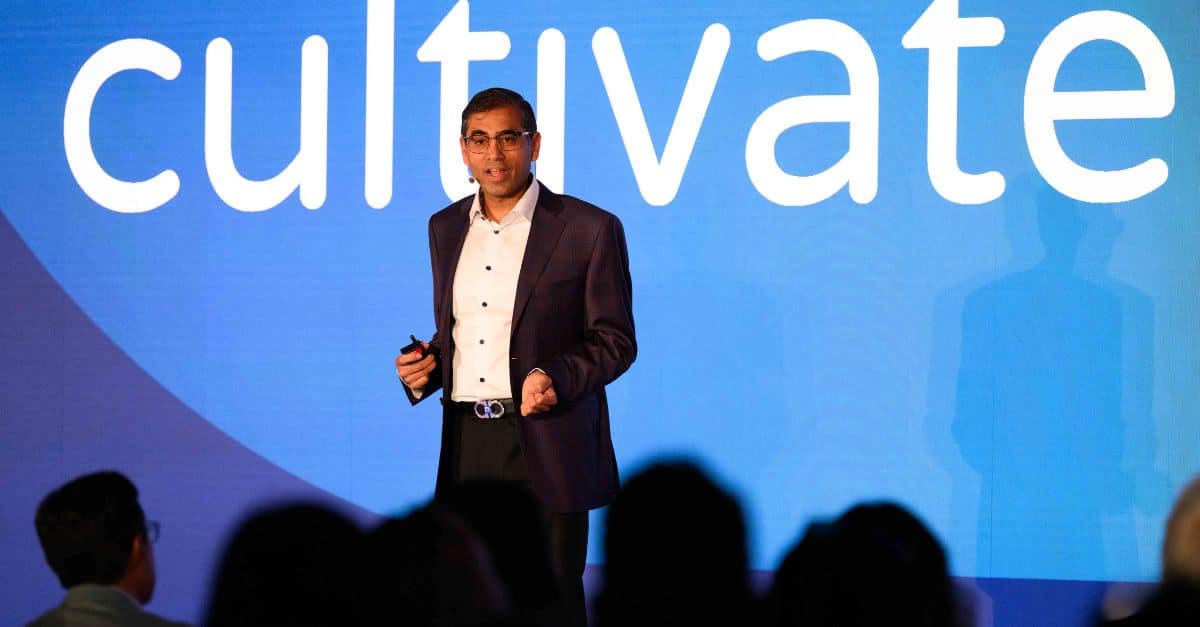


“AI and machine learning aren’t magic,” Eightfold Co-CEO and Co-Founder Ashutosh Garg told a Geneva-based conference last week. But, he said, they’re necessary now for companies to hire quickly in a world where skill needs are changing fast and there’s a near-frenzy to recruit and retain.
Garg spoke at a “Future of Work and Artificial Intelligence” event with, among others, Professor Peter Cappelli from Wharton, and Dr. Janine Berg of the International Labor Organization. The online event was put on by Geneva Macro Labs.
Garg said at the Future of Work event that skills needs are changing quickly. He gave the example of data-science skills, something companies in every industry are actively seeking. “Data science is hot,” Garg says. “Everyone is hiring for it. But there are only so many data scientists out there. There are, however, a lot of math majors. Phenomenal candidates. AI can help identify and see which of these math majors can adapt to science roles.”
AI can be used to help plan for the next several years, and identify the skills you need in your workforce, Garg told the Geneva event. For example, AI can show you the extent to which your needs for COBOL may decrease and Python will increase. Or, it can show you how customer support as a skill requirement will decrease, but customer experience will grow in demand. This kind of knowledge can help you find the right people with the right skills as your workforce transforms.
Tons of data needed
Cappelli said that talent-management processes right now are by and large quite poor. For example, only about 20 percent of companies, he said, measure the quality of hire. Most are focused on getting people in the door as quickly as possible and at as low a cost as possible.
“Let’s not mythologize how well things work now,” Cappelli said. “We are terrible at hiring. A machine-learning prediction is going to be better than anything we have done before,” Cappelli said.
For AI to help solve the problem, a lot of data is needed, Cappelli says. Companies can’t rely just on their own company’s data, but need information based on many organizations and what can be learned about how people are hired and managed.
Cappelli sees AI playing a role in improving recruiting, selection, onboarding, training, performance management, and promotions. But, he cautions companies who might think it’s a substitute for learning to manage people. He says some leaders prefer “software and monitoring” over trust. They haven’t managed people before, and “don’t know enough about the human dimension,” Cappelli said. They have a top-down view of managing people, rather than empowering people to make their own decisions.
Cappelli talked about technologies that automate people’s schedules. They might “optimize” an employee’s schedule by having them work two weekends in a row. This may be a schedule the technology thinks is smartest, but will burn out the employee.
Berg, from the ILO, talked about the need for AI to be explainable. Companies need to be able to describe how they’re using it to make decisions, and how it’s unbiased. She said what’s important is not whether to use AI, but how it’s used, and where it’s used. Technology made for one context (such as for a large company) may not work if applied to another context for which it wasn’t designed.
At the conclusion of the June 3 session, Garg was asked to sum up how he sees the future of AI for talent. His word: “hope.” It reflects his view that AI is still being refined, but represents an enormous opportunity to improve the way people are hired and managed.