

- Leaders must be adaptable to keep pace with today’s rapid changes and fluctuating market demands.
- Identifying and nurturing top-performing talent is difficult with static and limited data, siloed systems and legacy processes.
- Executives can turn to AI to help them identify rising talent to drive innovation, respond to change, and lead in their industries.
Without a doubt, your future organization will look and operate differently from today. A recent PwC surveyrevealed that45% of CEOs don’t think they’ll still be in business 10 years from nowif they continue on the same path.
To ride the wave of these incoming challenges, youneed to look across roles within the organization for potential leaders with a broad range of skills, including emotional intelligence and strategic foresight.
We recently took a deep dive withHeidrick & Strugglesto examine howtalent intelligence can help leaders identify and develop rising talent who can drive innovation, inspire teams, and confidently lead through uncertainty.
Here are some of the high points from this discussion.
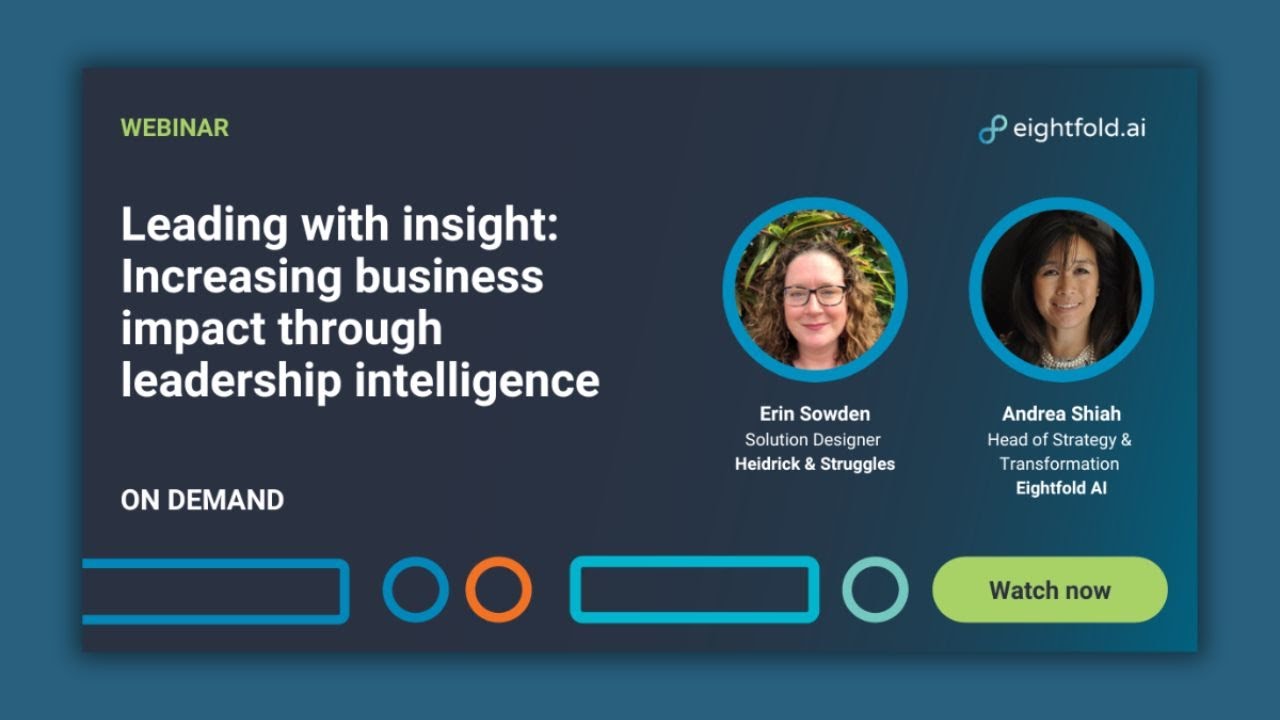
Related content: Heidrick & Struggles joined us to discuss how to empower leaders to navigate today’s toughest business challenges.
HR in the hot seat
With the need for organizations to put the right leaders in place, HR is under a lot of pressure to come to the table with recommendations. The problem is HR often doesn’t have the right tools to surface the best candidates.
To keep up with modern leadership demands, talent leaders need real-time leadership andskills datain a dynamic system to inform decision-making. With a complete view of the skills in-house and the ones you need, you can more easily align talent with the work at hand and make recommendations to your organization.

Shifting from static to dynamic data is the future of leadership intelligence. It means taking a comprehensive look at leadership capabilities and experiences along with the functional skills required to deliver the strategic objectives of your organization. These insights unlock a much bigger picture on what skills employees have today and what’s needed to prepare leaders for the future.
A comprehensive view is essential
The question on top of most HR professional’s minds is how to begin.
Managers account for70% of the variance in employee engagement. It’s vital that organizations put the right talent in leadership positions because they are the baseline.

From there, you can take the attributes of existing talent thriving in leadership roles and start to think about where the business is headed. Leadership skills may need to be redefined, which can also reveal gaps to identify and fill.
Leadership intelligenceis not looking at your talent through one dimension — it’s understanding their backgrounds, assessing their skills today, and what skills they can gain tomorrow. The ability to measure leaders’ contributions to enterprise-wide initiatives and functional impact gives a deeper understanding of their skills and whether they are ready for new responsibilities.
Most organizations do this in a vacuum usually relying on judgment of HR or senior leaders in a business unit. Current leaders must widen the scope to focus on leadership skills, business impact, subject matter expertise, and a 360-degree view of that individual’s potential based on data, not opinion.
Widen your talent pool
Many organizations have already made significant investments in leadership identification, development, and succession planning, and they’re reluctant to throw those to the side and begin anew.
That work is still valuable and leadership intelligence can build on what is already in place.
Existing successor pipelines, performance-management practices, or competency models can be added to a larger data set to deliver insights. It’s also the opportunity to bring together multiple processes that pull, organize, and analyze data from across all sources and give a consistent view of leadership talent across the company.

With this leadership intelligence, you can transform biased and outdated systems to less subjective processes that highlight a leaders’ past experiences and competencies. This provides a more complete view of the impact they will have in future roles and to your organization’s larger strategy. This also opens up the talent pool across functions, geographies, and business lines so you can find hidden leadership potential waiting in the wings that have been stuck in siloed hierarchies.
With the right talent intelligence backing your talent decisions, you can be sure that every role finds the best-fit talent.
Watch our full webinar with Heidrick & Struggles,“Leading with insight: Increasing business impact through leadership intelligence,” on demand now.