

Most HR technology was built to answer one question: What happened?
Who was hired last quarter? How long did it take to fill that role? How many candidates dropped out of the funnel? These are reasonable questions, and for decades, analytics dashboards have answered them dutifully.
But in a world where the World Economic Forum predicts that 39% of workers’ core skills will change by 2030, and where 92 million jobs are expected to be displaced while 170 million new ones are created, answering questions about the past is no longer enough.
The real competitive advantage belongs to organizations that can answer a far harder question: What’s coming next, and who do we have to meet it?
That shift from data to wisdom and from description to prediction is at the heart of what a true talent intelligence layer makes possible. It’s why the distinction between storing information and accumulating wisdom matters more now than it ever has.
The difference between a database and a brain
Legacy HR systems were designed for a different era. They were built on SaaS architecture meant to handle administration — tracking head count, managing benefits, ensuring compliance. They cataloged people as static database records: a name, a title, a list of past jobs.
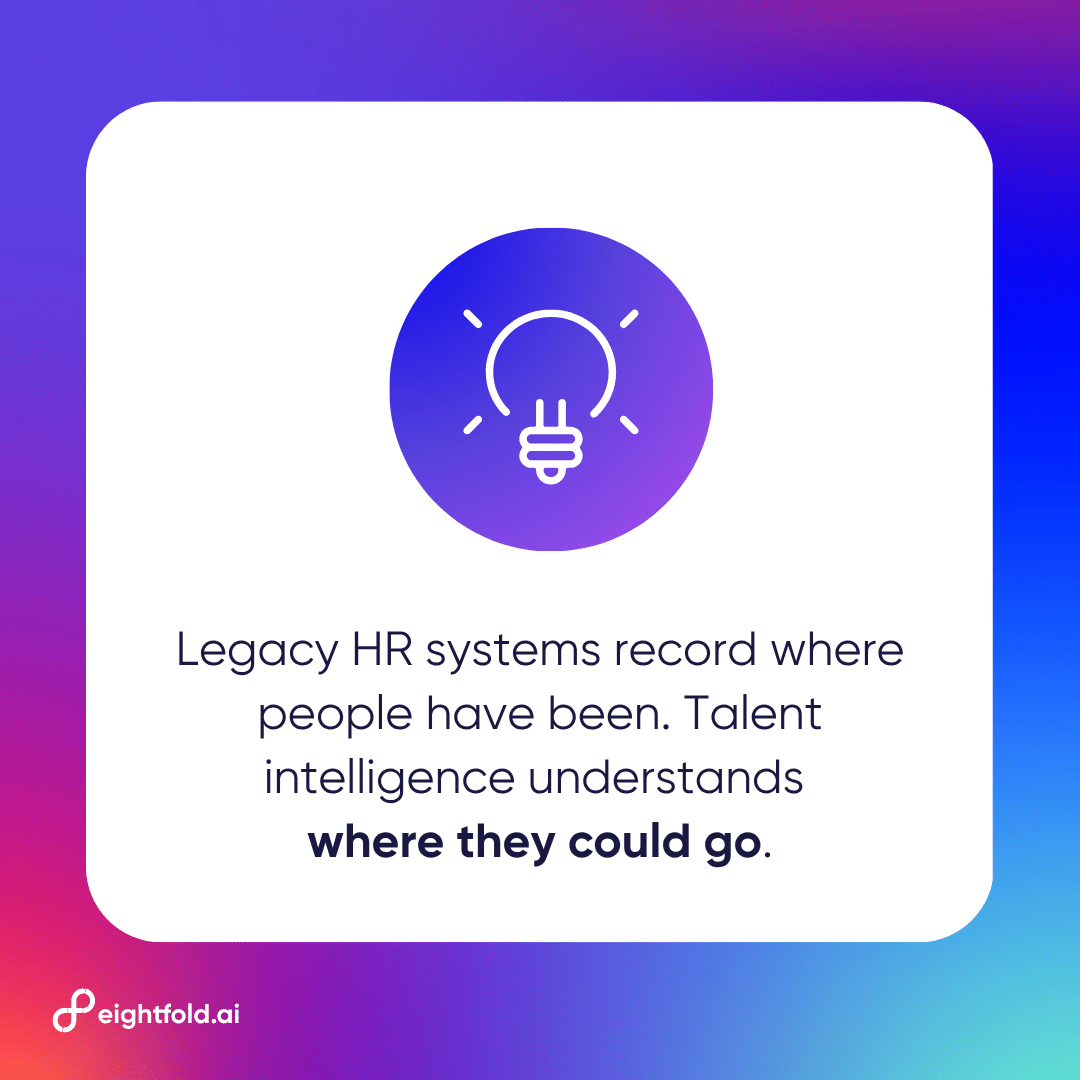
But ask one of these systems what a candidate or employee is capable of, and it will stare back blankly. It can tell you where someone has been. It cannot tell you where they could go.
This distinction sounds philosophical, but it has very real operational consequences.
When your system treats talent as a static record, you make decisions based on résumés rather than potential. You filter candidates based on job titles that may have nothing to do with the skills you actually need. You miss internal employees who are ready to grow into new roles because your system has no mechanism to surface their adjacent capabilities. You end up driving a car while only using the rearview mirror.
A talent intelligence layer works differently. Rather than simply recording what people have done, it builds a dynamic, continuously updated model of human potential — informed not just by your organization’s data, but by a global map of how careers actually unfold.
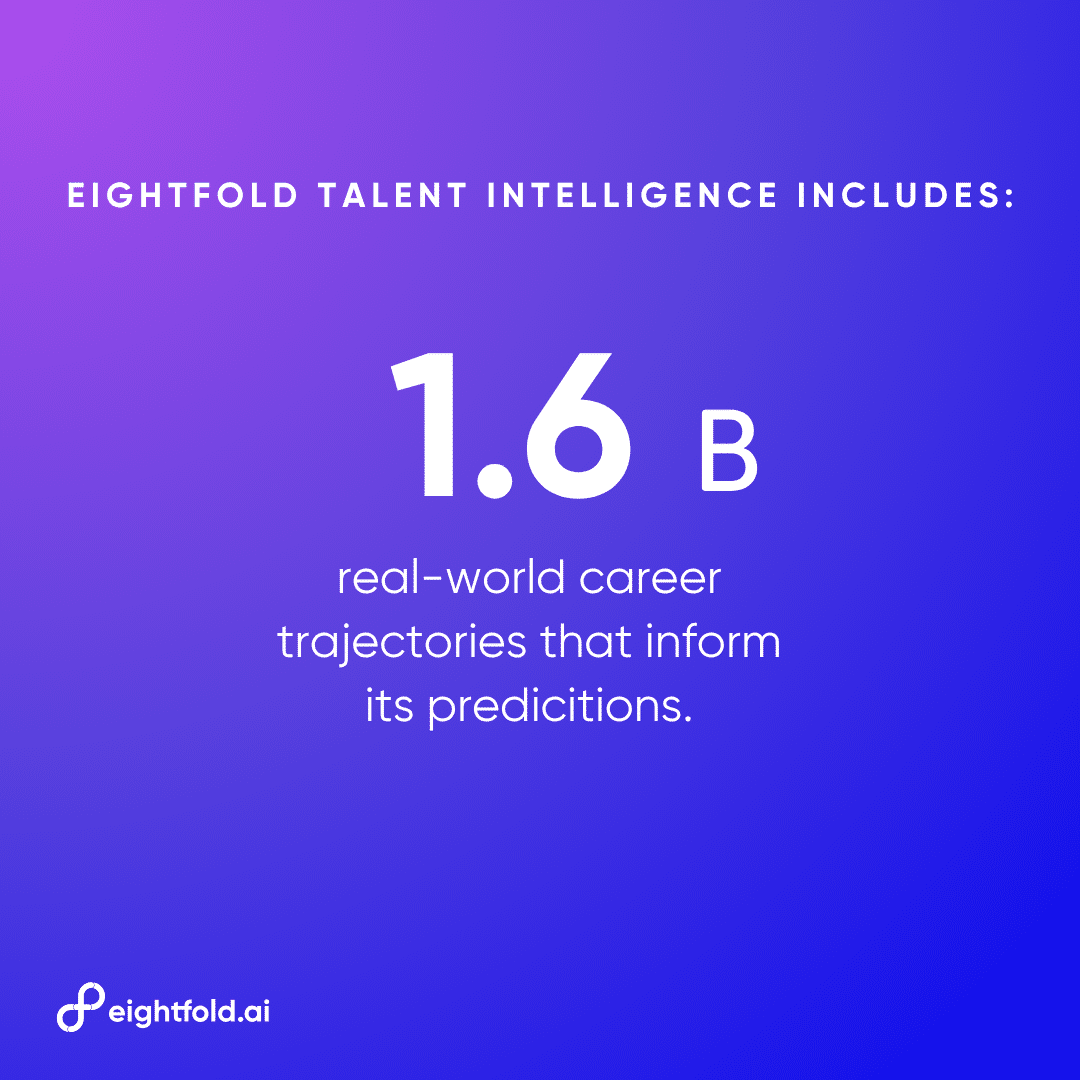
Trained on real-world career trajectories and millions of skills, such a system doesn’t just store information. It learns from every hire, every promotion, every transition. Over time, it doesn’t just know more. It understands more. It accumulates wisdom.
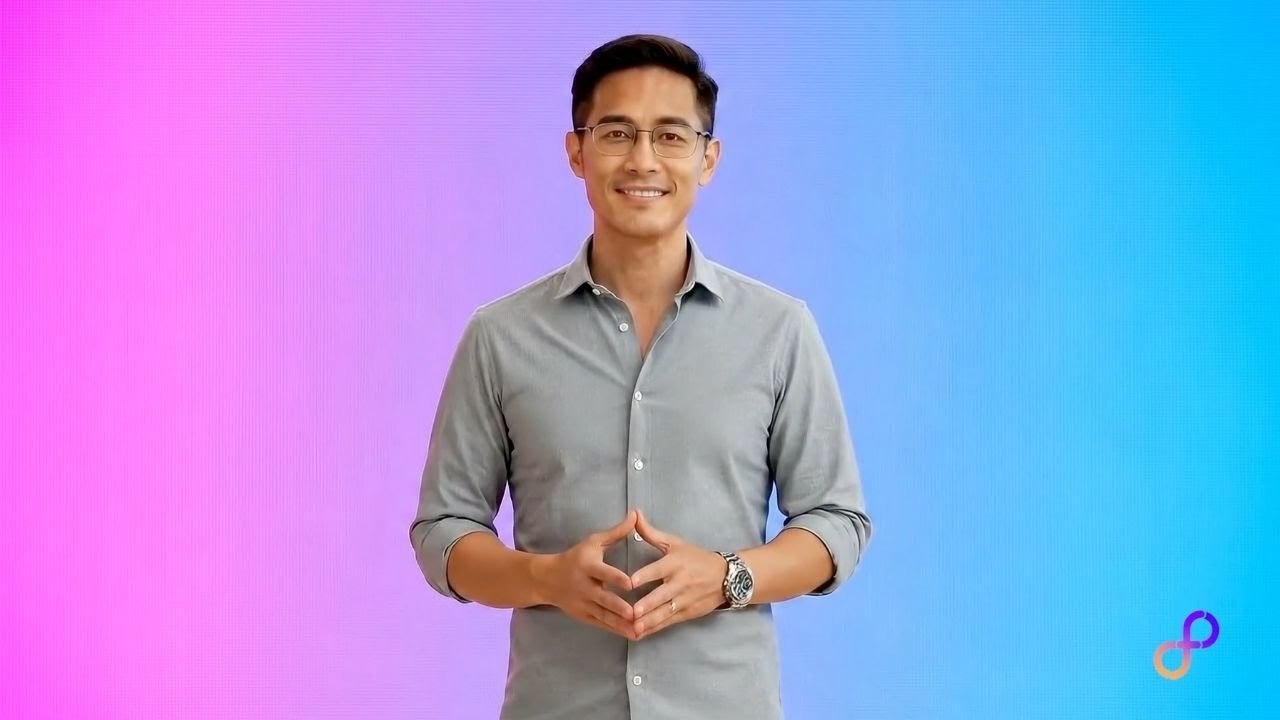
Learn how Alex tapped into his potential and discovered a new career path using Eightfold’s talent intelligence.
Seeing potential: Beyond the résumé
The first capability a talent intelligence layer unlocks is the ability to see potential that traditional tools routinely overlook.
Keyword matching — the backbone of most legacy applicant tracking systems — is blunt by design. It looks for exact terms, specific titles, familiar institutions. It can tell you whether a candidate has listed “project management” on their résumé.
It cannot tell you that the same candidate, having spent six years in a client-facing operations role, has developed the organizational, communication, and stakeholder management skills that make them an exceptionally strong fit — even if they’ve never held the title you’re hiring for.
Research bears this out in striking ways. More than half of the skills required for account executive roles, for example, also appear across other occupations, spanning sales, marketing, and human resources.
An intelligence layer trained on global career data understands these adjacencies. It can identify candidates and employees with transferable capabilities that a keyword search would never surface, effectively widening your talent pipeline without lowering your standards.
One telecommunications company that applied this approach analyzed thousands of workers globally to understand machine learning skill development pathways — and found its talent pool was at least three times larger than leaders had estimated. Not because new people had been hired, but because the organization could finally see the potential already sitting inside it.
For HR leaders tired of being told the talent isn’t there when the data says otherwise, this reframing is significant. The talent is often there. The problem has been the tools used to find it.
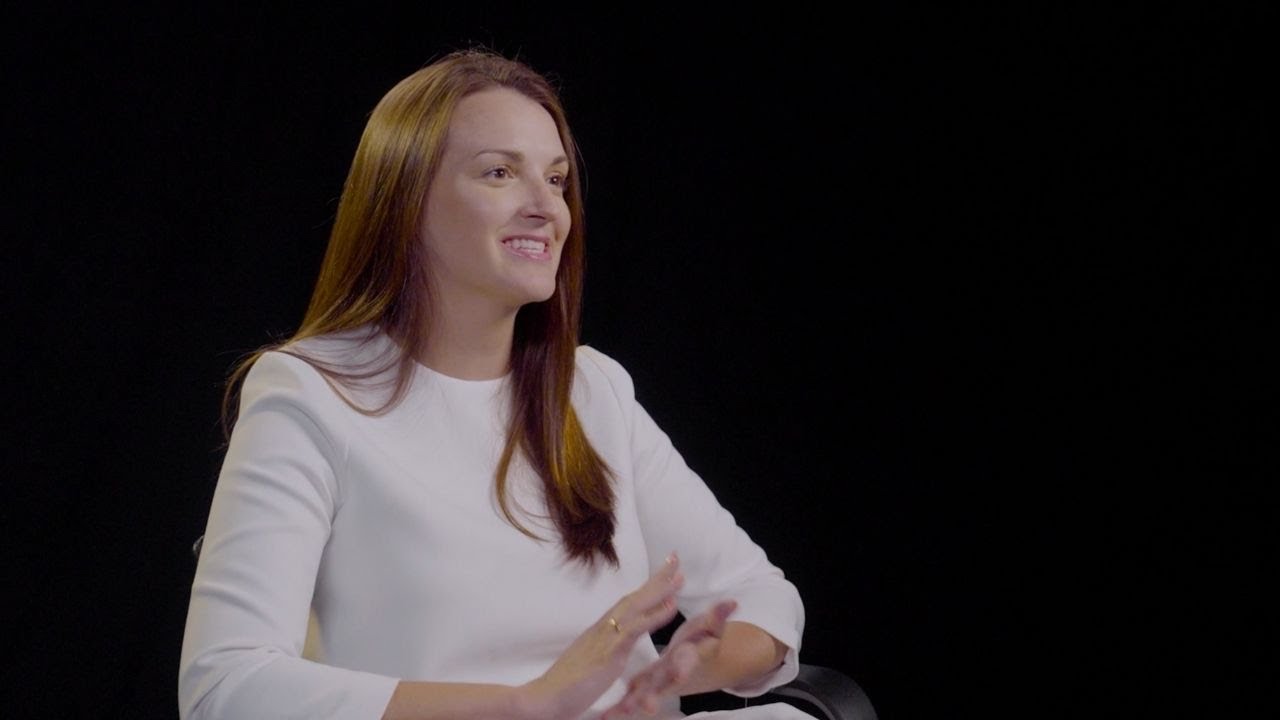
Meet Kristine Yamartino, a former recruiter who found her next career opportunity in an entirely different function.
Predicting trajectory: From where they’ve been to where they can go
Seeing potential is a starting point. But the deeper value of a talent intelligence layer lies in its ability to look forward — to predict where someone could go, not just document where they’ve been.
This predictive capability matters enormously at a strategic level. Research shows that 46% of C-suite executives cite talent skill gaps as the key reason their organizations are developing AI tools too slowly. That’s not a hiring problem. That’s a planning problem — a failure to anticipate which skills will be needed, where they can be sourced, and how long it will take to develop them internally.
A talent intelligence engine addresses this by forecasting career trajectories at scale. Drawing on patterns from billions of career transitions worldwide, it can model where an employee is likely to move next — or where they could move, given the right development support. It can identify which employees are on a trajectory toward roles that no longer exist, flagging the need for proactive reskilling before the gap becomes a crisis. It can show talent leaders which skills are trending upward in the market, so workforce planning is built around future demand rather than past habit.
This shifts the CHRO conversation from reactive to strategic. Rather than explaining why roles are hard to fill, talent leaders equipped with predictive trajectory data can come to the C-suite with a forward-looking plan: here is what our workforce will look like in three years, here is where the gaps will appear, and here is how we close them today.
Guiding growth: Personalizing the path forward
The third capability — and in many ways the most human — is the ability to architect personalized development paths that align individual aspirations with organizational needs.
Most employees don’t leave organizations because they’ve run out of ambition. They leave because they can’t see a path forward. Career development conversations happen too infrequently, are too generic, and rely too heavily on what a manager happens to know about available opportunities.
The result is a workforce where latent potential goes unrecognized and unnecessary attrition drains organizations of talent they worked hard to recruit.
A talent intelligence layer changes this dynamic by giving every employee something that was previously available only to the most senior or well-connected: a personalized view of where they could go and what it would take to get there.
Rather than a static career ladder, employees can explore a dynamic map — discovering adjacent roles, identifying the skills they’d need to develop, finding mentors and learning opportunities that align with their goals.
Why global context is non-negotiable
Underlying all three capabilities — seeing potential, predicting trajectory, guiding growth — is a critical architectural point: none of this works if the system only learns from your data.
Deloitte research found that 83% of organizations worldwide have low people analytics maturity, meaning they lack consistent data definitions, integrated reporting tools, or the ability to connect workforce data across systems.
When your AI learns only from your past decisions — decisions made by humans who may have carried their own biases and blind spots — it doesn’t become more intelligent. It becomes a machine that repeats your mistakes with greater speed and confidence.
True talent intelligence requires a global context. It needs to understand how billions of people have moved between roles across industries and geographies. It needs to know which skills are growing in demand and which are declining. It needs to understand career physics — the real patterns of how human potential develops over time — not just the patterns visible inside a single organization’s hiring history.
This is the difference between a system that stores and retrieves, and one that genuinely understands.
The former gives you faster access to what you already know. The latter gives you access to what you couldn’t have known — and that, ultimately, is where the competitive advantage lives.
From dashboards to decisions
For HR leaders who have spent years staring at dashboards full of historical metrics, the shift this represents is significant and, for many, overdue.
The organizations that will win the talent competition of the next decade won’t be the ones with the most data. They’ll be the ones with the systems that turn data into understanding, and understanding into action. They’ll see potential that others miss. They’ll plan for futures that others can only react to. They’ll guide the growth of every employee, not just the few lucky enough to have a great manager.
The case for a talent intelligence layer isn’t about technology for its own sake. It’s about finally building the organizational capability that has always mattered most: the wisdom to know what your people are capable of and the systems to help them get there.
The past is well-documented. It’s time to start planning for what comes next.
Plan for what’s next at your organization. Start with a demo of Eightfold’s capabilities.