

Humans Behind Our Innovations is a quarterly series about the people behind some of the most interesting technology and ideas being built at Eightfold.
A 45-minute interview produces a lot of information. Some of it tells you whether a candidate can do the job. A lot of it doesn’t.
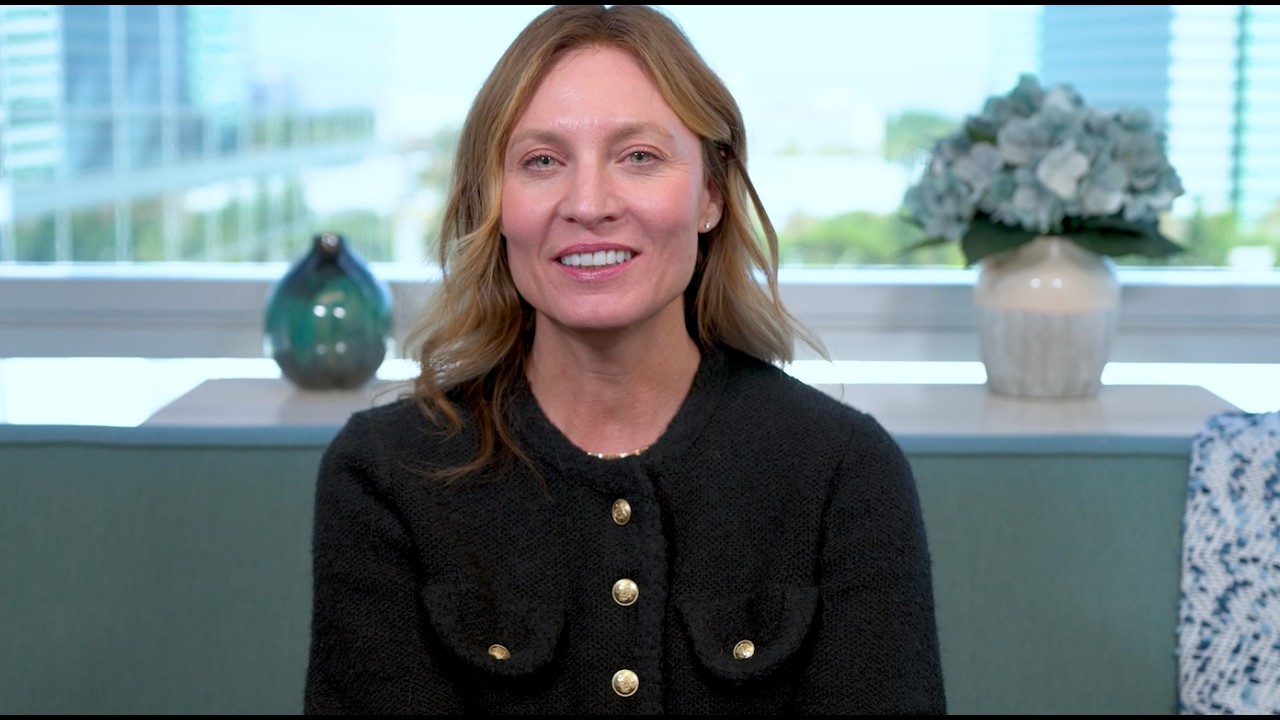
Sorting one from the other is the problem Deepali Saxena, Senior Director, Product, and Hussain Kazmi, Principal Solutions Consultant, work on every day. Deepali helps build AI Interviewer, the Eightfold Talent Agent that conducts structured interviews with candidates. Hussain works with the customers who use it. Between them, they see both sides of one hard question: how do you build AI that can recognize meaningful signals in an interview without jumping to conclusions about what those signals mean?
The answer, it turns out, has as much to do with what the AI won’t do as what it will.
Sounding good isn’t the same as being good.
AI Interviewer isn’t trying to figure out who gives a great interview. It’s surfacing evidence that someone can succeed in the role.
“That means looking for meaningful signals across things like role knowledge, problem-solving, communication, judgment, and technical ability,” Deepali says. “Those signals don’t only come from conversation. They can come from code, a case study, a canvas, written responses, or how a candidate works through a problem.”
The hard part is that good evidence is often buried. “Some candidates are polished but give you very little evidence. Others show strong capability in less obvious ways,” she says. “The interviewer has to tell the difference between what sounds impressive and what actually shows the capability the role needs.” Context matters too. The same answer can be excellent for one role and not enough for another, depending on what the job requires and the seniority of the position.
One scenario made the team rethink how AI Interviewer should evaluate candidates: a candidate gives a polished, detailed answer that never actually demonstrates the skill being assessed.
“It raised an important question for us,” Deepali says. “Should the AI try to connect the dots and infer what the candidate might be capable of, or should it evaluate only what the candidate has actually demonstrated?”
They chose the second option: evaluate only what the candidate has demonstrated. That decision made “indeterminate” a valid outcome. If there isn’t enough evidence to evaluate a skill, the system says so instead of guessing or filling in the gaps.
It also became a principle that still guides the team’s product decisions. “Don’t confuse a good-sounding answer with demonstrated capability,” Deepali says, “and never invent signals where there isn’t any.”
Noticing something isn’t the same as knowing what it means.
This is one of the team’s most important design principles: detecting evidence isn’t the same as interpreting it.
An AI interviewer could, technically, pick up on a lot. Nervousness. Tone of voice. Facial expressions. Accent. A change in speaking pace. Deepali’s team decided none of it should count.
“The AI can observe the interaction, but it should only make recommendations based on job-relevant evidence in the candidate’s responses,” she says. “It shouldn’t try to determine someone’s personality, emotions, intent, or potential from things that aren’t relevant to the actual evidence being evaluated.”
Candidates aren’t left guessing, either. Across every Eightfold product, AI-powered features carry one consistent label and a recognizable icon, visible to recruiters, hiring managers, and candidates alike, in every region and language.
This principle shows up in how candidates are evaluated. The team starts with the requirements that matter most for success in the role, ranks them, and builds evaluation criteria from there. If a hiring team’s feedback form doesn’t include questions that test a critical skill, AI Interviewer can suggest relevant questions so every candidate has a consistent chance to show that skill.
The work no one sees.

Ask Deepali what’s hardest about getting AI Interviewer right, and her answer is short: guardrails on what not to ask.
“Customers rarely see how much work goes into deciding what the AI should not do,” she says. For every recommendation behavior, the team debates the same set of questions:
- What evidence is enough?
- When should the AI say “I don’t know”?
- Could this signal introduce bias?
- Is this something a human recruiter would reasonably use to make a job-related judgment?
Hussain sees the same tension from the candidate’s side. “Someone outside Eightfold might assume the goal is to ask more questions or collect more data,” he says. “In reality, it’s about asking the right questions in the right way. The experience has to be useful for the employer, but also human and approachable for the candidate.”
The customer question that changed the conversation.
For Hussain, some of the most useful moments come from customers who push back.
One recently asked him: “If we use an AI interviewer, how do we make sure we’re not introducing bias by letting hiring teams react to how a candidate looks or how they engage with an AI agent?”
In other words, what stops someone from watching the recording and passing on a candidate because they didn’t like how that person looked?
His first answer was about the product. AI Interviewer is designed to help assess candidates only on role-relevant responses, skills, and experience, and not on appearance or personal characteristics, and it gives hiring teams structured feedback and a clear rationale they can review.
But the question stuck with him, because it wasn’t really about the model. It was about the people using it. Since then, Hussain has started recommending that hiring teams review AI interview results with the video turned off when it makes sense, so they can focus on what the candidate said.
“It was a good reminder that responsible AI isn’t only about how the model works,” he says. “It’s also about how customers design the human process around it.”
Earning trust, one explanation at a time.
When customers first see AI recognizing signals in an interview, Hussain says they want two things before they trust it.
The first is to understand what the AI is evaluating. “A vague assessment is not enough,” he says. “They want to see the transcript, the summary, evaluation criteria, and any flagged moments, so they understand why the AI surfaced something and can explain that decision internally.”
The second is knowing that people are still in charge. AI Interviewer helps structure the interview, spot patterns, and surface potential concerns. The recruiter or hiring team still reviews the context, overrides the recommendation when needed, and makes the final call. “The value isn’t replacing human judgment,” Hussain says. “It’s giving hiring teams better, more consistent information so they can make more confident decisions.”
Customer conversations also feed straight back into the product. A few customers asked whether the agent could update a candidate’s profile when it learned something new in an interview, like a candidate mentioning Swift experience that wasn’t on their profile yet.
That request reframed how Eightfold thought about the product. Customers didn’t just want interview automation. They wanted better information about their candidates. Today, the interview summary, feedback, and transcript live on the candidate profile, where recruiters can use them and control how they’re used.
Each side makes the other better.
Working this closely together has changed how both of them do their jobs.

For Deepali, customer questions pushed the team to make the product easier to understand. “Customers want to understand how the AI works, not just rely on an interview score,” she says. “That’s helped us improve explainability.”
For Hussain, being close to the product has taught him to talk less about the technology and more about what it does for people. “I personally get excited about the latest technology, but customers are thinking about the practical impact. Will this help my team move faster? Will it improve candidate experience? Will it help us make better decisions?” he says. “I try to slow down, understand the customer’s problem, and connect the technology back to what they care about.”
They also agree on where human judgment matters most. “In deciding where AI should have boundaries, not just where it’s technically capable,” Deepali says. Hussain lands in the same place: “People need to define how it should behave, what it should and shouldn’t do, and how its recommendations are explained.”
Innovations ahead
Deepali and Hussain agree, the work is not finished.
Deepali is focused on making interviews feel more natural so candidates are comfortable, while continuing to refine how scoring works against evaluation criteria. The open question she keeps coming back to: “How do you make the conversation more natural and more human without bringing in human bias?”
Hussain is curious about something related. AI Interviewer is often a candidate’s first real conversation with an organization, so it shouldn’t feel generic. “The question I don’t think anyone has fully solved is how to give an AI agent enough personality to feel like your brand, while keeping it consistent, responsible, and fair,” he says.
For Deepali, that’s exactly why the challenge is worth working on. “It sits at the intersection of AI, human judgment, and something that has a real impact on people’s careers,” she says. “By continuing to improve, we can help recruiters evaluate more candidates thoughtfully, while giving every candidate an opportunity to show what they can do.”
Talent intelligence, human led.
Interested in being part of innovations like this? See open roles at Eightfold.