

Already undergoing a transformation before the coronavirus hit, the financial-services sector is rapidly changing the way it hires, manages, and develops employees. Insurance is changing, banks are changing, jobs are changing, and skill needs are changing as the sector goes more digital.
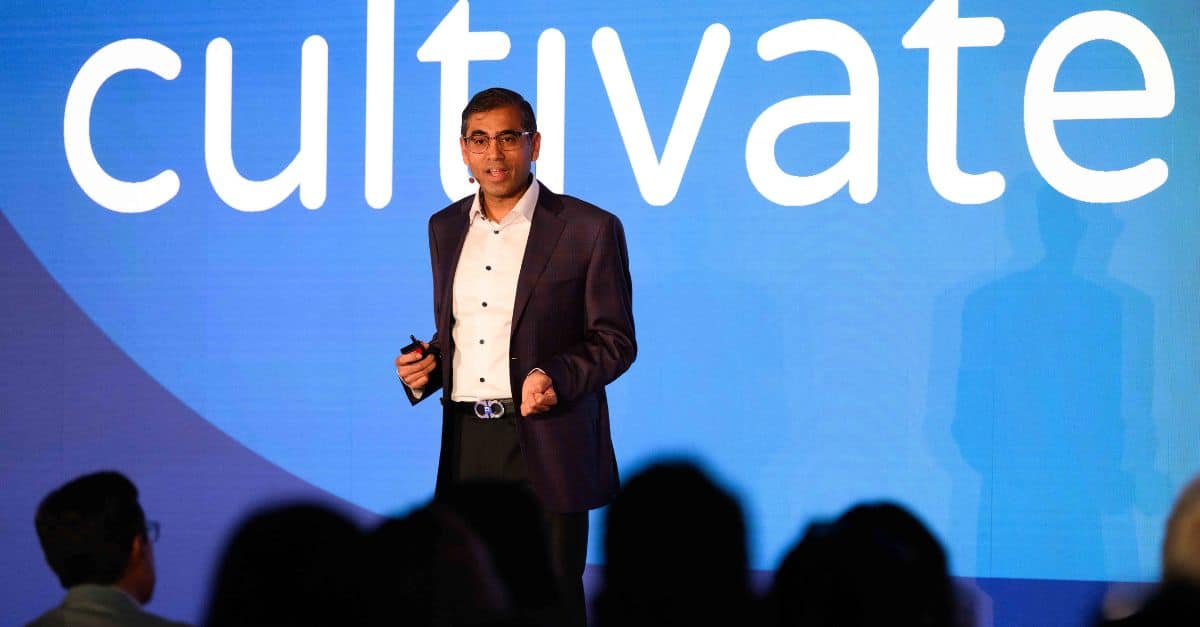
That was the upshot of two conversations November 17 at the SAP Financial Services Live event led by Kamal Ahlulwalia, president of Eightfold, and Ashutosh Madeshiya, VP operations at Eightfold, and including talent leaders from BNY Mellon, Capital One, and Deloitte.
Devin Lipawsky, Capital One’s Managing Vice President of Talent Acquisition and Development, said the company has been taking a look at “what should be virtual and what shouldn’t be,” shifting learning and development offerings to meet learners where they are. This isn’t just a technical issue, he says. It’s more about navigating critical experiences across the associate lifecycle in new ways. In recruiting, for example, “How do you showcase your culture when candidates aren’t able to see teams collaborating in-person?”
Deloitte’s Steve Hatfield, principal, workforce transformation, says that some companies, pre-pandemic, would have given you a “quizzical look” as to whether all this remote learning and recruiting would fully work. But, Hatfield says, we surprised ourselves. Assuming you have a good connection and an ability to set some boundaries, remote work and workforce management can work, he says.
The new geography
Ashutosh Madeshiya, VP operations at Eightfold, says that talent pools are expanding in the financial services companies he’s working with. Forty to sixty percent of hires are now coming from “people you know” such as past candidates, past employees, employee referrals, and alumni. “And the number is going up,” he says. Because people can work from anywhere, there are many more opportunities for talent acquisition, and more opportunities for candidates.
Lipawsky says that means certain geographies are losing their “retention advantages.” It’s harder to keep someone if they can work from anywhere, but it’s also looking at how this might open up previously untapped talent pools, he says. Capital One has undergone a multi-year technology transformation. From software engineering to product management to machine learning to AI, “we have an insatiable demand for talent,” he says. Competitors are so numerous that it has caused Capital One to really hone in on its value proposition.
Courtney Intersimone, Global Head of Talent at BNY Mellon, is thinking along those lines. “What’s your value proposition to talent that has lots of options?” she asks. “Revisit and be very intentional with your messaging. Speaking to the why, as in why this role at this particular organization, and proactively addressing the ‘what’s in it for me?’ question. Get them excited about what’s possible, about the passion your colleagues have about your company’s purpose, and how they will be able to make an impact and continue to grow.”
BNY Mellon has always invested heavily in the well being of employees, pre-Covid-19. But with the pandemic, “we’ve doubled down,” she says. The company has focused on being flexible about hours and work habits/locations, making sure people take time off, and making sure there’s an environment where “it’s ok to not be ok.”
Hard skills, soft skills, and adjacent skills
For financial services, Madeshiya says, the winners will be companies that can figure out who in its workforce has what capabilities, and can use that data to respond to changes in the industry. As an example, he says, many companies may need fewer underwriters. But the underwriters they do have are equipped with hard and soft skills that will be valuable to corporations going forward. AI can be used to help companies see how various underwriters can be redeployed into other company jobs by, for example, improving their data-crunching skills. A personal banker, similarly, could be re-deployed in the digital consumer experience department with a little training.
Intersimone, from BNY Mellon, says that companies need to know “what you already have within your existing talent ecosystem” when it comes to people’s capabilities. An employee who’s been working at a company for years may have learned new things that you, the employer, are unaware of. “That’s one of the biggest challenges,” she says. “Current employers may have no idea about someone’s current skills and how they’ve grown since joining your organization.”
She says the company is also thinking about adjacent skills. A hiring manager who needs people to fill critical roles requiring highly in-demand skill sets, she says, needs to widen their lens and consider a broader array of talent for the role, thinking beyond who has done the exact task in the past. Instead, they should see what the data shows people are capable of going forward; people who have excelled in adjacent skill x would very likely excel at y with a relatively short ramp-up period.
Even within roles where the title hasn’t changed, the necessary skills are changing, Madeshiya says. Take a credit risk manager, for example. Now, there’s a greater need for quantitative skills to do this job. Companies need to have a handle on which credit-risk managers, including those who are prospects outside the company, have the capabilities needed going forward.
Along those lines, Hatfield suggests companies consider the differences between knowledge, skills, and capabilities. Someone may know Powerpoint, but that skill may wane in importance. Increasing in importance: what can they learn? What are they capable of? When bank branches are closed, that doesn’t mean there’s no work. There may be a need to work virtually on loan programs, and people who’d worked live/in person may have the right potential. He says that as skills like empathy grow in importance vis-a-vis hard, industry-specific experience, this means that companies may find talent in pockets they may not have previously searched, such as in other industries (something we mentioned here).
Intersimone says that BNY Mellon needs to hire people with skills in engineering, cybersecurity, data analytics, AI, and machine learning. It is also looking for people who are “comfortable working in an agile manner, in which a more flexible, boundaryless construct for teaming is the norm. If you need to be deployed somewhere else on a turn of a dime, you move in and out with ease.”
More fairness in finance
Lipawsky says the company, like others in finance, is using Eightfold to improve the recruiter experience, which has been a “game changer.” It’s also tapping into analytics to measure where diversity needs to be improved.
Hatfield says “we’re seeing more and more things of that sort,” such as better data sets on whether diverse candidates are experiencing diverse interview panels. (More on diversity here, from a study of a 120,000-employee bank.)
The future of learning at work
Lipawsky says he’s learned tremendously through mentorship, observation, and on-the-job training. By rotating through divisions and leaders, he has been exposed to a multitude of experiences, subject matter experts, and leadership styles. Along the way he has focused on a growth mindset and embraced constructive feedback to grow, learn, and improve. He notes that companies like Capital One and other large enterprises have tremendous opportunities to learn through internal universities, and have access to industry-leading content. Associates can also grow by taking on new assignments through internal mobility, passive learning, and training geared toward job-specific skills.
Indeed, Hatfield says the workforce is “the greatest untapped asset of an organization.” People can learn, and motivate, from being in your workplace.
They learn best, Madeshiya says, when that learning is connected to their own career growth. Instead of a company saying “here’s what we need you to learn to help us,” a company can, through the use of AI, have employees view what employees need to learn to help their own careers, and think about learning in terms of what’s in it for them.