
- An AI-native talent platform can reveal your workforce’s true capabilities, helping you match internal talent to opportunities instead of expensive external hiring.
- Personalized, AI-driven upskilling aligns employee development with both individual career goals and your organization’s strategic skills needs.
- Real-time AI insights enable continuous talent management, replacing outdated annual reviews with ongoing feedback, engagement monitoring, and bias reduction.
Imagine discovering that the perfect candidate for your most critical project has been working three floors down for the past two years. Or learning that the expensive external hire you just made could have been replaced by reskilling someone already on your team.
These scenarios play out every day in organizations still running on talent management practices designed decades ago.
While the rest of business has been transformed by data and technology, talent management has remained stubbornly stuck in the past. Annual performance reviews that feel like cross-examinations rather than development conversations. Job descriptions are so generic that these could apply to dozens of roles. And development programs that treat every employee like an interchangeable part.
The cost of this inertia is staggering — not just in wasted resources and missed opportunities, but in disengaged employees who can’t see a future at your organization and organizations that can’t move fast enough to compete.
But here’s the breakthrough: AI is finally making it possible to manage talent the way modern business demands.
Alex was stuck in his career progression. Watch this video to see how Eightfold Talent Management translated 15 years of his experience into showing him new opportunities.
Current challenges with traditional talent management
Traditional talent management systems were built for a different era, one where career paths were linear, skills remained relevant for years, and organizational change happened slowly.
Today’s reality looks nothing like that. Technologies evolve at breakneck speed, job requirements shift constantly, and employees expect personalized development opportunities rather than one-size-fits-all training programs.
The annual performance review exemplifies everything wrong with legacy approaches. By the time your managers sit down for year-end evaluations, feedback is stale and opportunities for course correction have long passed.
Meanwhile, talent decisions — who gets promoted, who needs development, who might be a flight risk — are often based on incomplete information and unconscious bias rather than comprehensive data.
Perhaps most critically, traditional systems fail to capture what your employees can actually do. A résumé lists past roles and responsibilities, but it doesn’t reveal the full spectrum of someone’s capabilities, potential, or aspirations. This invisibility of skills creates a painful irony: you scramble to hire external talent for capabilities that already exist within your walls.
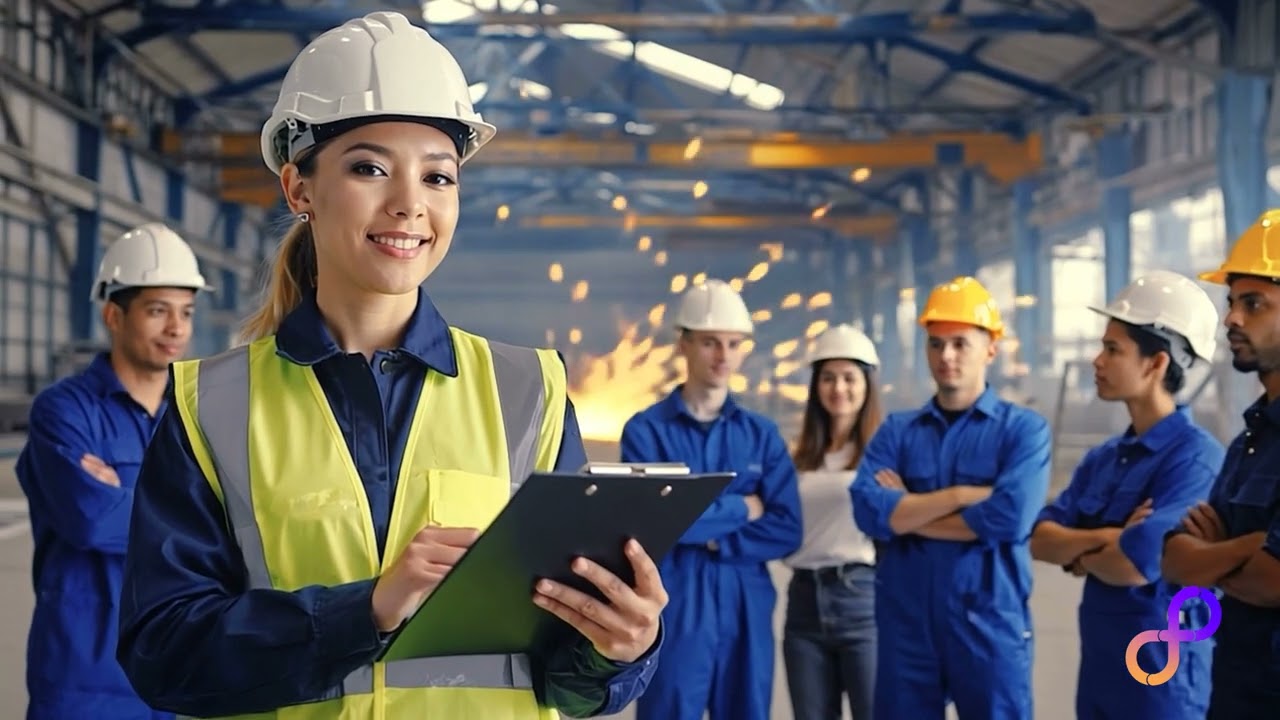
Your greatest talent might be hiding in plain sight. Learn how talent intelligence can help you find them to grow your business.
Enter the modern talent AI platform
This is where AI changes the game. Rather than relying on outdated org charts and static job descriptions, modern talent AI platforms create dynamic, data-driven pictures of your workforce capabilities.
AI in a talent platform can aggregate information from multiple sources — project histories, skills assessments, learning activities, performance data, and even collaboration patterns — to build comprehensive profiles of employee capabilities.
The system doesn’t just know that someone has a job title; it understands what they’ve actually done, what skills they’ve demonstrated, and where they have potential to grow.
This shift from credentials to capabilities is profound. It means that when a critical project needs staffing, managers can identify the right people based on proven skills rather than job titles. When an employee wants to pivot careers internally, the system can map realistic pathways based on their existing capabilities and suggest specific skills to develop.
And when your organization needs to prepare for future needs, talent intelligence can identify skill gaps before they become crises.
Making upskilling personal and strategic
AI is also revolutionizing how you can approach employee development. Traditional training programs took a broadcast approach — everyone in a certain role or level went through the same curriculum, regardless of their individual starting points or career goals.
The result: disengaged employees sitting through irrelevant content and wasted resources on generic programs.
AI enables truly personalized learning at scale. By understanding each employee’s current skills, career aspirations, and learning preferences, AI-powered systems can recommend specific development opportunities tailored to the individual.
An engineer interested in moving into management gets different recommendations than one who wants to deepen technical expertise. Someone who learns best through hands-on projects receives different suggestions than someone who thrives with structured courses.
But AI-driven upskilling isn’t just about personalization. It’s about strategic alignment.
These systems can analyze which skills will be most valuable to your organization in the coming years and prioritize development accordingly. They can identify which employees are best positioned to learn high-priority skills quickly, ensuring your development investments deliver maximum impact.
This approach also addresses the reskilling challenge many organizations face. As certain roles become obsolete while others emerge, AI can identify employees whose current positions may be at risk and map viable internal transitions based on their existing skills.
Rather than layoffs followed by expensive external hiring, you can redeploy talent strategically.
Real-time insights replace annual reviews
AI is enabling a shift from periodic check-ins to continuous talent management. Instead of waiting for an annual review cycle, AI-powered systems can provide ongoing insights about employee performance, engagement, and development.
Natural language processing can analyze communication patterns to identify employees who might be disengaged or at risk of leaving — not through invasive surveillance, but by detecting changes in collaboration frequency or sentiment.
Additionally, machine learning algorithms can spot high performers who might be overlooked by traditional promotion processes, helping ensure that your talent decisions are based on merit rather than visibility or politics.
These real-time insights also improve the employee experience. Rather than wondering where they stand until the annual review, your employees can receive continuous feedback and coaching. Your managers get nudges about important conversations to have or recognition to give, finally making talent management a true daily practice rather than an annual event.
Reducing bias in talent decisions
One of AI’s most promising applications in talent management is reducing the unconscious bias that plagues human decision-making. When properly designed and monitored, AI systems can evaluate candidates and employees based on skills and performance data rather than demographic characteristics or personal connections.
However, it’s crucial to acknowledge that AI isn’t automatically unbiased. Systems trained on historical data can perpetuate existing inequities if not carefully designed and continuously audited.
The key is using AI to augment human judgment rather than replace it, with HR maintaining oversight to catch potential bias while AI handles objective skills assessment and opportunity matching.

Getting started with AI in talent management
You don’t need to overhaul your entire talent infrastructure overnight. The most successful approaches start with specific pain points: improving internal mobility, personalizing learning recommendations, or identifying retention risks.
These focused applications deliver quick wins while building organizational comfort with AI-driven talent practices.
The foundation for any AI talent initiative is data — specifically, a clear understanding of skills across your organization. This requires moving beyond job titles to capture actual capabilities, which might mean implementing skills assessments, analyzing project histories, or mining learning management systems for development data.
Equally important is change management. Your employees need transparency about how AI is being used in talent decisions and assurance that these systems augment rather than replace human judgment. Your managers need training on interpreting AI insights and using them to have better talent conversations.
The future of work is intelligent
The organizations that thrive in coming years will be those that can rapidly identify, develop, and deploy talent to meet emerging needs. Outdated practices built around annual cycles and rigid hierarchies simply can’t deliver that agility.
Talent platforms powered by AI, personalized upskilling, and continuous insights offer a path forward — one where your employees have clearer visibility into opportunities, your managers make more informed decisions, and your organization builds the capabilities it needs for the future.
Ready to get started with talent intelligence? Learn more in our newly refreshed buyer’s guide.