

Talent needs and solutions have never been one size fits all, especially in an economic downturn or recession.
While the news is filled with updates about mass layoffs in tech and finance, only some industries are letting people go. Healthcare and transportation are aggressively hiring and battling significant labor shortages.
Whether your organization is looking for strategies to do more with less or expand your workforce, it’s never been more critical to practice flexibility.
Times like these call for an elastic talent strategy that considers offering opportunities for team members, being more strategic when recruiting talent with the right skills, and looking at nontraditional sources of talent, including contingent workers.
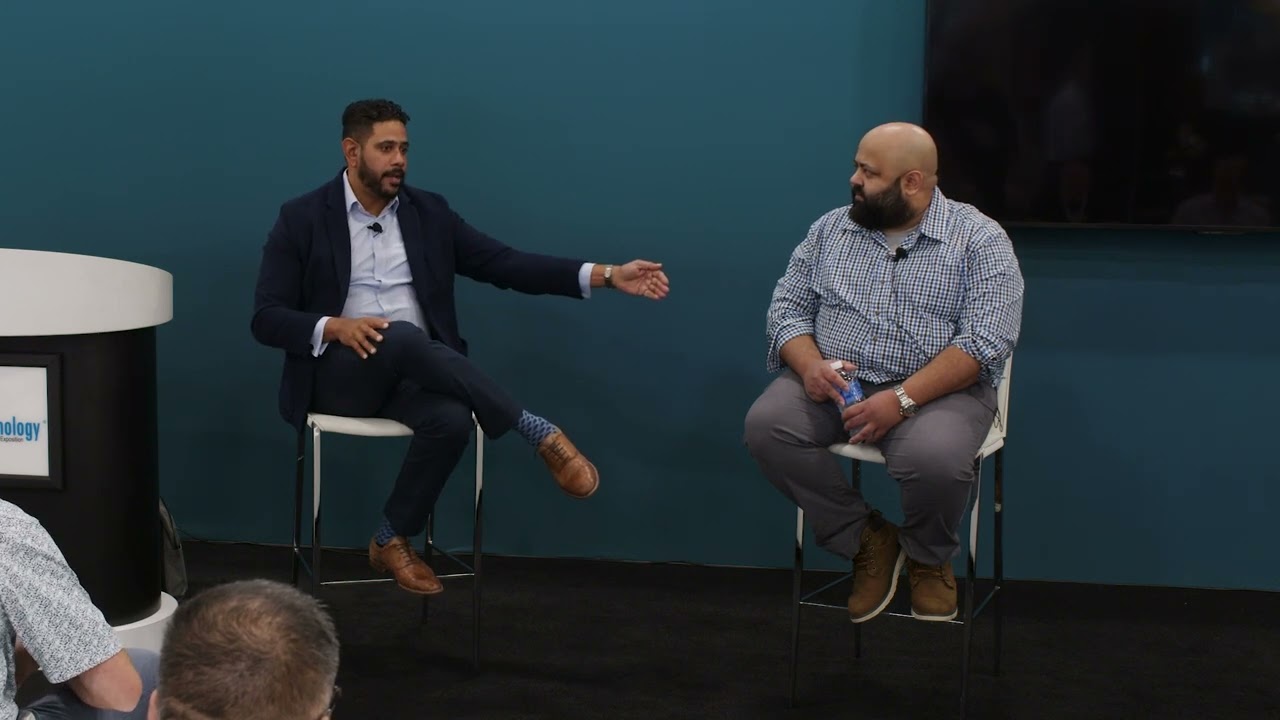
I recently spoke with my former colleague Jason Yoraway, Senior Recruiting Consultant at Inspire Medical Systems, to get a sense of what hiring managers are looking for today and how an elastic talent strategy can support their business needs. With extensive experience as an agency recruiter placing contingent talent, building in-house contingent programs, and working as a career consultant, Yoraway is incredibly well-versed in scaling a workforce up or down to fill the skills gaps. [Full disclosure: we worked on a consulting gig together through Salo Consulting and in-house at P.F. Chang’s.]
Caption: Learn how audiovisual pioneer Dolby strengthens its workforce with an elastic talent strategy.
Here’s how talent leaders can build an elastic workforce that bends with the economy and shifting business priorities.
Rethink jobs with skills to do more with less
A year ago, the talent acquisition world was in a hiring frenzy. It was a volume game. Now it’s all about finding the right skills to do the job. In fact, 40 percent of our webinar attendees said finding candidates with the right skills was their top challenge.
“Figuring out what those right skills are — and how to find them — is the million-dollar question,” Yoraway said. “I’m bringing something a little different to the table and trying to open horizons.”
Building an elastic talent strategy is about allowing everyone who works with talent the visibility to quickly adjust to shifting work demands. It’s not all about external hiring but includes repurposing talent and reskilling inside your organization.
Often, organizations find that they can place an existing employee and move them around on internal projects. With this kind of mobility in mind, you can fill business needs, help employees take on new challenges, and let them try out different areas where they might make great fits.

Talent leaders and hiring managers are best positioned to identify which high-potential employees have the transferable skills to succeed in a new role or project. But in my experience as a recruiter for large organizations, it’s taken me up to three weeks to find someone internally with approval from their manager, interest in trying something new, and the particular skill set for the role.
For most talent leaders, manually sifting through the skills profiles of thousands of employees is probably impossible, as was the case with our customer, DICK’s Sporting Goods. With the help of AI, the retailer’s transparent succession planning process enables skilled employees to connect with open opportunities more quickly and effectively.
“[Skills] help facilitate access and exposure for individuals to consider internal opportunities as well as external opportunities for applicants and prospects,” said Brad Cohen, Sr. HRIS Analyst for DICK’S Sporting Goods, in a recent webinar. “And they help drive long-term employee engagement.”
Positions don’t need to be backfilled one-to-one
If somebody leaves or moves internally, you probably have to backfill that position. That’s the traditional way of thinking, with 70 percent of talent leaders saying they have jobs to be backfilled, according to a 2022 HR.com survey. But it’s not necessarily the only way to think about it.
The labor market and the fluctuating economy require hiring managers and talent leaders to take a more flexible approach to get the work done.

“Now is a good time to self-reflect, adjust your recruiting style, and rethink how the work has to be done,” Yoraway said. “From my recruitment chair, many of my jobs now are more fluid than they have been. [Hiring managers] want to find that niche ‘purple squirrel,’ but focusing less on qualifications and more on skills widens my ability to recruit from those types of professionals in that [talent] pool.”
Using talent market and skills data to educate hiring managers on available talent pools helps set healthy expectations. During my time with Target Corp., I could tell you where every solutions architect across the world was located, and there were very few for what we needed to do for Target. There were times when I had to level-set with hiring managers that we needed to think about this position differently while I continued working on the four candidates who fit the bill perfectly.
If you have the data, it’s easier to set expectations with hiring managers on the available talent market, consider a nontraditional candidate, or even bring in a short-term consultant to get things moving. [Click to Tweet]
Integrate your contingent strategy for total talent visibility
In these times when workforce agility is critical, it’s beneficial to have visibility into the contingent workforce.
We asked webinar attendees to share more about their current contingent strategies. Many are starting to incorporate contingent workers into their total talent management strategy, with 58 percent saying that HR owns the contingent workforce strategy. However, it also surprised me that nearly a third don’t have a contingent strategy.

For those just getting started building an integrated total talent strategy, it’s about getting the work done in the given timeframe. We’re already finding that many Eightfold customers are moving away from third-party agencies and starting to recruit and hire contingent workers themselves. As a result, organizations can fulfill a business need faster and with the best candidates, regardless of whether it’s a short-term project or a full-time position. This also improves visibility into consultant performance so they can redeploy them to other projects.
“If you’re looking for this niche role, you absolutely should bring that contingent workforce in to help cover any pain point while you find the full-time employee,” Yoraway said. “Having the ability to open your [toolbox] to anything and everything to be a true consultative partner to my hiring managers is fantastic.”
Related: Read about how audiovisual pioneer Dolby integrates contingent workers with an elastic talent strategy to have a total view of skills across its organization and talent pools.
Regardless of where your workforce strategy lives, we firmly believe in building partnerships across the organization — including finance and procurement — to create an elastic talent strategy that bends with the economy.

Rebecca Warren is the Director of Customer Success at Eightfold AI. Before joining Eightfold, she held multiple talent roles with global manufacturing and retail organizations. Watch the entire conversation in the webinar, “Bend Don’t Break: Why an Elastic Workforce May be the Answer to Your Talent Challenges,” to learn more about building a recession-proof elastic talent strategy.