


- Chevron is taking a skills-based approach to talent management with the help of AI.
- To transform the HR function, leaders had to demonstrate the business value of talent intelligence.
- This skills-based approach helps Chevron be better prepared for what’s next.
Adopting a skills-based approach is critical to effectively managing talent, but executing it across your entire organization is another challenge altogether.
HR teams are still grappling with the best way to manage internal talent. It’s become clear that a skills-based approach — focusing on what employees can do and learn — is a great option, but it’s more challenging in global enterprises. Larger organizations have more processes and systems to cut through. Their HR leaders also must demonstrate the business value of becoming talent-centered.
It’s a challenge Luis Niño, Digital Manager, Technology Venture and Innovation at Chevron, was poised to tackle when he was tasked with the job of digitally transforming Chevron’s HR organization.
“I was not an HR professional. When we started this journey, my job was the digital transformation manager for the HR function, and we realized pretty quickly that HR systems and processes were too dispersed,” Niño said.
He and his team dove in, and their work has transformed Chevron to prepare for what’s next with an agile, flexible approach centered around talent.
The skills rabbit hole
Chevron’s starting place was centralizing its data. Siloed data loses value when it can’t be used against other systems. Gathering HR data, workflows, and processes was critical to getting started.
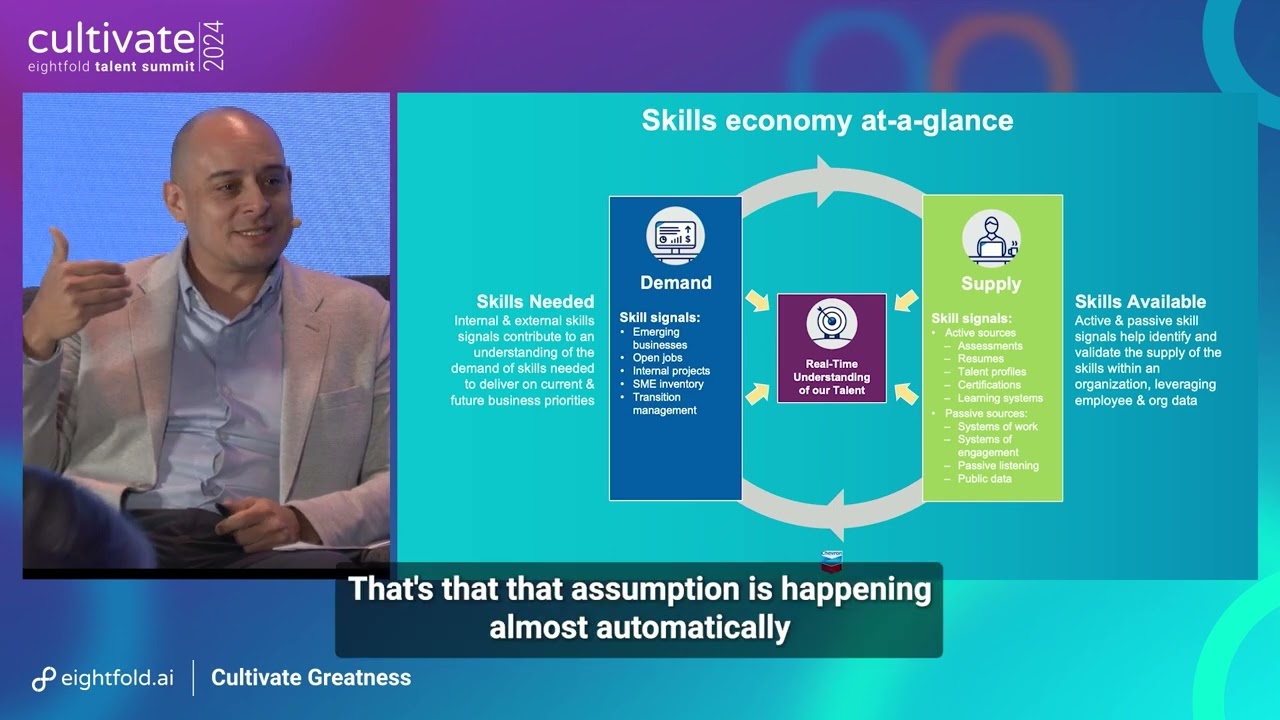
Once that was complete, Niño’s team could look at internal talent. They quickly realized their traditional framework based on roles wasn’t going to give the company an accurate view of the skills needed to fill demands.
“We needed to figure out a way to equate our understanding of jobs and our understanding of people,” Niño said. “We know what the demand looks like and we know what jobs we have open, but we didn’t have a good handle on our people and their skills. That’s when we started diving into the skill’s rabbit hole because we believed that by leveraging skills, we could understand our talent pool better.”
Niño’s team developed the Chevron skills framework, which led to their next step: finding and accessing skills data.
Returning to employee résumés for skills listed was somewhere to start, but Niño knew they had to go deeper. They needed to truly understand how to empower the HR organization and the company to manage talent in a dynamic way to meet the changing demands of the energy market.
Talent intelligence unlocks talent management potential
Uncovering the granularity of skills was key to Chevron’s talent management transformation.
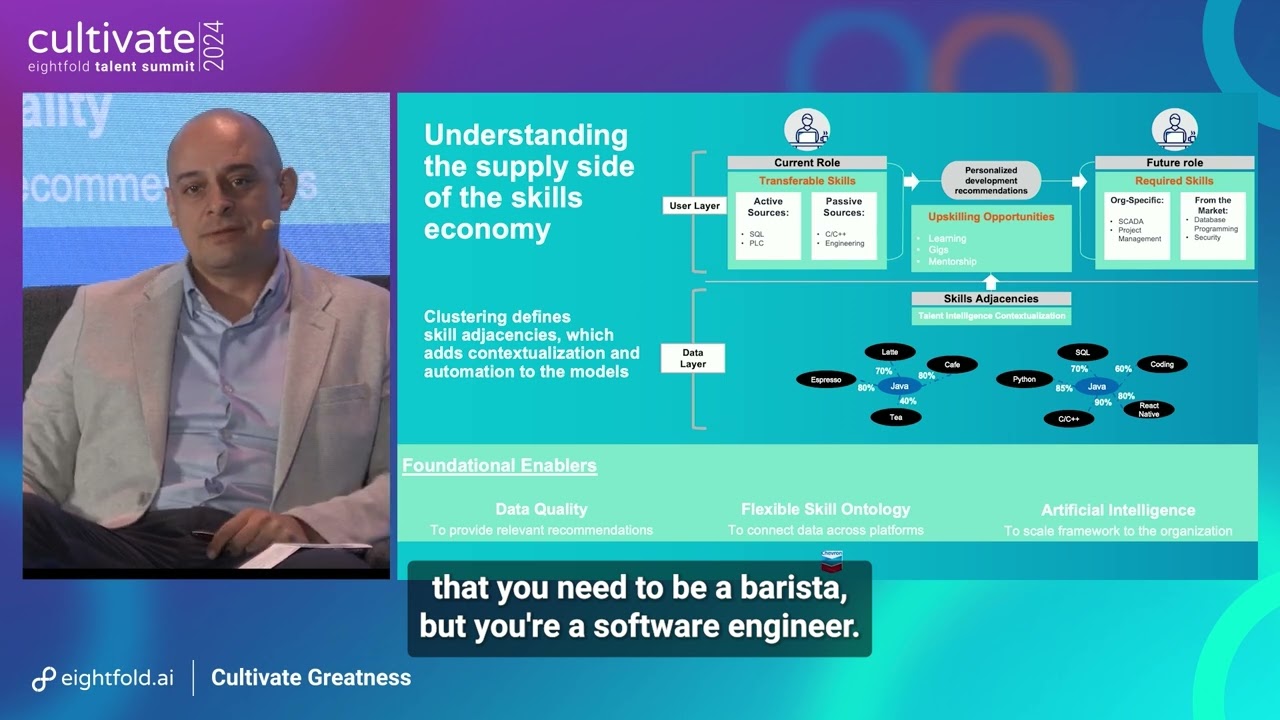
Niño’s focus on skills led to looking into talent intelligence as a way to get there. Through the power of AI, their HR team could better analyze and understand employee skills to fill roles in emerging areas of the business.
“One of my concerns as we were looking into this space was that everybody had a marketplace, but not every marketplace was driven by talent intelligence,” Niño said. “The way you set up your data and the way that you allow the data to learn is critical. We wanted to see the relationships between skills. If you don’t have a very strong data layer that enables hyper personalization, the marketplace won’t work.”
The focus on talent management functions, not just talent acquisition, was essential to Chevon’s need to unlock the adaptability and responsiveness of the HR function to deliver real value to the business.
“Now we know not only the demand for a particular set of skills but, we also know the individual’s ability to build those skills,” Niño said. “This gives HR tremendous power to fill those emerging roles from within the company like never before.”
Managing the talent pool with speed and flexibility
In the end, the project not only digitized Chevron’s employee skills bank, it also transformed the company’s approach to talent management.
Today, talent intelligence at Chevron connects employees with opportunities in real time and learns as it goes to drive engagement. It also continuously informs HR leaders about existing talent’s capabilities, skills updates, and reskilling opportunities.
AI-native talent intelligence has transformed Chevron’s HR function to constantly deliver value. They can now use their data to address skills needs and proactively meet emerging demands.
“Understanding your talent pool and moving the talent pool at speed and with flexibility impacts the business,” Niño said. “Now the company can be more nimble to take advantage of emerging markets because we know we have the talent with the skills to deliver value.”
Watch the full fireside chat with Chevron, on demand now.