


Mid-size organizations occupy a uniquely challenging position in the talent market.
You’re large enough to run dozens of open requisitions at once, but lean enough that your TA team is stretched thin trying to manage all of them. You compete head-to-head with enterprise organizations for the same candidates — and you’re expected to move just as fast, even without the same resources.
The result? Top candidates slip through the cracks. Recruiters spend disproportionate time on manual screening work instead of high-value relationship building. Hiring managers get inconsistent candidate summaries depending on who did the intake. When you’re running seasonal hiring surges or expanding into new markets, the gaps in your process become even harder to ignore.
This is where an AI interviewing tool transforms what’s possible for your team — not by removing human judgment from your process, but by making sure it’s applied where it matters most.
The mid-market hiring gap
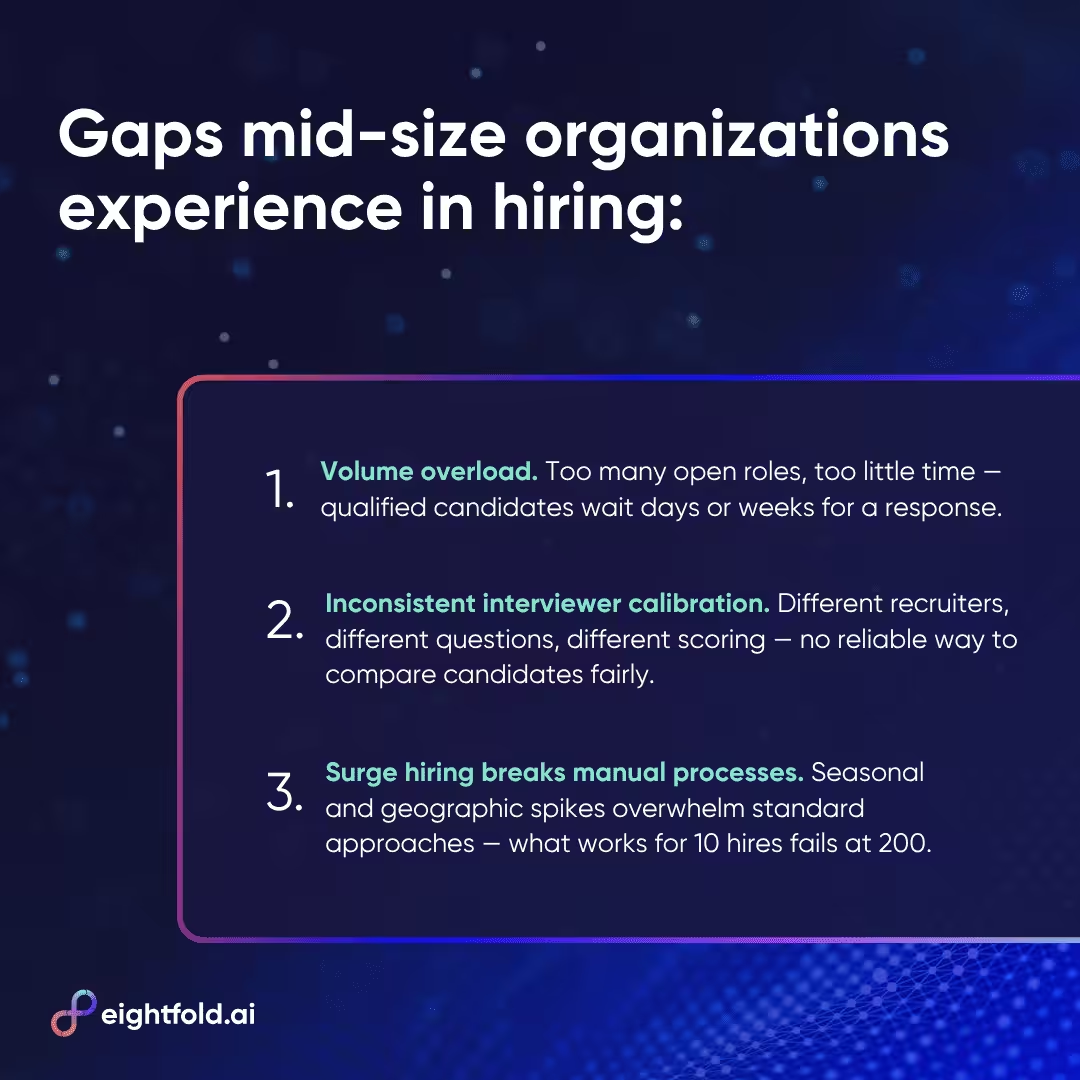
Mid-size organizations face a set of hiring pressures that don’t fit neatly into the small business playbook or the enterprise toolkit.
Your recruiting team may be managing 50, 100, or 200 open roles at any given time. Each role generates its own flood of applications, and manually screening even a fraction of them is a full-time job in itself.
When a recruiter can only get through so many candidate profiles in a day, qualified applicants inevitably wait days or weeks for a response. In today’s market, that’s often too long.
Add to that the complexity of inconsistent interviewer calibration. When different recruiters are conducting phone screens for the same role, the questions change. The scoring changes. What counts as a strong answer depends as much on who’s asking as on what the candidate says.
That inconsistency doesn’t just introduce bias. It makes it harder to compare candidates fairly and build a reliable pipeline.
And for organizations with seasonal or geographic hiring needs — retail ahead of the holidays, healthcare systems expanding to new facilities, logistics organizations scaling up distribution teams — the volume spikes are severe enough to overwhelm any manual process. Hiring 200 warehouse associates in six weeks using the same approach you use for corporate roles isn’t a strategy. It’s a scramble.
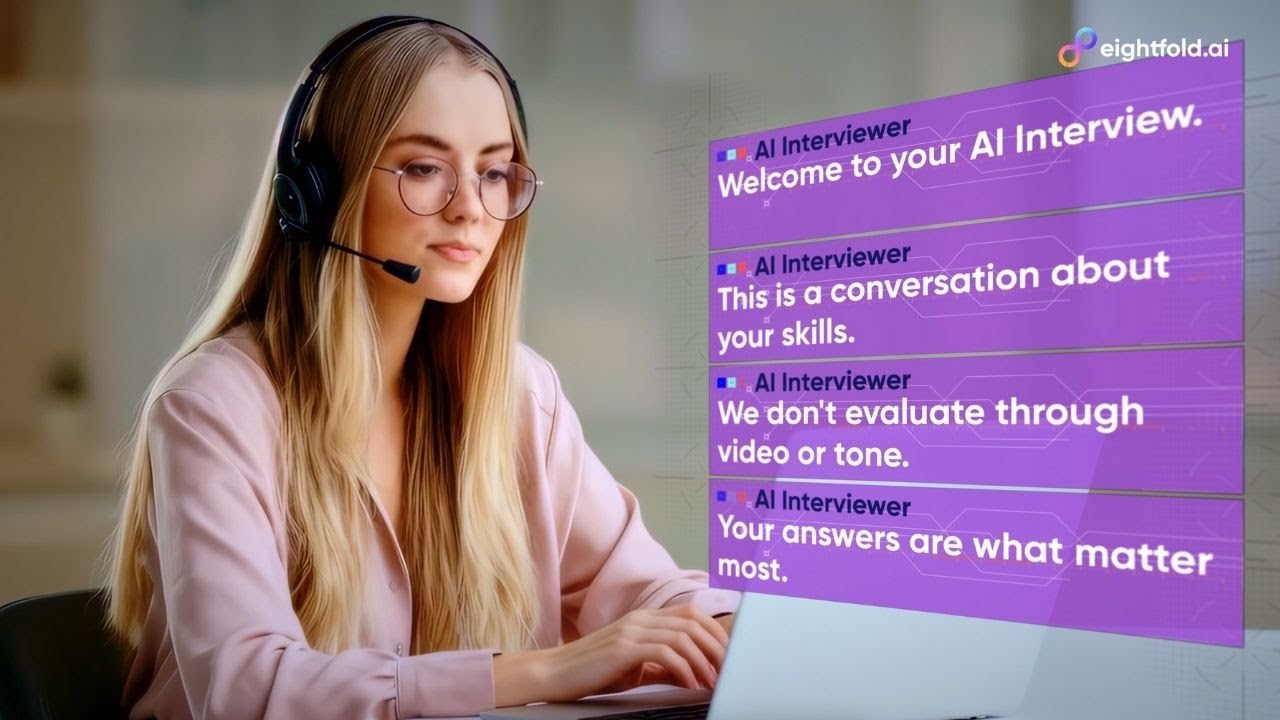
See how AI Interviewer conducts fair, conversational screening interviews the moment candidates apply, helping you discover qualified talent in hours, not weeks.
How AI Interviewer closes the gap
Our AI Interviewer, built on the Eightfold Agentic Talent Operating System, gives mid-size organizations a consistent, scalable screening layer that operates from the moment a candidate applies — no matter how many roles are open or how many candidates are in the pipeline.
Faster time-to-first-interview, at scale.
The moment a candidate applies, AI Interviewer automatically invites them into a conversational screening interview — no scheduling lag, no recruiter bottleneck. Candidates complete it on their own time, in 22+ supported languages, and your team receives structured insights within hours. Early results have shown organizations reducing time to first interview by up to 90%, compressing a multi-week process into days.
For a mid-size organization managing high application volume, this changes the math entirely. Instead of your recruiters triaging hundreds of incoming applications to find the ones worth a phone call, AI Interviewer surfaces your strongest candidates with consistent, skills-based summaries already in hand.
Consistent evaluation across every interviewer and every role.
AI Interviewer asks every candidate the same role-specific questions and evaluates their responses based on skills, experience, and demonstrated capabilities — not résumé polish or interviewer subjectivity. The system never analyzes facial expressions, tone, or emotion. It evaluates what candidates say, full stop.
This structured consistency is particularly valuable when multiple recruiters are covering the same role, or when you’re staffing similar positions across different locations. Every candidate gets the same rigorous assessment, and every hiring manager gets a summary built on the same criteria — making cross-candidate and cross-location comparisons genuinely apples-to-apples.
The system uses bias-audited models and has been proven across 155 countries. Candidates with accessibility needs are automatically routed to a human-led process, ensuring equitable access at every stage.
Built to flex for seasonal and high-volume hiring surges.
For organizations that face predictable surges — seasonal retail, open enrollment periods, fiscal year head count pushes — AI Interviewer scales without proportionally increasing recruiter workload. You can activate a high-volume screening process across hundreds of roles simultaneously, maintain consistent candidate experience, and keep your team focused on the qualified candidates who warrant a deeper conversation.
Geographic expansion works the same way. Whether you’re hiring for a new regional office or staffing a distributed workforce, AI Interviewer delivers the same structured process without requiring additional local recruiting infrastructure.
Your team stays in control
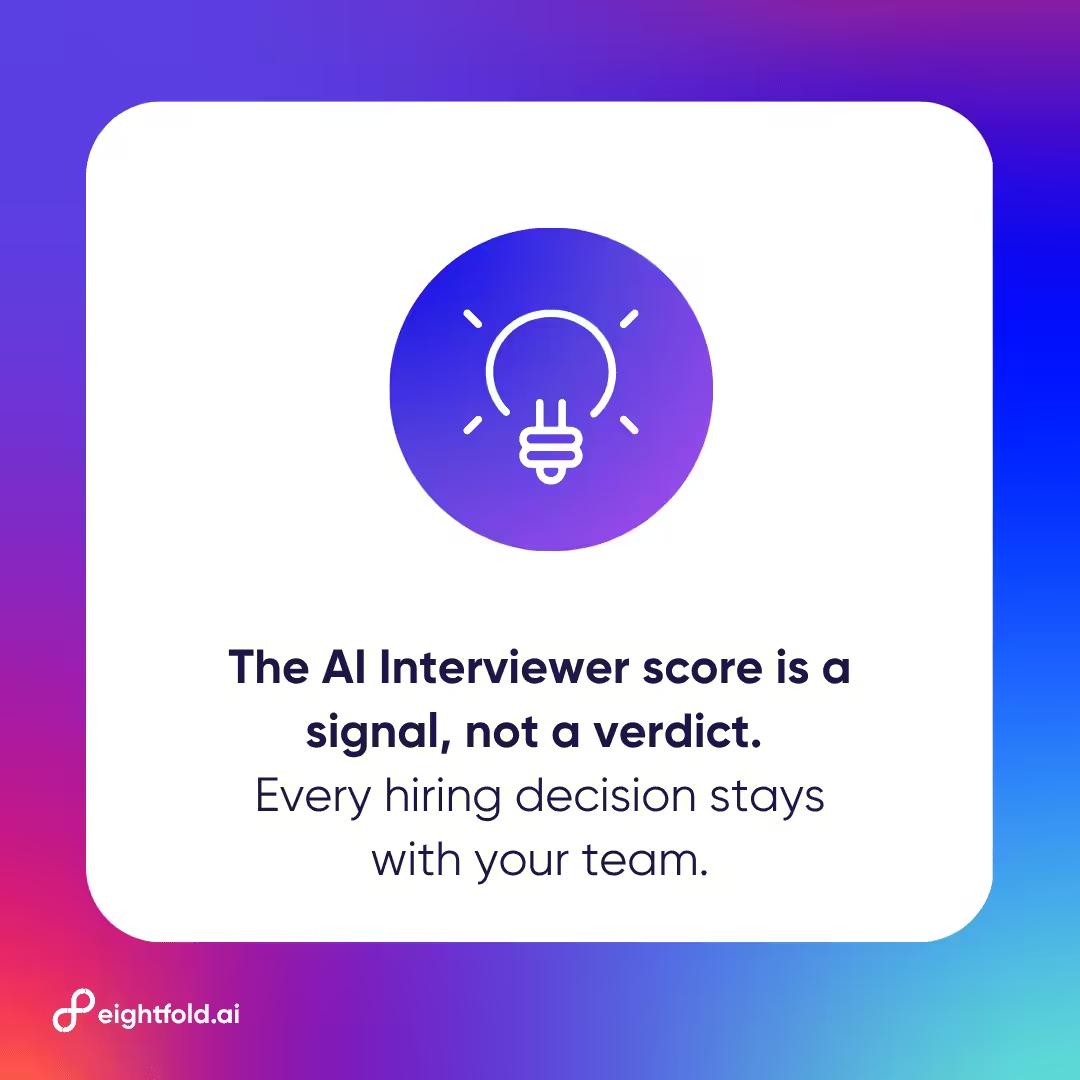
AI Interviewer handles initial screening and delivers structured insights — but every hiring decision remains with your team. Recruiters and hiring managers can replay any interview, review full transcripts, add their own context and notes, and override AI recommendations whenever their judgment calls for it.
The AI interview score is a signal, not a verdict. It’s designed to help your team prioritize their time — to spend more of it on the candidates who deserve closer attention and less of it on manual processing of applicants who aren’t the right fit.
Because AI Interviewer is part of the broader Eightfold Agentic Talent Operating System, the insights generated in screening don’t disappear after a hire is made. They feed into a richer picture of your workforce over time — informing internal mobility decisions, skills gap analysis, and retention strategies as your organization continues to grow.
What mid-size HR and talent leaders report
Organizations using AI Interviewer at mid-market scale consistently point to a few standout outcomes:
- Dramatically faster pipelines: Roles that once took three to four weeks to get to first interviews now move in days. That speed matters enormously in competitive talent markets where your strongest candidates have multiple options on the table.
- More equitable outcomes: Structured, skills-based screening surfaces candidates who might have been filtered out by keyword matching or résumé bias — career changers, non-traditional backgrounds, candidates returning from caregiving leaves. That translates to a more diverse and capable talent pipeline.
- Recruiter time redirected: When initial screening is handled by AI, your recruiting team spends more of their hours on what requires human skill: building candidate relationships, evaluating culture fit, and partnering with hiring managers on complex decisions.
- Scalable without head count: Organizations absorb volume spikes — seasonal surges, rapid expansion, M&A-driven head count growth — without a proportional increase in recruiter capacity. The process scales; the overhead doesn’t.
Related content: Learn how Quality Automotive Services, the second largest and fastest growing Valvoline Instant Oil Change franchise, is using AI Interviewer.
The cost of moving slowly
In today’s talent environment, time-to-fill isn’t just an operational metric — it’s a competitive one. Every week a role stays open is a week of lost productivity, additional burden on existing team members, and risk that your best candidates accept offers elsewhere. For mid-size organizations already competing against enterprise hiring machines, a slow process is one of the most costly disadvantages you can have.
AI Interviewer was built on an enterprise-grade platform — recognized as one of the Top HR Products of 2025 and trusted by a third of the Fortune 500 — and makes that same capability accessible without requiring dedicated technical resources or a months-long implementation.
The mid-size organizations winning on talent aren’t necessarily the ones with the biggest recruiting teams. They’re the ones with the smartest processes — ones that move fast, evaluate fairly, and free their people to focus on the decisions that actually require human judgment.
Ready to transform how you hire? Learn more about how AI Interviewer can help your mid-size organization compete for top talent.