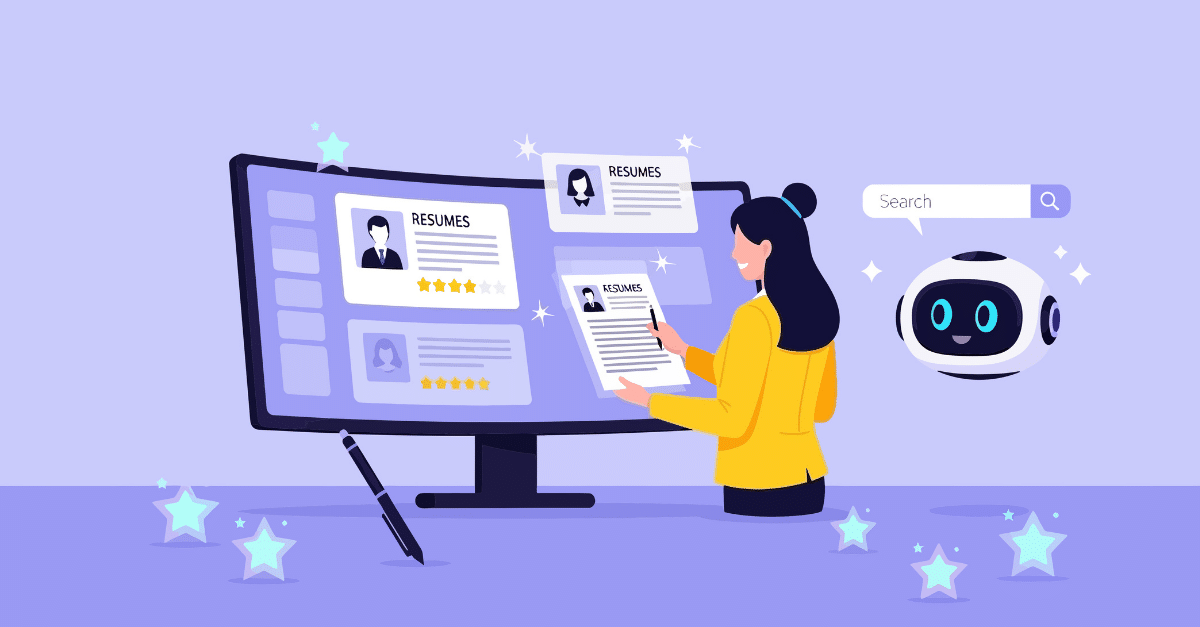


Picture this: it’s the beginning of a new fiscal year, and your agency just received authorization to fill 40 open positions. Your recruiting team is three people. The applicant portal is already filling up. Every step of the process has to be documented, defensible, and fair — and your hiring managers are booked solid for the next six weeks.
This is the reality for HR leaders across federal, state, and local government. The pressure to hire quickly is real. So is the obligation to get it right. And unlike private-sector employers who can streamline at will, government agencies operate within frameworks designed to protect public trust — structured processes, standardized evaluations, documented decisions.
Those requirements exist for good reason. But they create a genuine tension: how do you move fast enough to compete for talent while honoring the rigor that public hiring demands?
AI interviewing in government is one of the most promising answers to emerge in years. Agencies at every level are beginning to use AI interviewers — not to replace human judgment, but to handle the high-volume, early-stage work that currently creates bottlenecks and delays.
When implemented thoughtfully, the technology doesn’t cut corners on compliance. It makes compliance easier to sustain at scale.
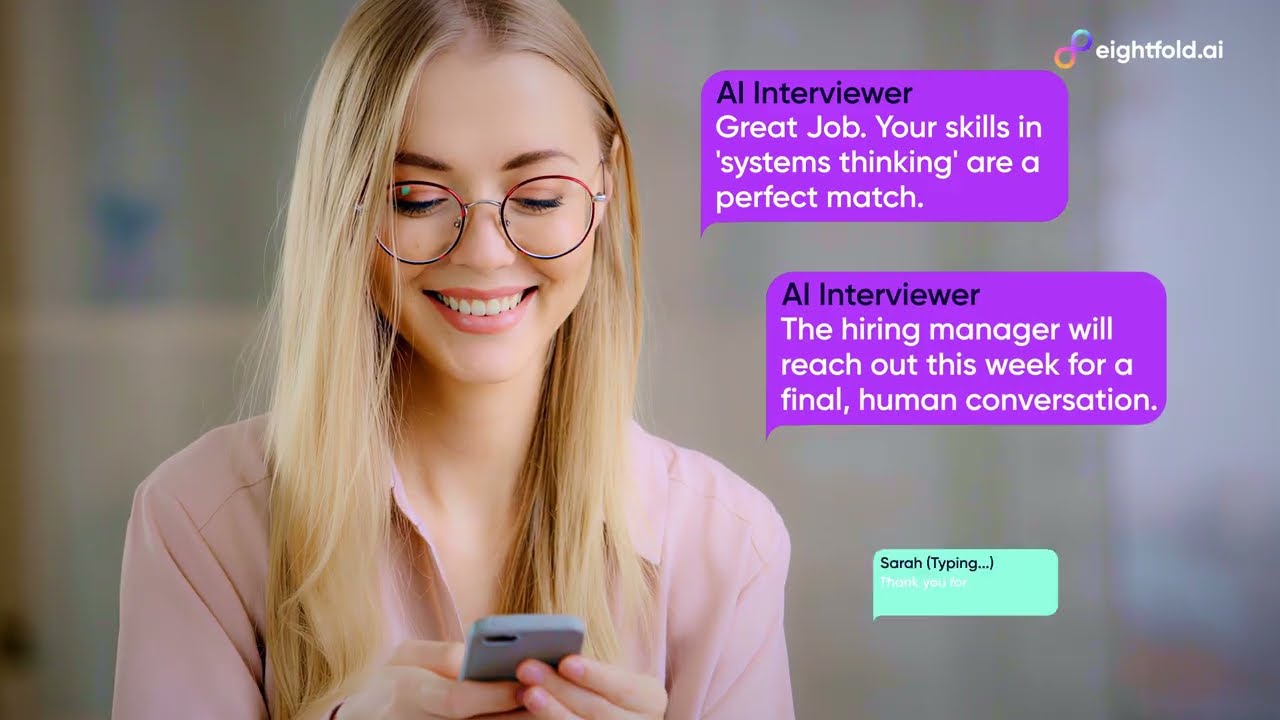
Government hiring is high-volume, compliance-heavy, and understaffed. AI Interviewer was built for exactly that. See how it works.
The shared challenges across government hiring
Before diving into how AI interviewing applies at different levels of government, it’s worth acknowledging what federal, state, and local agencies have in common because hiring challenges for the public sector are more similar than they might appear.
Compliance and auditability are non-negotiable at every level. Whether an agency is subject to federal merit system principles, state civil service rules, or local equal employment ordinances, the documentation requirements are significant. Decisions need to be explainable, processes need to be consistent, and every candidate deserves a fair shot.
Recruiting teams, meanwhile, are almost universally lean. Government HR functions have been stretched by years of hiring freezes, budget constraints, and workforce reductions. The teams responsible for filling dozens — sometimes hundreds — of positions at a time are often small, and they’re managing that volume alongside onboarding, classification, and employee relations work.
Applicant volume is high, particularly for entry- and mid-level roles. Government positions offer stability, benefits, and purpose — qualities that attract strong candidate interest. That’s a good problem to have, but it creates real pressure on the screening stage.
And the hiring process itself tends to be structured and sequential by design. That’s not a flaw — it reflects the values that public sector hiring is meant to uphold, and it does mean that bottlenecks have a way of compounding. A delay at the screening stage cascades into delays at the panel stage, the approval stage, and the offer stage.
AI interviewing in government addresses the bottleneck where it tends to be most acute: the transition from application to structured screening.
Federal government: Handling volume without adding head count
Federal hiring is one of the most process-intensive talent functions in any sector. Agencies operate under strict merit system rules, and the documentation requirements for selection decisions are extensive. For competitive service positions especially, every step needs to be traceable.
At the same time, federal agencies routinely receive hundreds or thousands of applications for a single posting. A popular federal job announcement can generate more applicants than a small HR team could realistically screen in weeks, let alone days. The result is a hiring process that often takes months — far longer than most private employers — which puts agencies at a disadvantage when competing for in-demand skills.
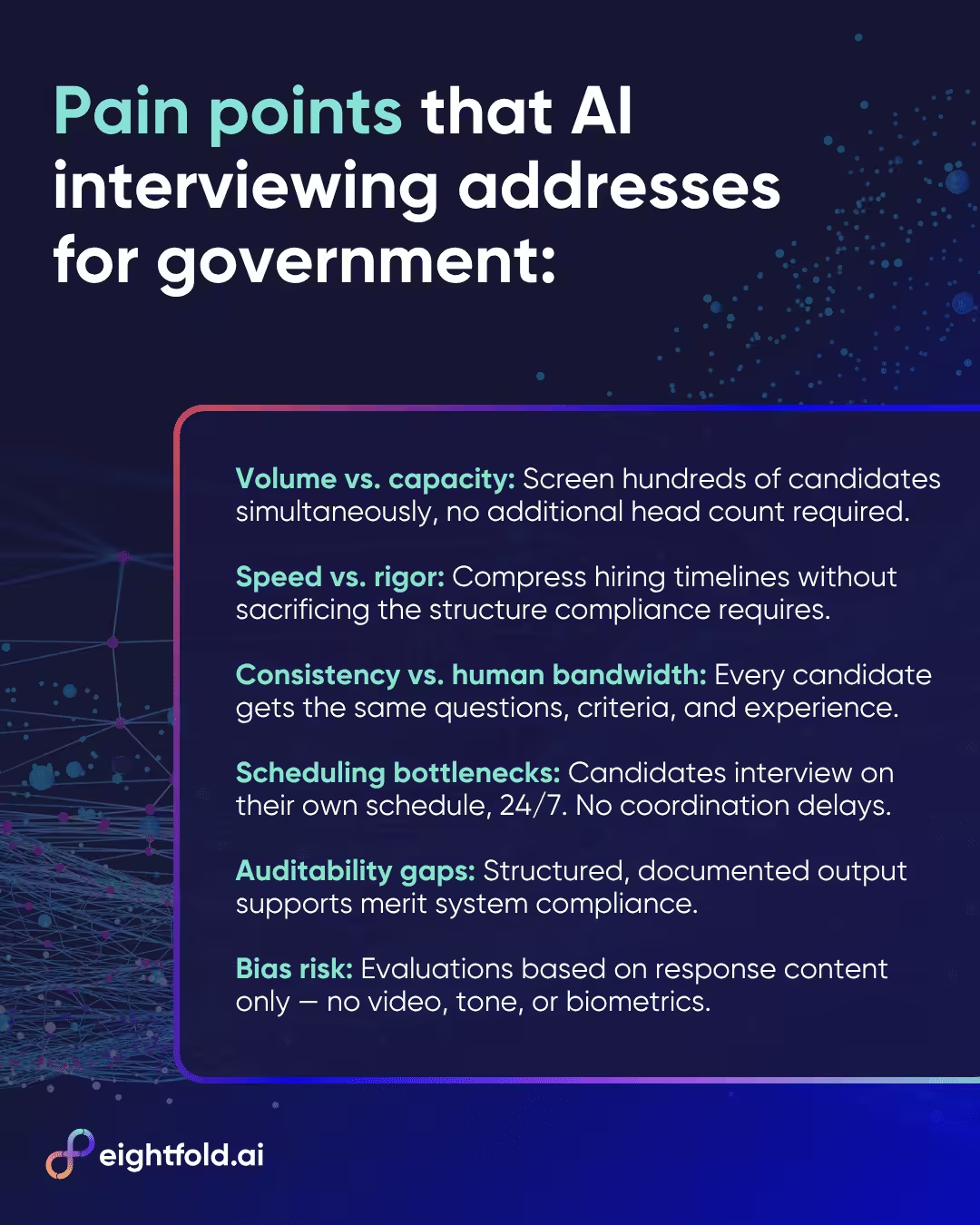
AI interviewing addresses this challenge by creating a consistent, documented screening layer that can absorb high application volume without adding staff. Rather than requiring recruiters to conduct individual phone screens with every qualified applicant, an AI interviewer can conduct structured assessments with all of them — simultaneously, around the clock, in a format that generates standardized output for every candidate.
Critically for federal HR, every interview is conducted the same way. Every candidate receives the same questions. Every response is evaluated against the same criteria. That consistency directly supports the merit system principles that govern federal hiring: treating candidates equitably and making selection decisions based on job-relevant factors.
The Eightfold Talent Intelligence Platform is built specifically to support the structured, auditable workflows that federal agencies require. Our AI Interviewer is certified to ISO/IEC 42001:2023 — the international management system standard for artificial intelligence — and holds FedRAMP and DISA IL4 authorizations, making it one of the few hiring tools cleared for deployment in sensitive federal environments. For agencies that need to demonstrate the integrity of their process, that level of certification matters.

State government: Consistency across departments with very different needs
State agencies present a different kind of complexity. A state HR office may be responsible for supporting hiring across departments as varied as transportation, public health, corrections, environmental regulation, and revenue. Each department has its own job families, its own technical requirements, and its own hiring managers — but they’re often supported by a centralized HR function that has to maintain consistent processes across all of them.
This creates a tension between standardization and flexibility. The HR team needs a process it can apply uniformly to maintain compliance and fairness. But the hiring needs of a public health nurse recruiter are genuinely different from those of a civil engineer recruiter, and those differences need to be reflected in how candidates are evaluated.
AI interviewing in government at the state level helps resolve this tension. A platform, like our AI Interviewer, can be configured to reflect the specific role requirements and competency frameworks for different departments while maintaining a consistent underlying process.
A candidate applying to a fiscal analyst role at the department of revenue and a candidate applying to a program coordinator role at the department of aging go through the same structured interview experience with questions tailored to their specific position, evaluated against criteria built for that role.
For state HR leaders, this means a single tool that serves the whole enterprise without requiring each department to build its own process from scratch. It also means that when questions arise about consistency across departments — as they often do in state civil service systems — the answer is already built into how the tool works.
Local and municipal government: A force multiplier for small teams
Cities and counties often face the most acute version of the government hiring challenge. The HR teams are small — sometimes a single person covering all aspects of talent for an organization of hundreds. The roles span an enormous range: public works, parks and recreation, utilities, code enforcement, emergency services, finance.
And the hiring pressure is real: local government turnover tends to be high in frontline positions, and community members feel the impact of vacancies immediately.
For a city HR director managing dozens of open positions with a lean team, the interview stage can become a genuine bottleneck. There simply aren’t enough hours in the day to personally screen every applicant, and yet the pressure to fill positions quickly is constant.
AI interviewing in government at the local level functions as a force multiplier and strategic investment. One recruiter can move a large cohort of candidates through the initial screening stage without becoming the constraint in the process. The AI interviewer conducts the same structured conversation with every candidate, generates consistent output that the recruiter can review, and surfaces the strongest candidates for the human-led stages of the process.
This also addresses a consistency challenge that small teams often face. When one or two people are responsible for all initial screening, their judgment — however skilled — is inherently variable across a high volume of interviews. Fatigue, context-switching, and time pressure affect every human interviewer.
An AI interviewer doesn’t have these limitations. The hundredth candidate gets the same experience as the first.
Our AI Interviewer is designed to be an enterprise-grade tool that doesn’t require a large internal team to implement or manage. For municipal HR directors who need a capable, compliant solution they can actually stand up and sustain, that accessibility matters as much as the capability itself.
What the numbers say about AI interviewing in government
The performance data from our AI Interviewer is worth understanding in context, because the numbers that matter most for government hiring are the ones about consistency and candidate experience — not just speed.
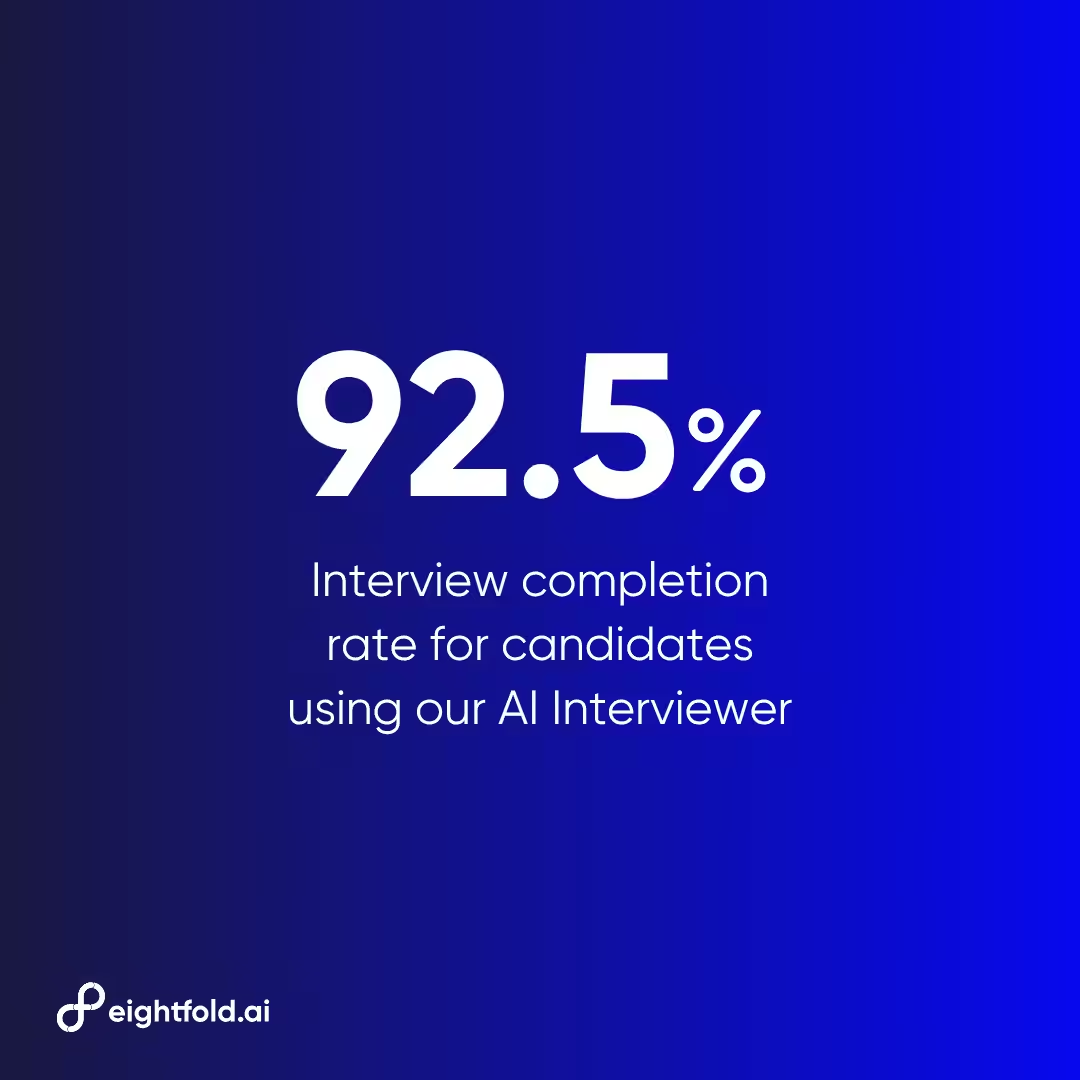
The system automates up to 80% of manual recruiter work in the screening stage, maintaining a 92.5% interview completion rate. Candidates who go through the process give it a 93% NPS score — meaning the experience is one that applicants actually rate positively. That matters in government hiring, where candidate experience directly affects an agency’s reputation as an employer and its ability to compete for talent.
Hiring cycles compress to as few as 1.3 days — a dramatic reduction from the weeks or months that characterize many government hiring timelines. And the system operates 24/7 across more than 22 languages, which is particularly relevant for agencies in diverse communities where candidates may not all be equally comfortable in English.
All of this happens within a system that evaluates candidates based on the content of their responses — not biometric cues, not video analysis, not vocal tone. For public sector employers that are rightly attuned to fairness and potential bias concerns, the architecture of the evaluation matters. AI Interviewer includes candidate identity verification through trusted partners, tracks signals of interview integrity, and is built on 1.6 billion real-world career trajectories and 1.6 million skills — making its assessments grounded in actual work reality rather than generalized language patterns.
Government hiring has to be fast, fair, and defensible — at the same time
The scenario at the start of this post isn’t unusual. It’s the normal operating condition for government HR teams. The wave of requisitions, the lean team, the process that was built for a different volume — these are structural realities, not temporary situations.
AI interviewing in government doesn’t change the rules. It makes the rules easier to follow at scale. Every candidate is evaluated consistently. Every decision is documented. Every step of the process is auditable. The compliance requirements that make government hiring what it is don’t become obstacles. They become design criteria for how the tool works.
For agencies that are ready to close the gap between the volume they face and the capacity they have, our AI Interviewer is purpose-built for exactly this environment — with the certifications, the architecture, and the track record to support high-stakes public sector deployment.
Ready to see how it works in a government context? Request a demo or explore our public sector solutions.