

Enterprise talent teams are under pressure to hire faster, spend less, and do more with the same head count. AI interview assistants have emerged as one of the highest-ROI investments in the modern recruiting stack, but what does the return actually look like at scale?
This guide breaks down the real financial impact of deploying an AI interview assistant across enterprise recruitment: the metrics that matter, how to calculate your own ROI, and what organizations using Eightfold AI Interviewer are seeing in practice.
See how AI Interviewer improves the recruiting process.
Defining enterprise AI recruitment financial impact and measurable ROI
AI interview assistant ROI for enterprise recruitment refers to the measurable financial return an organization generates by replacing or augmenting manual screening and first-round interviewing with an autonomous AI system.
At the enterprise level, this return compounds across three dimensions:
- Recruiter time savings.
- Faster time-to-fill.
- Improved quality of hire consistency.
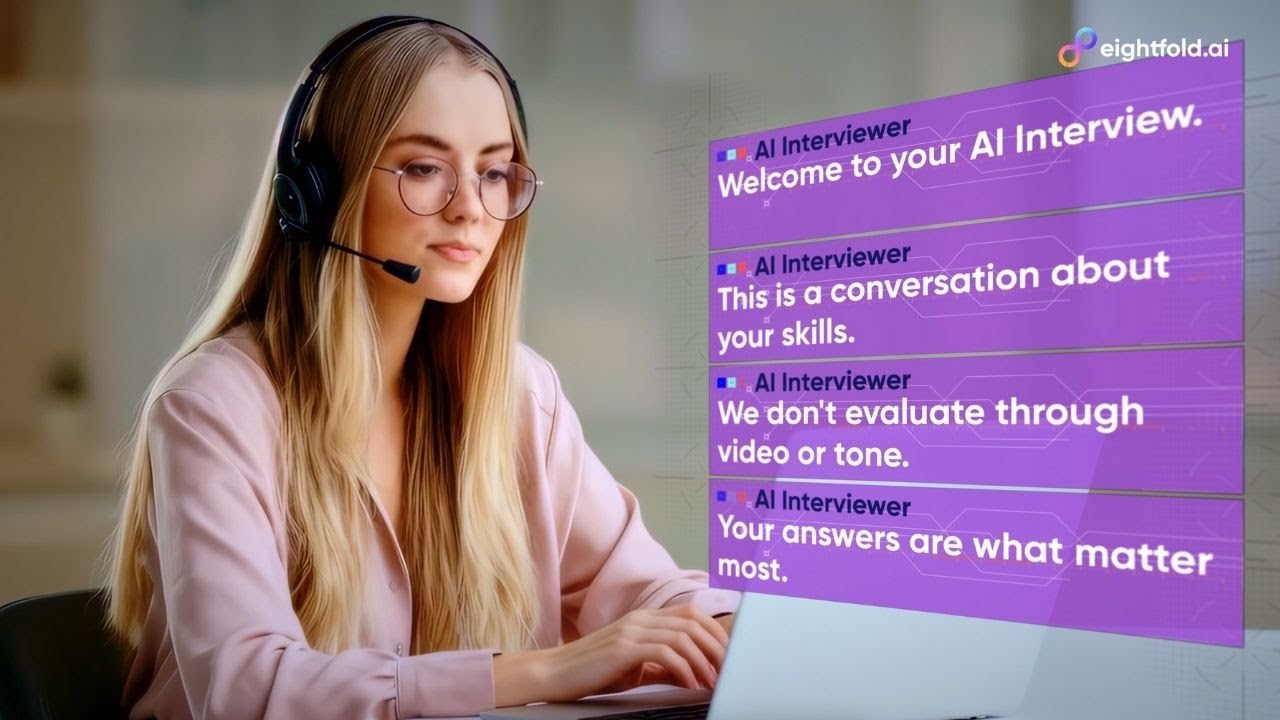
Unlike point solutions that automate scheduling or send automated reminders, a true AI interview assistant conducts the actual interview, asking role-specific questions, evaluating responses, detecting fraud, and delivering scored summaries to recruiters. The ROI calculation is therefore more significant than traditional HR tech.
How enterprise AI recruitment solves large-scale hiring challenges and delivers measurable financial impact
Based on our internal hiring results using AI Interviewer, enterprise teams are seeing three headline metrics:
- A 33% reduction in time-to-fill. Roles that previously took weeks to fill are now being filled in as little as 1.3 days using AI-driven interview workflows. For organizations with hundreds or thousands of open roles at any given time, the compounding vacancy cost savings are substantial.
- Under two hours to the first interview. Candidates can begin their interview the moment they apply — at 2 a.m., on weekends, in any of 22+ supported languages. This eliminates the 3–7 day scheduling gap that costs enterprises qualified candidates who accept competing offers first.
- Four hours saved per position. The AI handles initial conversations and delivers structured summaries for recruiter review. Recruiters stop chasing phone screens and start closing offers.
For organizations hiring at enterprise scale, these numbers translate directly into seven-figure annual savings. Use the to model your specific numbers based on annual hire volume, recruiter cost, and current time-to-fill.
How is AI interview assistant ROI calculated for enterprise recruitment?
The core ROI formula for an AI interview assistant has four components:
- Recruiter hours recovered. Multiply your average recruiter time per hire (screening, scheduling, first-round notes, debrief summaries) by annual hire volume by hourly recruiter cost. AI interview assistants typically reduce this by 50–70%.
- Vacancy cost eliminated. Every day a role sits open has a productivity cost — typically estimated at 50% of the daily salary equivalent for that position. Faster time-to-fill directly reduces this drag across your entire open requisition portfolio.
- Quality consistency value. Inconsistent screening leads to bad hires. AI interview assistants apply identical evaluation criteria to every candidate — the first interview of the day or the millionth. The downstream cost avoidance from reduced mis-hires is harder to quantify but consistently cited by enterprise TA leaders as a top-three benefit.
- Platform cost. Enterprise AI interview platforms are typically priced by seat, volume, or annual contract. AI Interviewer deployments are designed for 1–2 week activation — a light-lift launch that accelerates time to value.
Our early adopters are seeing hiring cycles compress from 42 days to under a week, with time to interview reduced by up to 90%.
What drives the financial impact of AI interview software at enterprise scale?
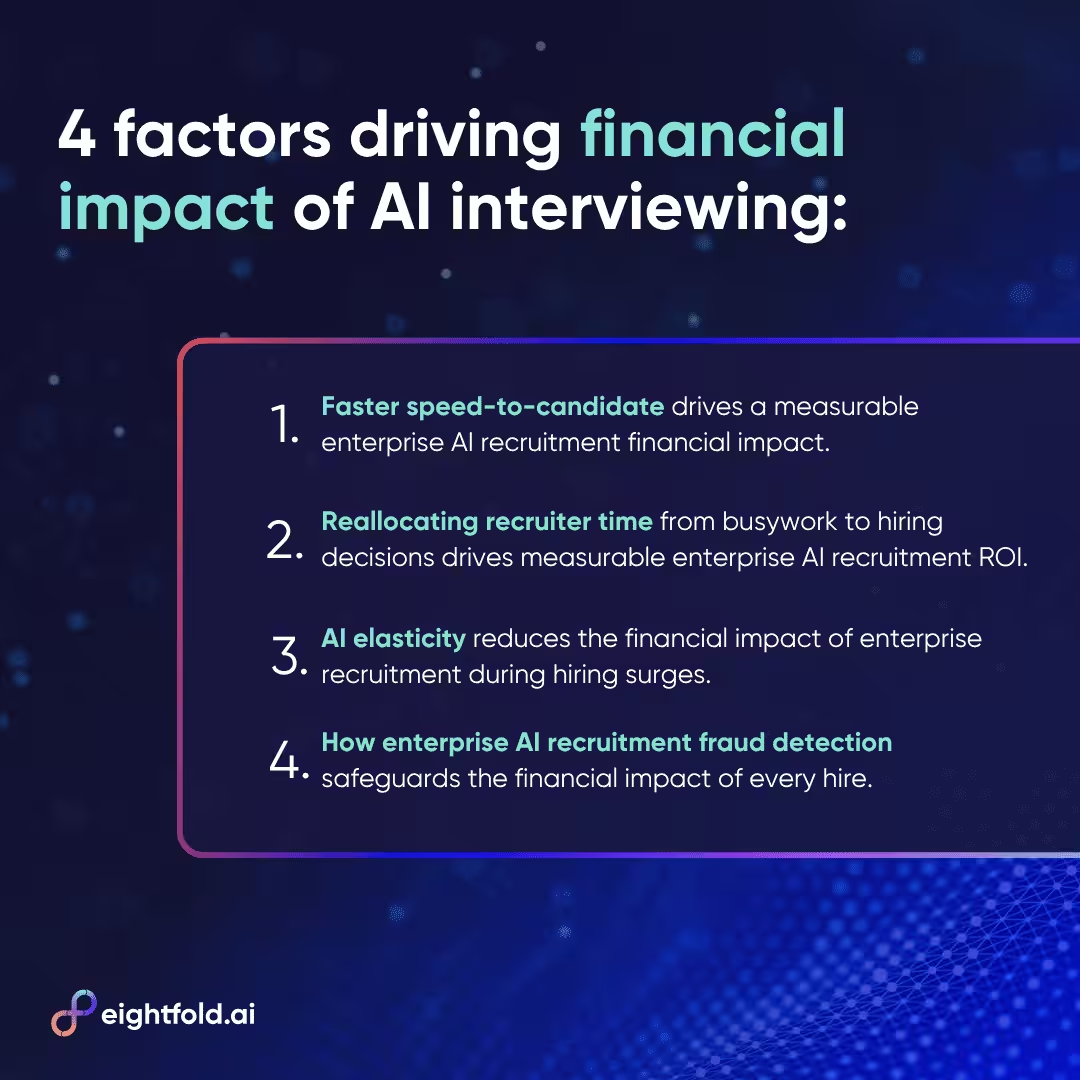
Faster speed-to-candidate drives a measurable enterprise AI recruitment financial impact
In high-volume and hourly hiring, the recruiter who reaches a qualified candidate first wins. Top candidates in competitive markets are often off the market within 10 days of applying. An AI interview assistant that engages candidates within minutes of application, not days, means enterprises talk to talent before their competitors do.
Reallocating recruiter time from busywork to hiring decisions drives measurable enterprise AI recruitment ROI
The highest-leverage recruiter activities are persuasion, assessment, and closing — not scheduling coordination and first-round phone screens. AI interview assistants handle the administrative and initial evaluation layer so recruiting teams can focus on the work that actually requires human judgment. This means the same head count handles more hires without burnout.
AI elasticity reduces the financial impact of enterprise recruitment during hiring surges
One of the most significant but underappreciated ROI drivers is elasticity. AI interview assistants can simultaneously conduct interviews with hundreds or thousands of candidates during peak demand — retail holiday seasons, financial services open enrollment periods, manufacturing ramp-ups — and scale back down when volume normalizes. The alternative is temporary recruiter hiring, agency fees, or hiring delays. None of those options are cheap.
How enterprise AI recruitment fraud detection safeguards the financial impact of every hire
Enterprise hiring fraud is a growing problem. AI Interviewer includes 12+ fraud detection systems, including alerts for tab switching, camera manipulation, and voice duplication, with integrations to ID verifiers including ID.me and CLEAR. The cost of a fraudulent hire, particularly in sensitive or regulated roles, far exceeds the cost of the platform.
AI Interviewer’s financial impact on enterprise recruitment ROI
AI Interviewer is an autonomous AI digital worker — not a chatbot, not a scheduling assistant — that conducts full, adaptive interviews at scale. It was recognized as a Top HR Product of the Year by HR Executive and the HR Tech Conference in 2025.
Key capabilities that drive ROI at the enterprise level:
- Trained on millions of interviews. AI Interviewer conducts adaptive, role-specific interviews using intelligence built from a massive base of real hiring outcomes, not generic question banks.
- 22+ languages. Enterprise recruiting is global. AI Interviewer screens every candidate in their language, eliminating language as a barrier to talent discovery and ensuring no qualified applicant is left behind.
- Built on responsible AI principles. AI Interviewer evaluates only what candidates say — their skills, experiences, and demonstrated capabilities — never how they look, sound, or emote. This is not just an ethical position; it reduces legal risk and improves consistency of hire quality across demographics.
- SOC 2, ISO 27001, and ISO 42001 certified. We are the first HR technology vendor certified to all three levels of ISO/IEC 42001:2023. For enterprise procurement teams navigating security and compliance reviews, this matters.
- ATS integration. AI Interviewer connects to existing applicant tracking systems, transforming static pipeline data into actionable intelligence without requiring a workflow rebuild.
- One to two week deployment. Complicated enterprise launches are replaced with fast, high-impact activation. The platform is designed to deliver value in weeks, not quarters.
Organizations using AI Interviewer include businesses across Fortune 500 companies, STMicroelectronics, and more.
Financial impact of AI Interview automation for high-volume and hourly hiring
High-volume and hourly hiring is where AI interview assistant ROI is most immediate and most dramatic. The structural problems in this segment — too many applicants, recruiter burnout, slow time-to-first-interview, candidate drop-off, seasonal spikes — are all directly addressed by AI interview automation.
The numbers from our high-volume use case are stark:
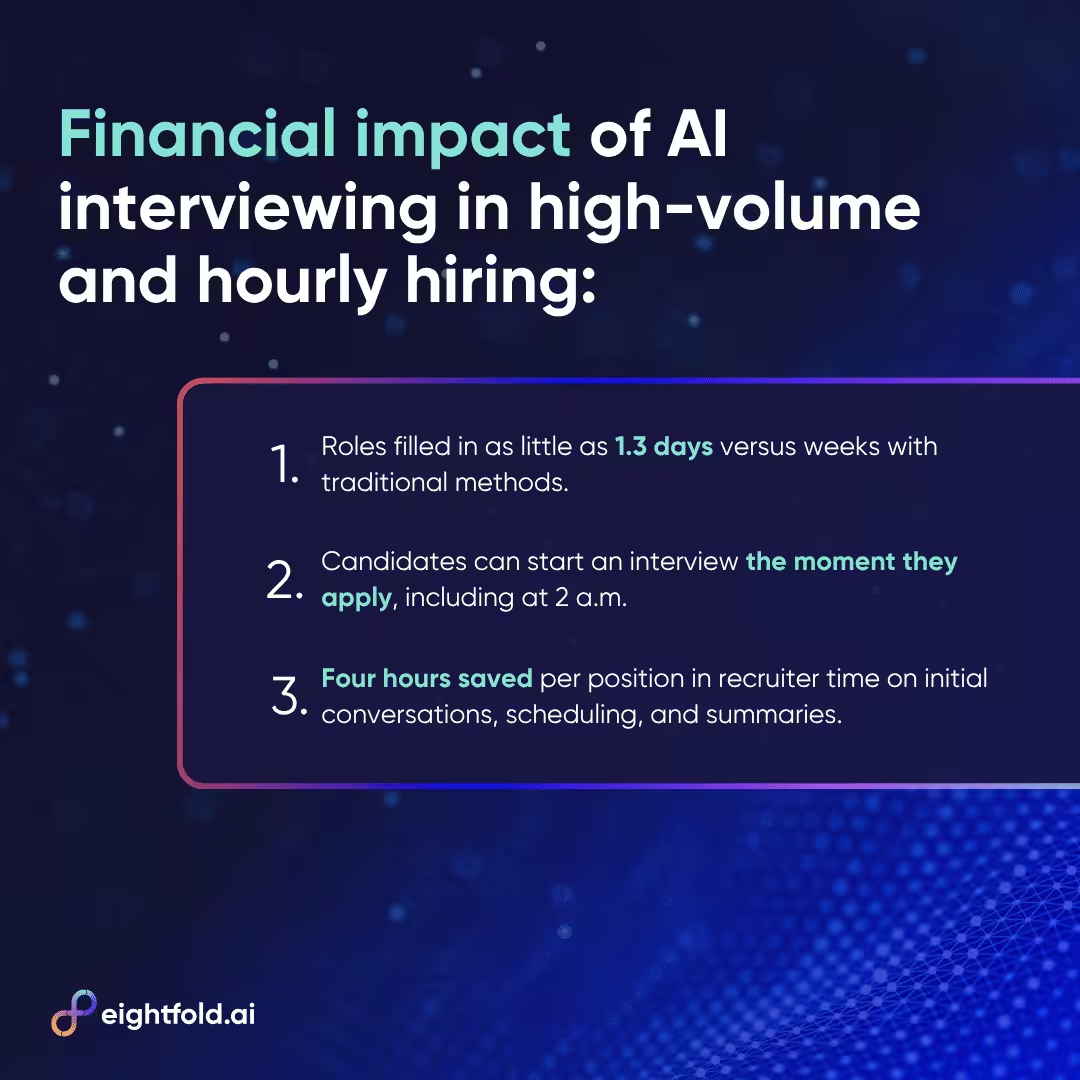
- Roles filled in as little as 1.3 days versus weeks with traditional methods.
- Candidates can start an interview the moment they apply, including at 2 a.m.
- Four hours saved per position in recruiter time on initial conversations, scheduling, and summaries.
For enterprise operations teams hiring thousands of frontline, warehouse, retail, or service workers annually, these metrics translate into operational resilience — the ability to staff up for peak seasons without adding permanent recruiting head count or paying agency premiums.
How does AI interview assistant ROI compare to traditional enterprise recruitment costs?
Traditional enterprise recruitment carries significant hidden costs that rarely appear on a single line item:
- Agency fees: Typically 15–25% of first-year salary for placed candidates.
- Recruiter time: Enterprise recruiters average 6–9 hours of administrative work per hire in scheduling, phone screens, and debrief documentation.
- Vacancy drag: Open roles cost organizations an average of 50% of daily salary equivalent in lost productivity per day.
- Inconsistent screening: Unstructured interviews correlate poorly with job performance, leading to higher mis-hire rates and associated replacement costs.
AI interview assistants compress or eliminate each of these cost categories simultaneously. The platform cost is a single, predictable line item. The savings are distributed across recruiter efficiency, vacancy reduction, and quality improvement — all measurable.

Key enterprise questions about AI interview assistant ROI and recruiter impact
Will this replace our recruiters? No. AI Interviewer handles the initial screening and evaluation layer. Recruiters review scored summaries, make decisions, and lead offer conversations. The platform empowers recruiting teams to handle more hires with the same head count — it doesn’t replace the human judgment that closes great candidates.
How does it handle compliance and bias? AI Interviewer evaluates only demonstrated skills and responses — never visual appearance, accent, or emotional expression. It applies consistent, role-specific criteria to every candidate. Enterprise teams get auditability and visibility into evaluation logic for compliance purposes.
What does implementation actually look like? AI Interviewer is designed for 1–2 week activation. It integrates with existing ATS systems and does not require a workflow rebuild. The deployment is high impact and light lift by design.
Can it handle our scale? AI Interviewer has conducted more than one million interviews in a single hour. It operates 24/7 in 22+ languages. It scales elastically to match hiring surges without adding head count or cost per additional interview.