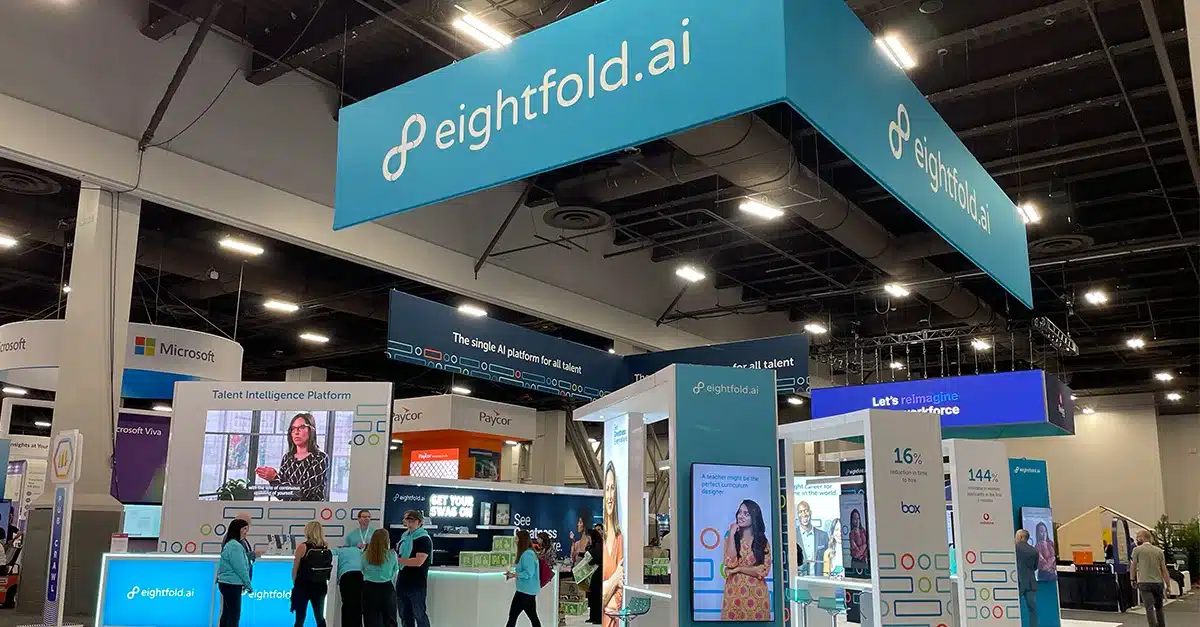


We’re living through one of the most consequential shifts the workplace has seen in decades, and the gravity of this moment was palpable at Cultivate ’25.
As I sat with peers across industries, I felt a shared undercurrent. Excitement, yes, but also uncertainty, humility, and urgency.
The AI era isn’t just arriving. It’s already reshaping the nature of work, including roles and employee expectations.
As CHROs, we have a choice to cautiously follow the wave or to shape it.
The conversation at our executive roundtable at Cultivate made one thing clear — the path forward is ours to define.
Here are three key takeaways I’m still reflecting on.

In addition to attending our executive roundtable, I hosted a fireside chat on how leaders are shifting their organizations toward a more agentic working model at Cultivate ’25. You can watch sessions on demand now.
1. Adoption starts with mindset, not just technology
Nearly every leader shared the same early challenge: low adoption, even when the tools were available.
What changed the equation? Not more tech. A mindset shift.
Some organizations introduced internal campaigns focused on AI fluency, like “AI Night” sprints that combined mindset, skill set, and tool set in short bursts.
Others launched pilots using AI assistants not to replace employees, but to enable them, like digital twins that offer coaching or copilots that help write performance reviews based on input data.
Adoption didn’t follow solely from training. It followed from leadership vulnerability. When executives shared how they personally used gen AI, and even what didn’t work, it gave their teams permission to experiment and grow.
One colleague perfectly summarized it: “If your manager is using generative AI, you are five times more likely to adopt it.”
As HR leaders, we have to lead the shift from fear to fluency, not just with programs but by example.
Related content: Learn more about where Eightfold is headed over the next year in this recap of our roadmap with Chief Product Officer Sachit Kamat.
2. We can’t build tomorrow’s workforce using yesterday’s playbook
If there was one theme that generated the most conversation, it was the changing shape of the workforce.
Roles are evolving faster than traditional systems can keep up. Skills are being outdated in months, not years. Functional expertise is no longer the only, or even primary, qualifier for success.
Skills that require greater emotional intelligence, like adaptability, analytical thinking, and resilience, came up again and again. But there was also a candid reckoning: we are not yet ready for the scale of transformation AI will demand.
Some asked hard questions about the role of HR business partners in an age when any leader can prompt AI for coaching frameworks. Others asked what “entry-level” means when automation handles most junior tasks.
Many worried about the mismatch between what colleges are producing and what employers will actually need in the next three to five years. There’s an urgent need to reimagine learning pathways — not just for employees but in partnership with universities, communities, and even primary schools.
As one executive said, “We’ve lost a lot of talented potential because our systems weren’t built to find it. AI could help us open that door, but only if we rethink the way we build and assess skills.”
3. Trust will be the ultimate competitive advantage
Amid all the innovation and acceleration, the most resonant word was trust.
Whether it was conversations about AI ethics, performance evaluations, or data privacy, it was clear, trust isn’t a one-time checkbox. It’s the foundation that determines whether new technology will be embraced or rejected.
One participant put it bluntly: “We’ve spent years earning employee trust. One misstep with AI could undo that.”
To responsibly move forward, organizations are establishing AI governance councils, inviting legal and compliance leaders into the conversation early, and treating transparency as non-negotiable.
In some cases, HR teams are training employees on not just how to use AI but how to use it ethically. The goal isn’t to eliminate fear. It’s to replace fear with informed confidence.
A participant with a civil rights background shared an insight that when correctly built and applied, AI has the promise to reduce bias and discrimination. But that’s only possible if we hold ourselves to the highest standards, whether regulations require it or not.

This is our moment
HR has always been about people, potential, and progress. We have the opportunity to lead in ways we haven’t before — to shape the future of work at the speed it’s being created. That requires humility, courage, and a bias for action.
So let’s get our hands dirty. Let’s try the technology. Let’s ask the hard questions and help our organizations ask better ones. Let’s model the change we want to see.
Because if HR doesn’t lead this moment, who will?
Missed Cultivate? Find sessions available to watch on demand.
Meghna Punhani is Eightfold AI’s Chief People Officer.