
- AI is driving transformation in recruiting, making it a powerful tool for HR leaders.
- Stakeholder buy-in and feedback is essential to effectively implement and scale AI.
- HR leaders must stay informed about regulations and develop comprehensive policies to navigate ethical and compliance challenges.
For HR teams ready to win the battle for top talent, jumping in and trying AI is the first step to getting there.
For recruiters looking to deploy AI in their HR tech stacks, they should keep in mind that it can help with three areas right away: solving for specific use cases, testing and iterating, and transparency.
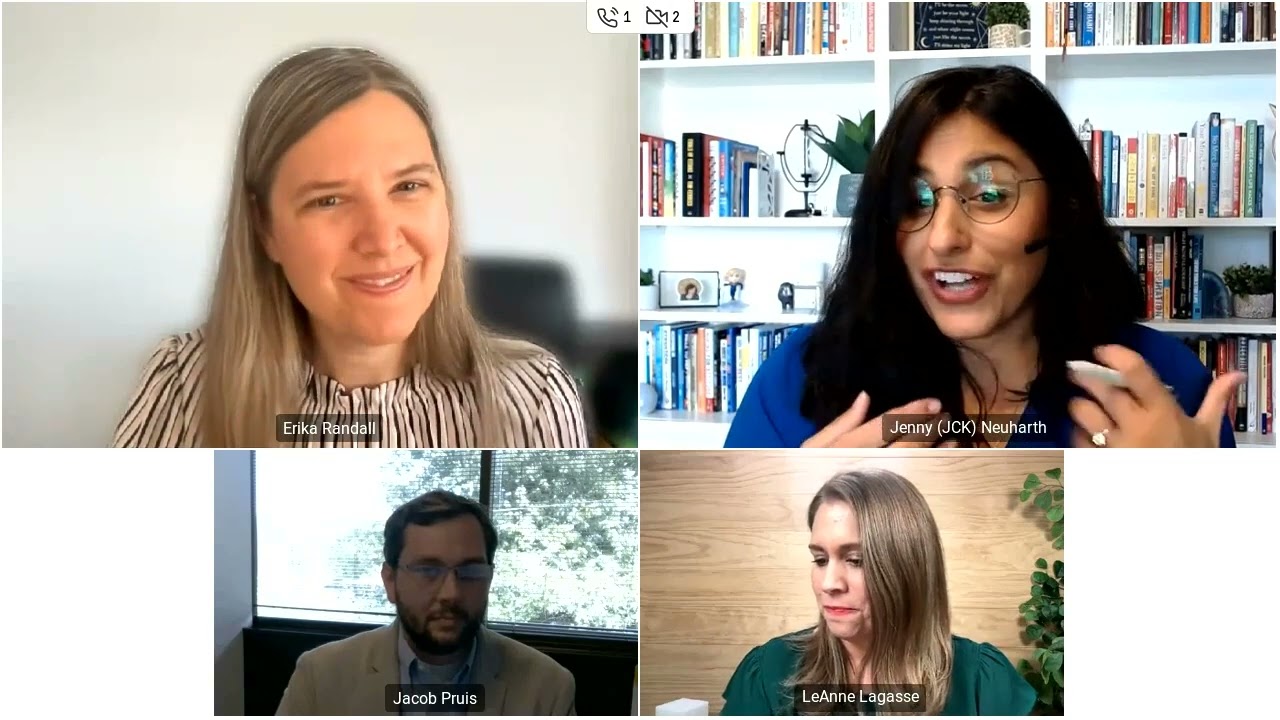
During HR Daily Advisor’s HR Technology Week 2024, I recently joined a panel with Jacob Prius, Director of Compliance at BCforward, a global IT consulting firm, and LeAnne Lagasse, HR Consultant, Trainer, and Speaker, to talk about how AI is used in recruiting.
Here are a few highlights from our conversation about automation and what it brings to personalize work experiences for employees, while staying compliant with employment laws.
Related: Jenny Cotie Kangas, Director of Talent-centered Transformation at Eightfold, joins this panel discussion on how to build your best workforce with AI.
AI helps recruiters prepare for change — and more change
Unlike some HR point solutions, AI in your HR tech stack is not a one-and-done project. It’s always evolving.
To make the most of AI in recruiting, HR leaders should approach it as a critical component of their broader recruiting strategy.
The HR teams that see the greatest success with AI start with a specific challenge to address, then look at their organization’s overall goals to align. It’s about iteration and continuous improvement.
“It’s best to identify specific challenges like reducing time to hire, improving candidate quality, or enhancing diversity, and then tailor AI to address them,” Prius said. “The tools available like predictive analytics, automated résumé screening, and others enable organizations to start small and then broaden out with the insight you learn along the way.”
Create, test, iterate — keep candidate experiences in mind
Don’t make assumptions about what candidates, hiring managers, or recruiters need in the way of design. To determine what’s working and what isn’t, feedback is needed from a cross-section of people inside and outside the organization.
“I’ve seen leaders assume that everybody is going to be as pumped up about AI as they are,” Lagasse said. “There are people who are still skeptical about it. They’re anxious about how their data is being used, or maybe they feel weird interacting with a chatbot. We have to lean in and listen to the feedback of the candidates, recruiters, and other users.”
To illustrate how important open communication is I shared an example of when I introduced a conversational AI product to enhance recruiting in the beauty salon industry. We presented the features to the franchise owners, and they were certain that their candidates and hiring managers were not interested in chatting with an AI bot.
However, when we spoke with actual applicants, they preferred to chat with a bot over a person. They liked the ease of accessibility and always-on availability to ask questions at their convenience, which added value to their recruiting experience.
At times, we hold initial design biases that “X” is going to work or not work, but we need to remember we’re creating better experiences for candidates and need to be sure our HR technical solutions work for them.
Related: Questions about AI and compliance? Visit our guide to Responsible AI for answers.
Keep compliance top of mind
Typically, governance, compliance, and regulations are viewed as roadblocks — rules we have to follow to get to the next step.
The landscape around regulations is ever-evolving and takes vigilance. Adopt a student mentality and ask tons of questions like how do we make sure we’re not inadvertently creating bias in our hiring process?
Historically, if you’ve never addressed handling potential bias or you’re not seeing the diversity results you’d like with your current HR tech stack, it might be time for a more integrated, global view of talent and skills that AI can provide. AI can also help identify areas where bias might exist in your recruiting and hiring processes.
Prius shared that the Equal Employment Opportunity Council (EEOC) published guidance on use of AI in HR. While it may get a bit technical, it’s worth a review.
“I think another thing to consider is understanding how the organization is going to use AI, then developing a policy,” Prius said. “It’s not good enough to just develop a policy. It’s important to train users on it, and enforce the policies as well.”
To get compliance right, ask: Who can we learn from? Who might have free resources?
It’s especially important to ask any HR tech vendor about how their product or solution complies with regulations. A reputable company should be willing to easily provide that information to you.

Ensuring a high adoption rate of AI-powered HR tech
At my first HR speaking engagement, I talked about disruptive HR. I wanted people to walk away knowing that blueprints don’t sell cars.
While blueprints are helpful in explaining the design and architecture, ultimately, they don’t move adoption. People need to clearly see and understand the benefits of said solution before they will buy into it.
In HR, we tend to lead with a blueprint instead of what’s in it for them. When we talk about AI for recruiting, we need to remember how it’s going to impact everyone’s experiences: candidate, hiring manager, and recruiter.
“Any organization should hopefully go through an audit of the candidate and recruiter processes to figure out the journey of the individual and how it spans workflows. What are all the tasks that have to happen for the ball to move along?” Legasse said. “It’s listening, it’s analyzing, it’s building a robust journey, and then iterating. Because things are going to change based on the feedback that you’re getting.”
The use of AI in workplaces still holds many unanswered questions for employees. There is a lot of focus and chatter about how AI might replace people in some roles. Organizations need to address worker concerns about AI when introducing the new technology into the workplace.
“It’s important when we’re adopting AI to make sure that we’re messaging it correctly, and that it’s not designed to replace anybody,” Prius said. “AI is designed to augment current human capabilities, make people more efficient and productive, so humans can be more innovative in their work. The message should be that AI is going to take over some of those repetitive tasks, and you’ll allow employees to dive into the fun stuff of everyday work.”
All told, AI is a powerful tool for HR to use in recruiting, one that can create faster, stronger connections with top talent, encourage diversity and mitigate bias, and automate time-consuming administrative tasks. Deploying and scaling it responsibly should be mission critical for every talent acquisition team.
Watch the full panel discussion, Finding your best workforce with AI, on demand now.

Jenny Cotie Kangas is a Director on our Talent-centered Transformation team. She is a former TA and HR leader turned HR tech strategist, known for tackling the toughest challenges in talent transformation. She regularly speaks on AI, HR tech, and strategy, with a unique talent for engaging with customers and fostering conversations that transform challenges into opportunities.