

- Transformation has become a continuous state rather than a one-time project, yet most initiatives fail because ingrained cultural patterns reproduce the status quo no matter how sophisticated the technology.
- Our partnership with HRpepper demonstrates that sustainable change requires balancing AI-powered talent intelligence with human-centered strategy rooted in organizational psychology.
- As HR leaders, you must undergo your own transformation to become a strategic driver of business change, using data-driven insights to make compelling cases for investments that deliver real business outcomes, not just technical capabilities.
In business today, we all face unprecedented pressure to transform while keeping the business running. Digital disruption, shifting market dynamics, and evolving workforce expectations mean that transformation is no longer a discrete project with a clear beginning and end. Instead, it has become the new status quo — a continuous state of adaptation and evolution that you must navigate while maintaining operational excellence.
Yet despite this constant push for change, many transformation initiatives fall short.
Organizations launch multiple initiatives in parallel, often without a long-term, holistic view of how these efforts interconnect or support broader strategic goals. Changes that look promising on paper fail to develop their full effect in practice.
Perhaps most critically, ingrained cultural and leadership patterns have a way of reproducing the status quo, no matter how much energy is poured into change management programs. The result is transformation fatigue without transformation results.
At the heart of this challenge lies a fundamental question: How can you apply technology — particularly artificial intelligence — to drive meaningful change without losing the human element that makes transformation stick?
The answer requires finding a delicate balance between human-centric strategies and technological solutions. It’s a balance that our partnership with HRpepper is uniquely positioned to strike.
By combining strategic HR and change expertise with AI-native talent intelligence, this collaboration offers a pathway to sustainable, effective transformation that honors both the power of technology and the irreplaceable value of human insight.

The dual transformation: Business and HR
True organizational transformation doesn’t happen in isolation. It requires evolution on multiple fronts simultaneously. For you in HR, this means embracing a fundamentally new role.
Driving corporate transformation
You must move beyond your traditional HR administrative functions to become a strategic shaper of change and a driver of corporate transformation. In practice, this means your team is identifying transformation needs within your organization before these become crises; deriving implications for workforce changes and personnel strategies; and providing consultation and support as your business realigns for new realities.
“In an era of constant change, HR is one of the most critical drivers of business transformation and sustainable growth,” said Patrick Amm, Principal Consultant at HRpepper. “We believe the ability to align people, culture, and capabilities with business strategy will define whether companies thrive or fall behind. That’s why HR must lead transformation, not just enable it.”
This shift positions you at the table where critical business decisions are made, contributing insights about organizational capability, workforce readiness, and the human factors that will determine whether strategic initiatives succeed or fail.
From processes to impact: the new role of HR
To effectively drive business transformation, the HR function must first transform itself. This internal evolution requires you to become more data-driven while remaining deeply people-centered — a combination that may seem paradoxical but is essential for modern HR effectiveness.
This transformation is a strategic necessity in response to the growing pressures on organizations: talent shortages, rapid advances in AI, and the increasing demand for speed and personalization.
Traditional HR operating models built around static roles, fixed processes, and legacy systems are no longer sufficient. You must move from being a service provider to becoming a strategic partner: from managing jobs to orchestrating skills, from enforcing processes to designing experiences, and from administrative execution to business impact.
This transformation will create a foundation for supporting broader organizational change. When you demonstrate HR’s ability to evolve, you gain credibility as a partner in guiding enterprise-wide transformation.
Technology as enabler, not silver bullet
The business world is awash in conversations about AI and technology. Every conference agenda and thought leadership article seems to promise that the right technology stack will unlock unprecedented organizational performance. But this focus on tools can obscure a fundamental truth: technology alone cannot change an organization.
Technology’s full potential is only realized when it’s paired with a holistic organizational transformation that rethinks ways of working based on a future-oriented workforce strategy. Without these elements, even the most sophisticated platforms become expensive investments that fail to deliver.
The promise of talent intelligence
This is where talent intelligence enters the picture. Talent intelligence represents a strategic approach to workforce transformation based on skills rather than traditional job architectures.
AI-native platforms, like ours, provide you with dynamic, real-time insights into your workforce capabilities, enabling you to make more informed decisions about talent development, deployment, and acquisition.
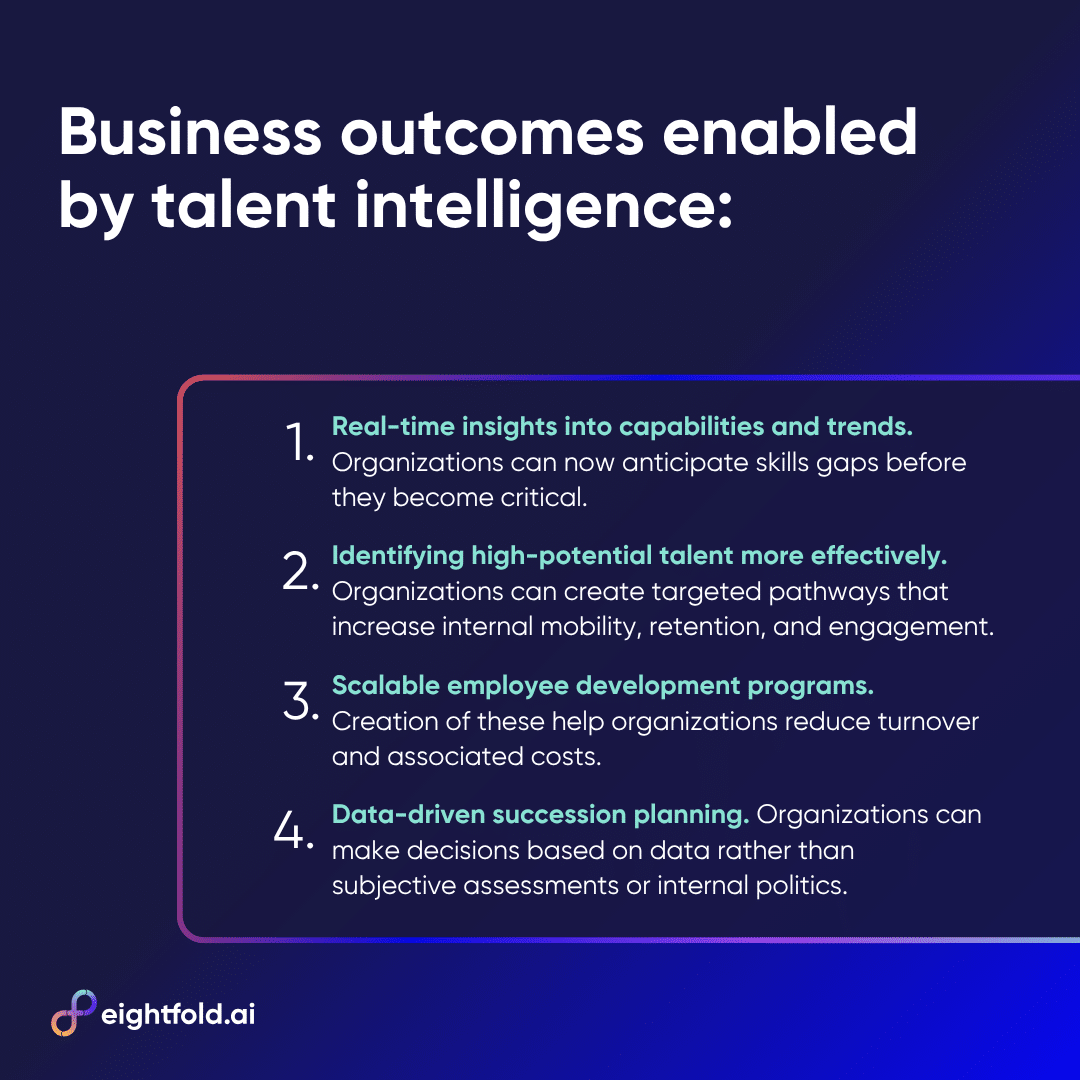
It’s not about tools — this is about shaping the workforce of the future. The business outcomes enabled by this technology are substantial:
- Gain real-time insights into your capabilities and industry trends, allowing you to anticipate skill gaps before these become critical.
- Identify high-potential talent more effectively, creating targeted pathways for growth that increase internal mobility, retention, and engagement.
- Create more scalable employee development programs, reducing turnover and associated costs.
- Succession planning becomes genuinely data-driven rather than relying on subjective assessments or organizational politics.
These outcomes aren’t automatic. These require thoughtful implementation, clear strategy, and an understanding of how technology fits into the broader human system of the organization.
Strategy meets technology
Our partnership with HRpepper brings together two critical capabilities: strategic HR and change expertise grounded in organizational psychology and advanced AI-native talent intelligence. This combination creates value that neither could achieve alone.
A people-centered approach to AI
HRpepper’s distinctive approach combines business acumen with transformation expertise and psychological insight, ensuring that transformation initiatives are effective and sustainable. Technology can provide the data and the infrastructure, but human expertise is required to ensure that change takes root in daily practice.

To guide this process, HRpepper applies “Human Business Design” — a holistic organizational transformation framework that aligns structures, processes, culture and capabilities on a shared strategic vision. This systemic approach ensures that technologies, like our platform, are implemented with a full understanding of organizational dynamics and human experience. The result: transformation initiatives that are not only technically sound but also embraced by the people who bring them to life.
Making the business case
For C-suite stakeholders outside HR — CEOs, CIOs, and board members — this integrated approach addresses a critical challenge. Too often, HR transformation initiatives are framed around technical specifications and HR processes rather than business outcomes.
This partnership enables you as an HR leader to reframe the conversation around growth, efficiency, competitive advantage, and organizational resilience.
“We help HR leaders shift the narrative from explaining features to demonstrating business value,” Amm said. “When HR can link transformation initiatives to outcomes like competitive advantage, revenue growth, workforce agility, and organizational resilience, it becomes a strategic force that earns executive support to drive real change.”
When technology investments are positioned within a clear strategic framework that connects directly to business priorities, they become easier to justify and more likely to receive the sustained support necessary for success.
Sustainable and effective change
Sustainable, effective transformation happens when technological innovation is embedded within a broader, human-centered and business-driven strategy. Technology serves as the indispensable enabler, providing capabilities that would be impossible to manually achieve.
From real-time skill visibility to predictive talent insights — the full potential of technologies like AI-native talent intelligence platforms is only realized when paired with a strategic framework that aligns people, structure, and culture.
The future of work will be shaped by organizations that can master this balance — using AI and talent intelligence to unlock new possibilities while transforming the structures, capabilities, and cultural foundations needed to make innovation stick.
Our partnership with HRpepper is a model for how this balance can be achieved in practice, creating a transformation that is technologically sophisticated and deeply human.
As you consider your organization’s transformation journey, ask: Are we treating technology as a solution unto itself, or are we integrating it into a broader strategy that honors both human potential and technological capability? The answer to that question may determine whether your next transformation initiative joins the ranks of successful change or becomes another cautionary tale.
Get started by downloading our newly refreshed ultimate buyer’s guide for an agentic talent platform.