

- Talent leaders embracing change and AI are already seeing the benefits of transformation.
- AI-native talent intelligence gives employees greater control in discovering new opportunities — like upskilling and reskilling — and making progress in their careers.
- Success with AI requires good data, clear goals, and solid communication.
Pull at the thread of HR, and you’ll be surprised at the number of growing challenges in today’s workforce: Gen Z workers outnumbering boomers, geopolitical conflicts, economic growth challenges, and more. But the biggest thread of all is AI.
Stacia Garr, Co-founder and Principal Analyst at RedThread Research, works to unravel these “megathreads” and help HR navigate the business landscape. To explore how talent teams are adopting and using AI, Garr interviewed two leaders at the forefront of AI transformation: Amber Grewal, BCG Chief Talent Officer, and Jaime Nielsen, Trimble Chief People Officer.
Here, we’ll share the top insights from their conversation, including the top challenges they face, and how AI is helping them address talent shortages.
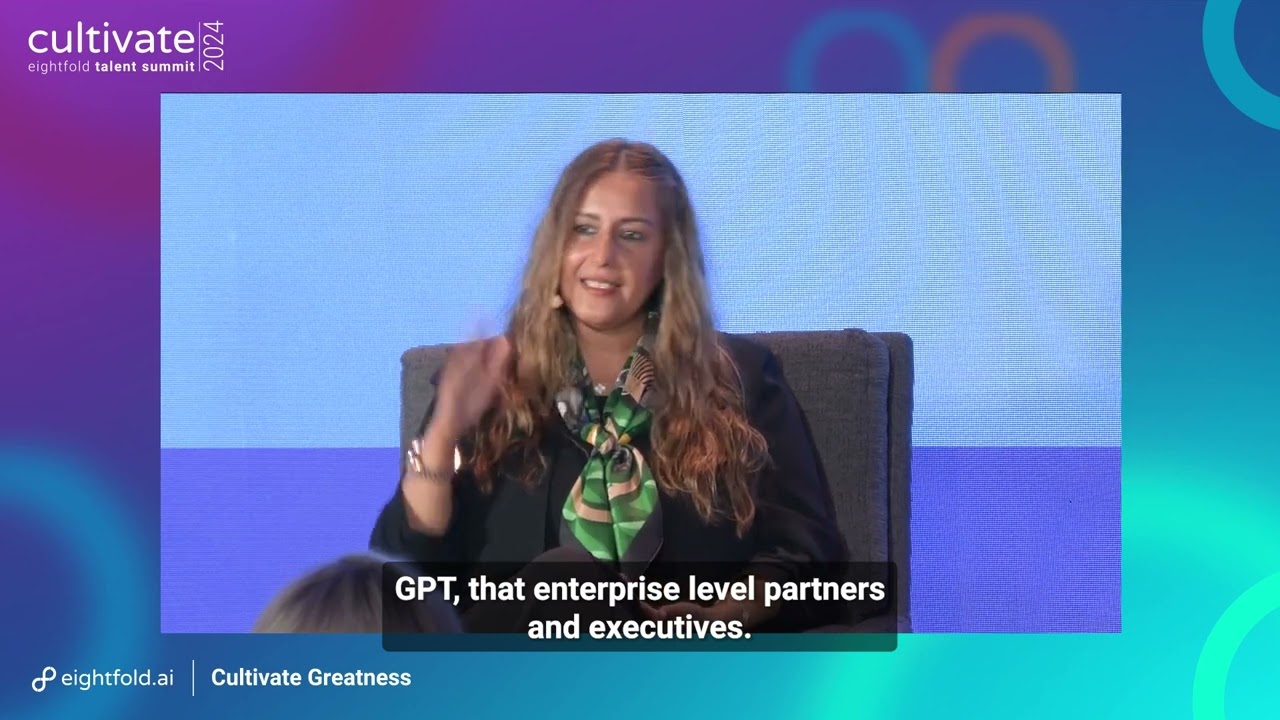
Related content: BCG’s Amber Grewal explains how important AI is to the global consulting firm.
Embrace change, embrace AI
Global consulting firm BCG advises organizations worldwide on how to make strategic transformations, but the firm also faces the challenge of navigating constant change too.
Grewal said her organization’s biggest challenges include “dealing with [that] change, with people, technology, the advancement of technology, and being able to respond to employees in a much faster way.”
“We [also] don’t have enough talent,” she said. “We are dealing with that challenge: how do we continue to find talent when we’re at a 15-year low in skills? [Our top priority is] continuing to make sure that we can find the talent, retain the talent, motivate that talent, and continue to evolve our culture.”
To help, Grewal and her team use AI.
Trimble, a global software company with 13,000 employees, faces similar challenges.
“The pace at which technology is continuing to advance is like nothing we’ve ever seen before,” Nielsen said. “When we look at our employees and the skill sets needed five years ago, it was easy to predict the skills that were going to be needed for the future. It’s a lot harder now because the pace and change of technology is happening so incredibly fast.”
They’re finding that, along with BCG, that the impetus for a lot of this radical change — AI — is also part of the solution.
Related content:
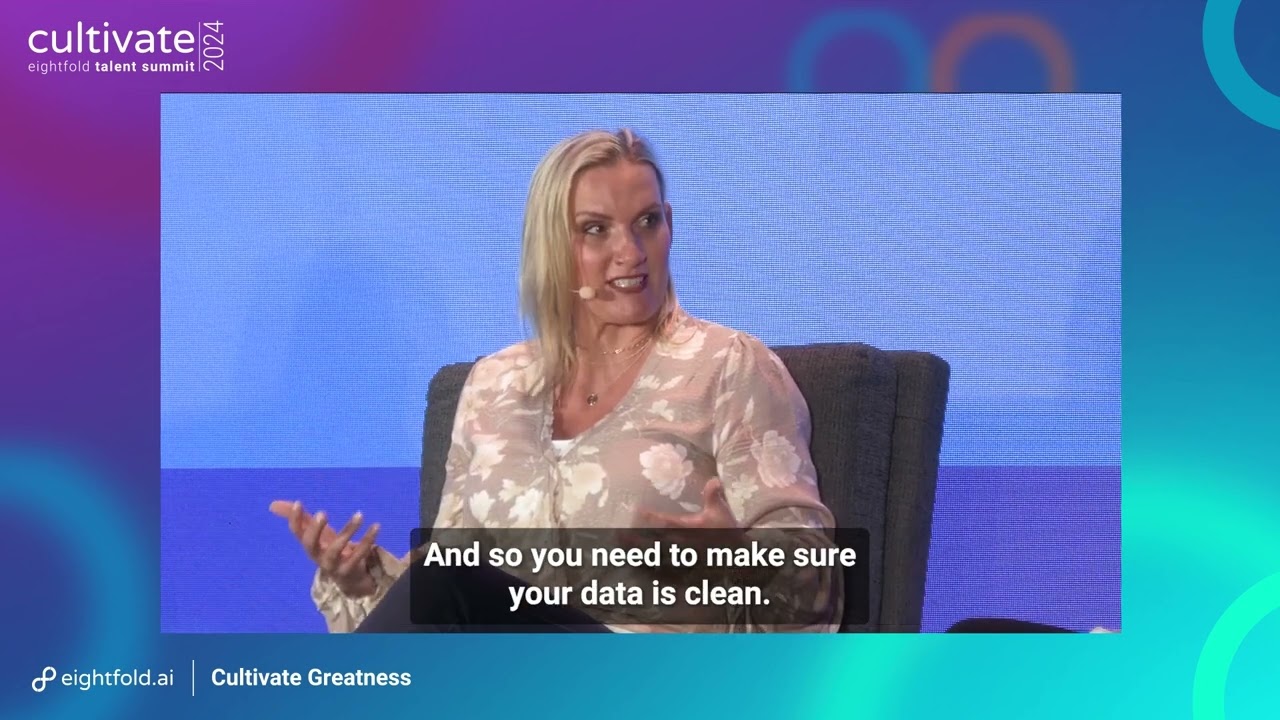
See Trimble’s Jaime Nielsen talk about their journey with data.
Overcoming skills gaps with AI
BCG and Trimble are approaching the widespread talent shortage with a two-pronged approach: AI-powered talent development paired with strategic recruiting.
For Grewal, that meant giving employees greater autonomy over their careers. “If someone has a passion to be in climate and sustainability versus generative AI, they can choose that,” she said. “They can clearly look at, ‘OK, if I’m a consultant today and I want to be a principal, how do I get there?’ … So really doubling down on [making] learning and development more personalized in these career pathways.”
Nielsen has a similar approach at Trimble: “Employees didn’t know how to navigate their career within our organization,” she said. “By using [Eightfold] and focusing on internal mobility, we were able to increase internal mobility from less than 20% in 2021 up to almost 30% now.”
Of course, you still need to recruit to find some skills. These organizations are using AI to identify urgent skill needs and find new ways to develop them.
BCG developed a curriculum for high school students that taught them what a career in management consulting could look like. It also built skills around GenAI, design thinking, and strategic consulting. To date, they’ve had more than half a million students go through their free course.
Trimble is also partnering with schools and colleges to better attract workers for their software solutions designed around construction, transportation, and natural resources.
Building trust through buy-in
“There’s a lot of fear with AI, especially the unknown,” Nielsen said. And it’s true. According to a survey from CNBC, a quarter of workers fear that AI will make their jobs obsolete.
Given those concerns, how can organizational leaders encourage widespread adoption?
“You have to start building trust and showing employees how it will work to their benefit,” Nielsen said. “[Show them] the proof points: increased mobility and their ability to have that transparency and visibility into how their career path works.”
Because of BCG’s culture, adoption was almost a given. “We’re very fortunate that our culture is a culture of learning and innovation,” Grewal said. “Our talent expects [AI adoption]. It’s part of our value proposition that we have to constantly be on the cutting edge.”
Not only did BCG’s culture facilitate implementation and experimentation, but its leadership also had clear messaging from the start. “We’ve had the message of: what does GenAI mean to me as an individual, what does it mean to my team, and then what does it mean as part of a systematic organization change?”
Armed with those clear insights and powered by a bold culture, BCG’s employees were eager to adopt and use AI. To date, they’ve in turn supported over 300 clients in their GenAI journeys, with 20% of their revenue already in GenAI, and they expect that to double in the next two years.

You need data to start
Every journey must start somewhere, and successful AI journeys begin with having the right data.
“The journey that we’ve been on around data is really around ensuring data integrity,” Nielsen said. “Garbage in, garbage out. No matter how smart generative AI is, if you don’t have good data, you’re not going to get good output.
“We’ve been working with our technology teams, analytic teams, and end users around the importance of that quality,” Nielsen continued. “For people to trust and adopt [AI], they have to know that they’re getting good information to make those right decisions.”
For BCG, the nature of being an innovative company full of self-starters made data quality more difficult. Employees were using shadow technologies. Data was scattered across dozens of disparate systems, requiring BCG to embark on a long journey to create a single source of truth.
“Eightfold has been a great partner [for] building this capability for us,” Grewal said. “This is the first time we’re going to be on one platform … but it started with setting that foundation and rethinking our tech stack.”
While it took BCG’s team considerable time and effort to consolidate their enterprise data, Nielsen added that it isn’t totally necessary to have all your data ducks in a row.
“Because the technology is growing so fast and it’s so smart, if you’re not already on your journey, you don’t need to be,” she said. “You can have technology work in your favor and go to the disparate systems … but you certainly need to have a data strategy to ensure you’re on the right journey.”
Clear goals = successful adoption
Getting started can feel overwhelming, but taking that first step is the most important part of the process. Be clear on your scope and purpose. Then you can ask questions like, is your goal to build out a skills strategy? Or do you need to work on your internal mobility?
By gaining that clarity, you can pursue your goals by acquiring the right technologies, processes, and people.
Nielsen encouraged CHROs wary of using AI to lean in.
“This is the opportunity for us to really think about processes, re-engineering our business model, and aligning it to a very human-centric experience,” Grewal added. “GenAI is a game changer, and I’m excited about it because it’s here to augment.”
Watch the full session, on demand now: “Advancing your HR strategy: How to embrace executive priorities with AI.”