

There’s a moment every recruiter knows. A candidate applies, clears the initial screen, and looks like exactly the kind of person you’ve been trying to find.
They’re qualified, they’re motivated, and they send a polite follow-up email 48 hours later. Then another. Then nothing — because by the time your team gets back to them, they’ve already accepted something else.
This isn’t a failure of effort. It’s a failure of architecture.
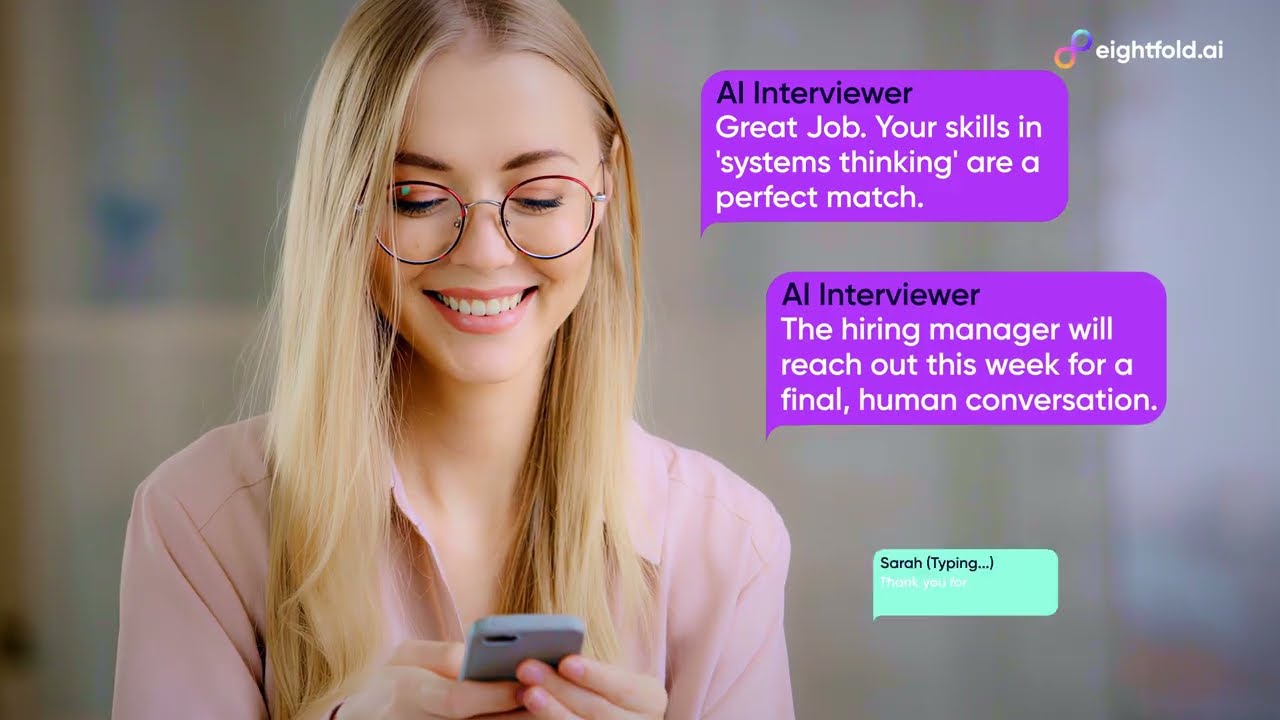
Stop ghosting candidates, and start interviewing them at speed with AI Interviewer.
The ghost problem is actually a speed problem
“I never have to worry about being ghosted again.” That’s how one candidate described her experience with our AI Interviewer — and it’s worth sitting with that sentence for a moment, because it says something uncomfortable about how hiring actually works today.
Ghosting has become so common in recruiting that candidates now expect it.
They apply, they wait, and they hedge their bets by pursuing five other opportunities simultaneously. When your team finally reaches them, whether that’s three days or three weeks later, the window has narrowed or closed entirely.
The best candidates, almost by definition, move the fastest.
This creates a paradox that CHROs feel but rarely name directly: your talent scarcity problem isn’t only a pipeline problem. It’s a speed and experience problem. The market is competitive, yes, but organizations are also losing candidates they already had by failing to respond with the urgency those candidates deserve.
The organizations that solve this first won’t just hire faster — they’ll hire better, because they’ll be selecting from the full pool rather than the fraction who were patient enough to wait.

What human-scale hiring was designed for
The modern recruiting process was engineered for a different era. It assumed humans were the sole executors of every step: sourcing, screening, scheduling, interviewing, coordinating feedback, extending offers. Each handoff added latency. Each latency created a window for attrition.
Software helped, but only at the margins.
Applicant tracking systems digitized the form without changing the work. They gave recruiters faster tools without reducing the cognitive load or the coordination overhead. The recruiter still had to move things manually from one box to the next.
McKinsey estimates that two-thirds of current HR tasks, such as aspects of recruiting, are automatable. Yet, the average time-to-hire at enterprise organizations still runs well past a month.
Meanwhile, a candidate who applies on Monday and hears nothing by Friday is already updating their résumé elsewhere.
This is the Human Scale ceiling. It’s not about the talent or dedication of your recruiting team — it’s about the physics of a process designed around finite human bandwidth.
And in an era where AI-native competitors can spin up what amounts to a factory of digital interviewers on demand, organizations still operating within those confines are running a race with a fundamental structural disadvantage.

Augmenting responsiveness, not replacing relationships
Here’s where CHROs often get cautious — and reasonably so. The instinct is to ask: if AI is doing the interviews, what happens to the human relationship? Doesn’t hiring require judgment, empathy, nuance? Aren’t we risking something important by automating this?
These are the right questions, and they point toward the right framing. AI Interviewer isn’t replacing human judgment — it’s replacing the waiting.
Think about what actually constrains your recruiters right now.
They’re not spending the bulk of their time on the work that requires a human soul: persuading a reluctant finalist, building a relationship with a passive candidate, making the nuanced call between two equally qualified people.
They’re spending it on coordination. On scheduling. On the mechanical back-and-forth of moving a candidate from one stage to the next. On screening volume that should never require a human at all.
AI Interviewer takes the execution layer off their plate entirely. It conducts structured interviews autonomously, 24/7, in 28+ languages, at whatever scale the moment demands — whether that’s one candidate or one million. It also evaluates skills and capabilities, not how someone looks on a video call or the polish of their presentation style, which means it’s not just faster than human screening, it’s fairer.
What this liberates isn’t the process — it’s the recruiter. Freed from the loop of scheduling and screening, your team ascends to the work that actually requires them: strategy, judgment, persuasion, the deeply human work of closing a great candidate who has options. They become talent architects rather than talent administrators.
This is the shift from Human Scale to Agent Scale, and it’s the difference between a recruiting function that operates at the speed of the market and one that perpetually plays catch-up.

The candidate experience is a competitive advantage
There’s a downstream effect of slow hiring that doesn’t always make it onto the CHRO dashboard, but shows up everywhere else: employer brand erosion.
Every candidate who gets ghosted tells someone. Every qualified applicant who times out of your process and ends up at a competitor carries a story about your organization. In a tight labor market, the experience of applying to an organization is itself a data point that circulates through professional networks, review sites, and word of mouth.
AI Interviewer reframes this entirely. Candidates get an immediate, structured opportunity to demonstrate their capabilities — on their schedule, not yours. No waiting for a recruiter’s calendar to open. No chasing a response that may or may not come.
The process signals something important: this organization values your time.
That signal compounds. Businesses that are known for fast, fair, respectful hiring processes attract better candidates. They get referrals from strong employees who know the experience won’t embarrass them. They reduce the attrition that happens between offer and start date because candidates aren’t having second thoughts during a three-week silence.
The talent market doesn’t reward good intentions. It rewards responsiveness.
What the Infinite Workforce makes possible
The deeper shift here is architectural. Our AI Interviewer is the first digital worker in what we call the Infinite Workforce — a model where human beings focus on orchestration and strategy while AI agents handle execution at scale.
In talent acquisition specifically, that looks like this: humans own role strategy, hiring criteria, the candidate relationship, and the final decision.
AI Interviewer owns the process of getting the right people in front of the right humans, quickly, consistently, and at whatever volume the business requires. Hiring compresses from months to days. Recruiting teams become five times more productive — not because they’re working harder, but because they’re working on different things.
For forward-thinking CHROs, 2026 is the year this stops being theoretical. The organizations building the Infinite Workforce now are establishing a compounding advantage: faster hiring means faster time-to-revenue, better candidate experience means better talent pools, and better talent pools mean better business outcomes.
The alternative is to keep the current architecture where HR is asking a candidate to wait three days for a call back and hope the candidate is still available. Some will be. The best ones, increasingly, won’t.
Your next great hire is out there right now, deciding how long to wait. The organizations that solve for speed and experience will see them. The ones that don’t will wonder why their pipeline keeps running dry.
See how AI Interviewer works and what it could mean for your hiring pipeline.