

A classroom without a teacher isn’t just an open requisition. A hospital ward that’s short two nurses isn’t just a staffing gap. In education and public health, every unfilled position has a name attached to it on the other side — a student without a homeroom teacher, a patient waiting longer for care.
For the HR leaders and recruiters who staff schools, universities, hospitals, and health departments, hiring isn’t just an operational function. It’s a direct line to the people your organization exists to serve.
That’s a lot of pressure to carry into every hiring season. Principals need classrooms staffed before the first bell. Nursing directors need shifts covered before flu season peaks. And they need to do it while competing for talent against private-sector employers who often move faster and pay more.
AI interviewing has emerged as one of the more practical tools for closing that gap — helping public-serving organizations hire at the speed the moment demands without lowering the bar on quality.
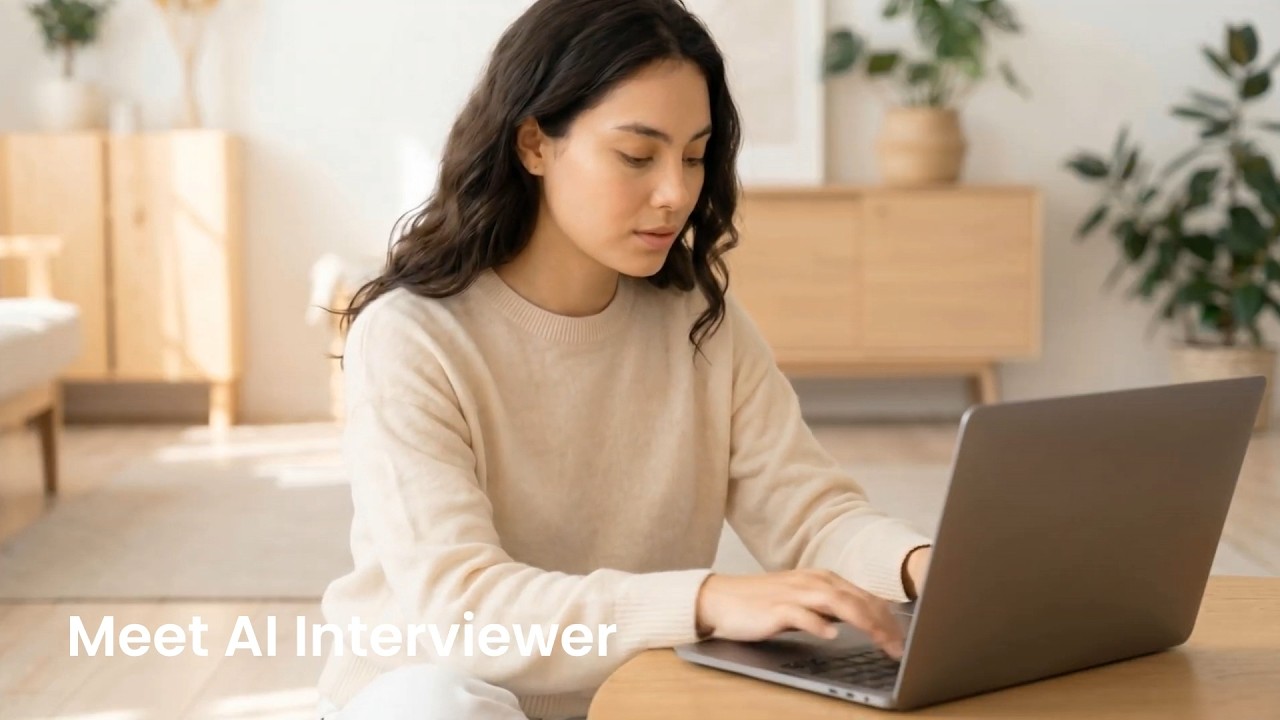
Meet AI Interviewer and see how it can provide your candidates a more consistent interview experience.
Why education and public health face similar hiring challenges
At first glance, a school district and a public hospital system don’t have much in common operationally, but look at their hiring calendars and buyer pressures, and the overlap is hard to miss.
Both sectors hire in intense, predictable waves. Schools staff up before the academic year starts and again mid-year when turnover hits. Health systems and health departments see surges tied to flu season, budget cycles, and public health events that can’t be scheduled around.
In both cases, the hiring window is short and the volume is high, which means screening — not just sourcing — becomes the bottleneck.
Both sectors are also competing for talent against employers who can simply move faster. A private clinic or a corporate training company doesn’t have the same procurement timelines, union processes, or budget cycles slowing down its hiring. Public-serving organizations are often playing the same talent market with fewer speed advantages.
And in both sectors, the cost of getting a hire wrong — or getting it too slowly — isn’t absorbed quietly inside the org chart. It shows up in a classroom, a clinic, or a call to a health hotline that goes unanswered.
That shared reality is what makes AI interviewing worth examining across both sectors together rather than as two unrelated use cases.

Public education: K-12 and higher education
Education hiring runs on a brutal seasonal clock. Districts and universities need positions filled before the semester starts, and there’s very little room to slide that date.
Complicating things further, the people who need to run interviews — principals, department chairs, deans — are often the busiest people in the building during exactly the weeks when hiring volume peaks. Asking them to personally screen every applicant on top of everything else they’re doing in August or January isn’t realistic, and it isn’t fair to them or to candidates.
At the same time, the applicant pool for many teaching and instructional roles has been shrinking in a number of regions, which means the candidates who do apply need to move through the process quickly before they accept something else.
This is where an AI interviewer earns its place in the workflow. Rather than replacing the human judgment that matters most in education hiring — does this person connect with students, do they fit the culture of this school — it handles the volume that sits in front of that judgment. It can screen a large batch of applicants during the exact weeks when hiring pressure is highest, asking every candidate the same set of role-specific questions and surfacing only the strongest matches for the human-led interview rounds where teaching ability and cultural fit actually get evaluated.
That takes real weight off principals and department heads during the busiest stretch of their year, and it means candidates hear back fast instead of waiting in silence while a stack of applications works its way through someone’s inbox.
Our AI Interviewer can be configured to screen specifically for the qualifications, certifications, and criteria that matter most for a given role — whether that’s a teaching license, a specific subject-matter background, or experience with a particular student population — so the screening stage does real work rather than just triaging resumes by keyword.
Additionally, our own data shows the scale this can unlock: a single posting can draw hundreds of applicants, and AI Interviewer works through the candidates a school invites and summarizes each one, so the people doing the hiring walk in with context instead of a backlog.

Public health and healthcare systems
Public hospitals and health departments are working from a harder starting position than most private systems: chronic understaffing, budget constraints, and a mandate to fill clinical and support roles fast, because every open shift is a direct capacity problem. And they’re often losing candidates to private hospitals and health systems that simply move through their hiring pipeline faster — sometimes extending an offer before the public-sector process has finished its first screening pass.
The screening stage is frequently where these systems lose people. A qualified candidate applies, then waits days for a callback while juggling other offers, and by the time someone reaches out, they’ve already accepted a position elsewhere.
An AI interviewer removes that delay by engaging candidates immediately. In practice, that can mean a candidate completes an interview the same day they apply, which keeps them engaged and in the pipeline during the exact window when they’re most likely to be shopping other offers too.
For roles where credentials aren’t optional — a nursing license, a specific certification, a background check requirement — our platform can be configured to screen for those qualifications directly inside the interview. Nothing critical gets missed at a stage where a missed credential could otherwise surface much later in the process.
This matters even more in regulated environments: AI Interviewer evaluates only what a candidate says — never facial expressions, tone of voice, or emotion — which is designed to support fairness and compliance with regulations like New York City’s Local Law 144, Illinois’ Biometric Information Privacy Act, and Maryland’s HB 1202. That evaluation approach, paired with built-in fraud-detection safeguards, helps public health employers document a consistent, defensible process.
The scale numbers here are relevant to public health specifically, since so much of this hiring is high-volume and shift-based. Early adopters of AI Interviewer have seen hiring cycles accelerate from roughly six weeks down to under a week, with the time it takes to get a candidate to their first interview compressed by as much as 90% — the kind of gap that, in a chronically short-staffed system, translates directly into shifts covered instead of shifts left open.
Closing the gap without cutting corners
In education and public health, a slow hire is never just an internal metric. It’s a class period covered by a substitute for a month longer than planned. It’s a unit running short-staffed through the worst weeks of flu season. The people affected by that delay aren’t inside the HR function — they’re the students and patients these organizations exist to serve.
AI interviewing doesn’t ask education and public health HR leaders to choose between speed and quality. It moves the volume — the initial screening that used to eat weeks and consume the time of your busiest people — to a layer that can run around the clock, evaluate every applicant with the same criteria, and hand your team a short list of genuinely qualified candidates instead of an unsorted stack of applications.
The humans in the room still make the final call. They just get to make it faster, with better information, and without losing good candidates to the private sector along the way.
If your team is heading into a hiring surge — a new academic year, a flu season staffing crunch, a budget-cycle hiring wave — it’s worth seeing what that screening layer looks like against your own open roles.
Request a demo of AI Interviewer to see how it can be configured for the credentials, certifications, and criteria your roles actually require.