

I’ve sat through a lot of AI conversations that felt like someone had fed a buzzword generator too much espresso. “Transformative.” “Paradigm-shifting.” “Game-changing.” And then…nothing changed. The coffee got cold and everyone went back to their inboxes.
When Martin Colyer and I recorded our webinar, Who Owns the Agentic Workforce?, we made a point to skip the hype and talk about what’s worth paying attention to: What is this agentic layer that everyone’s suddenly referencing? What does it mean for people strategy? And the question I care most about, what should leaders be doing differently starting now?
This is my attempt to distill the best of that conversation into something you can use.
Whether we’re ready or not, we’ve moved past “What is AI?”
The initial wave of AI excitement, the phase where organizations were either terrified or wildly optimistic (often on the same day), is largely behind us. What’s coming next is both messier and more interesting.
The agentic layer isn’t AI sitting passively in the background, quietly generating reports nobody reads. It’s AI that participates in executing work. It’s not just informing decisions. It acts on them.
For HR leaders, this changes the conversation entirely. The question stops being about what AI can do in theory and starts being about how work gets designed when some of it is done by systems that never sleep, never go on vacation, and never lose the thread of a 47-email chain.
The job title problem (Yes, we’re going there)
HR has spent decades organizing itself around job titles and static role descriptions. For a slower-moving world, that made sense. Right now, those labels are increasingly getting in the way.
If workforce decisions are still being made based on what someone is called rather than what they can do, there’s a significant blind spot in the room.
Skills-based thinking was supposed to fix this.
And to a degree, it has. It gave us a better language for work. More precise than titles. More flexible than roles. But here’s where things got stuck. Even the most sophisticated skills ontology is still, at its core, a set of descriptors. It tells you what might be true about a person or a role. It doesn’t, on its own, tell you how work actually gets done.
This is where AI changes the equation.
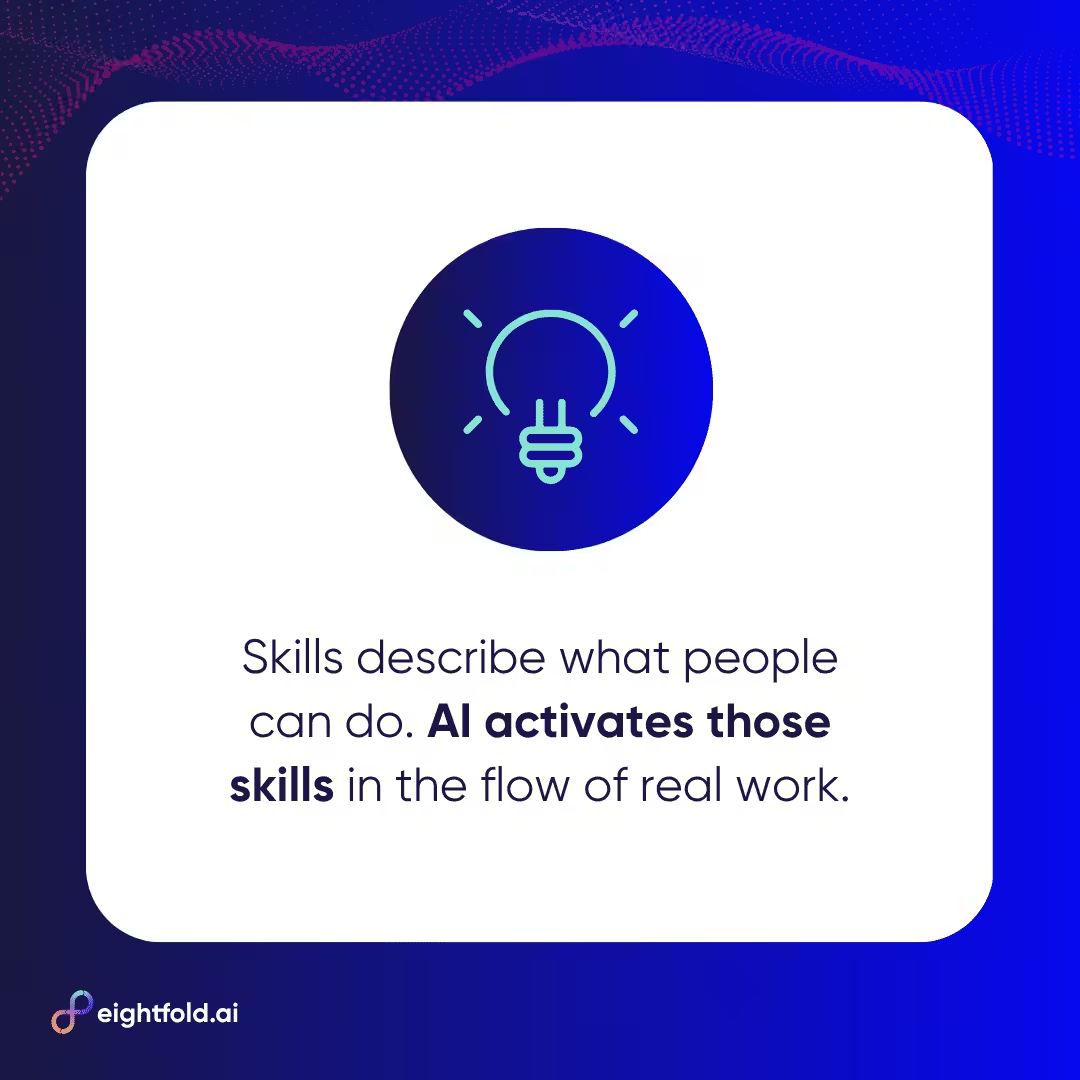
Agentic systems don’t just categorize skills. They activate them. They connect those descriptors to real tasks, real workflows, and real outcomes. They make skills usable in the flow of work rather than something that sits adjacent to it.
That’s the shift. Skills aren’t the end state. They’re the input layer. The raw material. AI is what turns them into something operational.
This means the goal isn’t building the perfect skills framework and hope the organization catches up. It’s to start using skills to redesign how work actually happens — where humans focus, where AI takes on execution, and how the two interact.
The practical advice: don’t try to boil the ocean. Pick one process that causes real friction. Map the skills involved. Then ask a different question: where could an AI agent use those skills to move the work forward? That’s where this becomes real.
The 10-80-10 framework: A better mental model for work
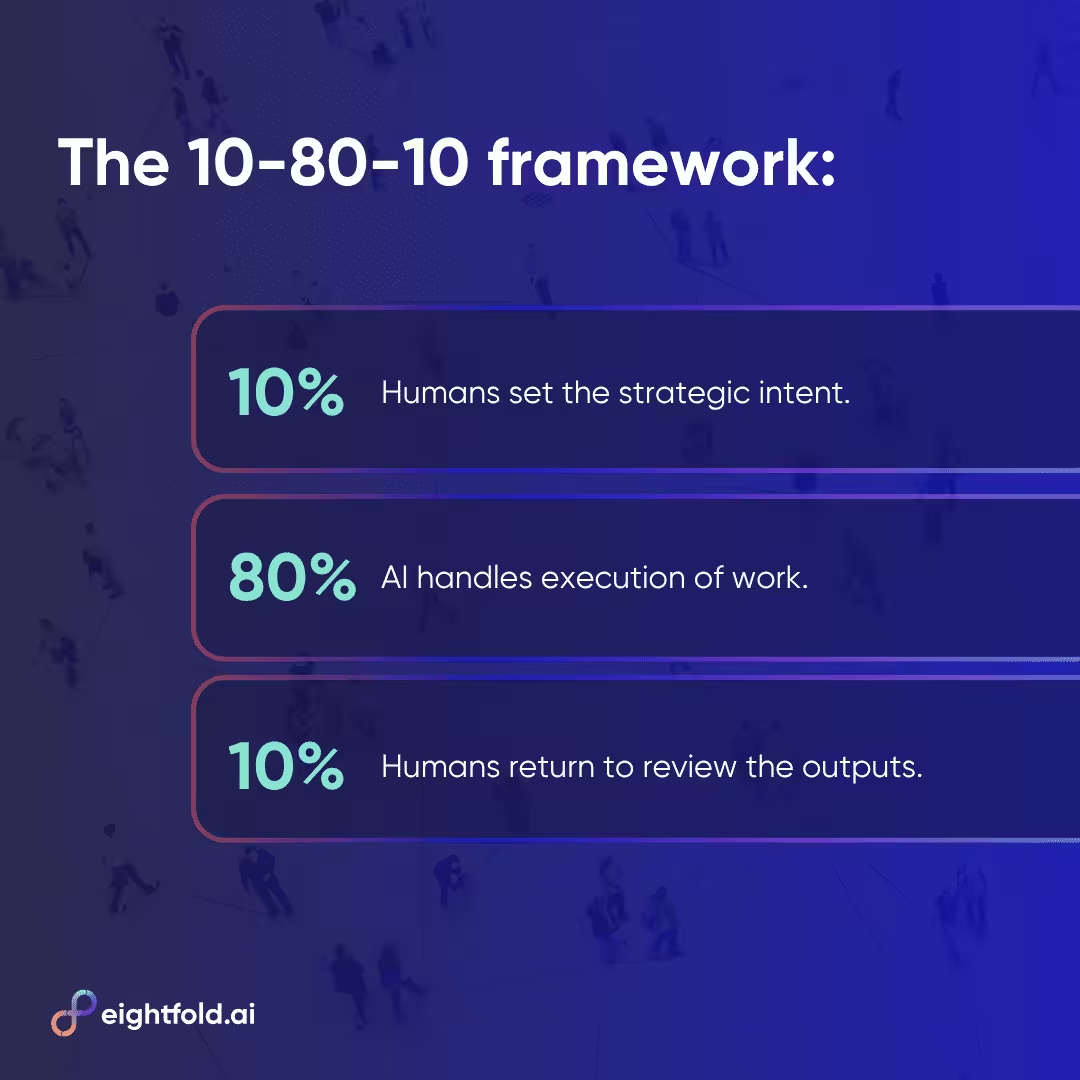
Martin introduced an idea in our conversation that I keep coming back to. He calls it the 10-80-10 framework, and it’s the kind of thing that sounds straightforward until you start applying it — at which point it becomes genuinely clarifying.
The logic runs like this:
- The first 10%: Humans set the strategic intent. What are we trying to accomplish? What does good look like? What constraints are non-negotiable?
- The middle 80%: AI handles execution. So the research, the drafting, the analysis, the coordination. The work that used to consume most of the day.
- The final 10%: Humans return to review the outputs, apply judgment, and decide what happens next.
This doesn’t make people redundant. It changes what’s expected from them.
The emphasis shifts from manual execution to what I’d describe as work orchestration, which is the ability to assess what an AI system has produced and determine whether it serves the wider goal. That requires contextual judgment, systems thinking, and a feel for organizational reality that no model is going to replicate. If anything, those capabilities become more valuable, not less.
This can’t sit with one team
Something Martin and I returned to more than once was the organizational challenge running underneath all of this, and it’s not primarily a technology challenge.
Moving toward an agentic workforce isn’t something HR can drive alone, and it isn’t something IT can implement without broader buy-in. The CIO, the CHRO, the CPO need to be working from a shared agenda. Not parallel workstreams that occasionally sync up. A common one.
The old model where IT provides the tools and HR gets on with using them no longer fits the complexity of what’s being asked. HR understands the context of work and the realities of talent. IT brings the infrastructure, the security frameworks, and the means to scale. Working in isolation, neither side gets where it needs to go.
If your AI strategy currently lives in one function’s inbox, that’s the first problem to fix. Get the right people in the room and have an honest conversation about where the blockers are.
The trust question
Anxiety about AI is widespread and, in some cases, well-founded. A lot of it traces back to the fear of being replaced. That fear deserves to be taken seriously, not paid lip service to with careful communications or dismissed with reassuring language about augmentation.
Martin and I were clear on this point: AI should never function as convenient cover for restructuring decisions that could and should be made transparently on their own merits. If head count is going down, say so and explain why.
Using AI as the scapegoat is a fast way to destroy exactly the trust you need to make any of this work.
Worth separating out here is the difference between AI literacy and AI fluency:
- Literacy means knowing what the tools are.
- Fluency means knowing how to use them with purpose as part of a coherent plan, with clear governance, and with people informed about how decisions are being made.
Organizations that build fluency broadly across their workforce, rather than concentrating it in pockets of technical expertise, will be better placed to make this stick.
Five things worth doing now
For anyone who got this far and wants something concrete to take away:
- Get specific about your vision. What does a workforce that integrates human and synthetic capability actually look like in your organization, in your sector, for your goals?
- Start with one process. Find where the friction is highest or the opportunity is clearest. Apply skills-based thinking to it. See where an AI agent could take meaningful work off people’s plates.
- Build the coalition. Get HR and IT leaders in real dialogue, working through the shared agenda together.
- Invest in fluency. Help people understand not just what AI is, but how to use it with intention in the context of their actual work.
- Make the ethics visible. Clear governance, open communication, and visible leadership commitment aren’t optional extras. These are what makes the rest possible.
The opportunity
At its best, the agentic shift is an opportunity to redesign work in a way that frees people from the tedious, repetitive corners of their roles and gives them space to focus on strategy, creativity, and judgment. These are things technology cannot replicate, however good it gets.
The organizations that do this well won’t necessarily be the ones with the most sophisticated AI stack. They’ll be the ones led by people willing to experiment, learn as they go, and stay genuinely attentive to what their teams are experiencing along the way.
The starting point is simpler than most transformation narratives suggest: get clear on what you’re trying to build, begin somewhere small and concrete, and start developing the habits and capabilities now that the workforce of tomorrow is going to need.
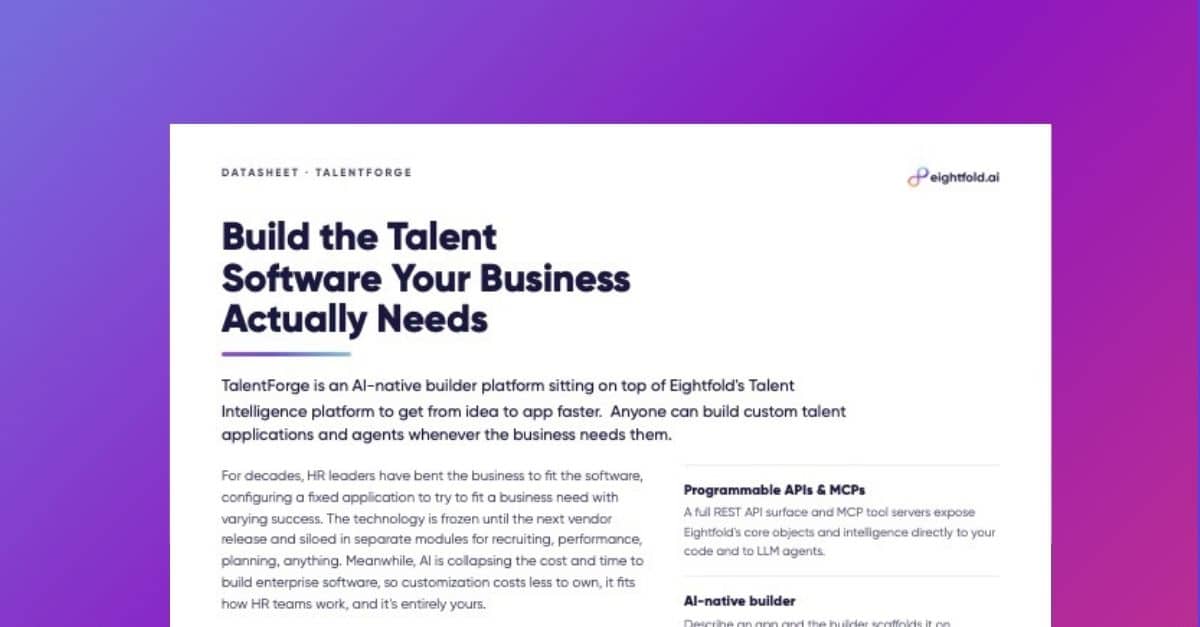
Learn more from this conversation and download the datasheet from Eightfold and LACE Partners.