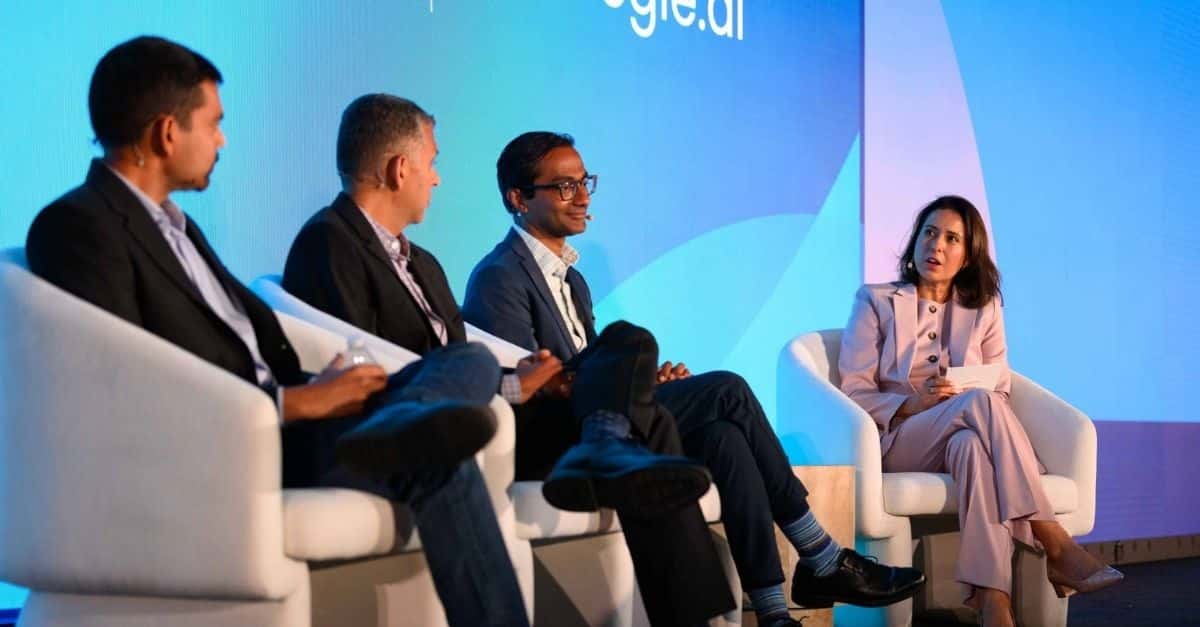


I recently spent a day in London at Cultivate ’25 hearing how large global employers are using AI to reimagine talent management. We’ll share more of these insights on AI and work in future articles.
In my Cultivate keynote, “Rewriting the rules of work: Mega trends shaping the future of HR,” I explored some of the shifts reshaping how work gets done. Here’s a distilled version — with eight key transformations every work designer should know.
(Ed note: This article originally appeared on Spence’s Substack, Work3 — The Future of Work. It has been lightly edited for tone and style.)
Andy Spence shares how he sees humans and AI working together in the future.
The big opportunity
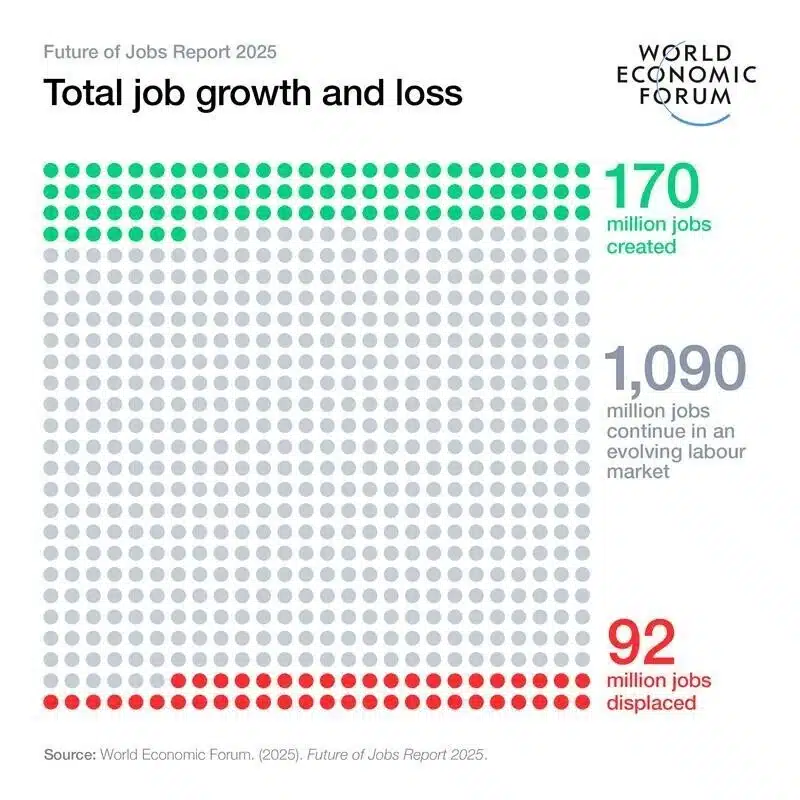
According to the World Economic Forum’s “Future of Jobs Report,” 92 million jobs will disappear, 170 million new ones will be created, and 39% of workers’ core skills will change.
It is impossible to predict which skills will be needed, but we are in the midst of major shifts in work. There will be winners and losers in this transition.
This also gives some great opportunities to those who can mobilize effective teams, and understand how to design agile work structures.
I outlined three mega trends driving the future of work — often overlapping and reinforcing one another:
- The human-AI partnership
- The global talent reset
- The unbundling of work
The old rules of work are creaking. Here are the eight work shifts to keep in mind for 2025.

Work shift 1: Departments to fluid capabilities
Traditional departments were designed for stability and control, but today’s most adaptive organizations are breaking work into projects and workflows, not job titles and functions.
HR’s challenge? Designing work around capabilities that extend beyond filling vacancies.
See more articles on this topic:
- The End of the Corporate Silo: How self-managed teams and tech stacks will reshape the traditional company.
- AI and the Corporate Pyramid: Who stays, who goes – The End of Middle Management or the Birth of a New Corporate Model?
Work shift 2: Org charts to networks and ecosystems
Work no longer lives inside boxes on a PowerPoint slide, or cells in an Excel spreadsheet. It flows through platforms, across partners, and between freelancers.
The internal company boundary is dissolving. People, platforms, vendors, and even AI agents co-create value — often without formal employment ties.
Modern orgs operate more like ecosystems than machines.
See more articles on this topic:
- The New Technology of Teams: How organizational network analysis can increase team collaboration
Work shift 3: Top-down control to empowered coordination
Leadership isn’t command and control. It’s coordination and trust. Great leaders now design for autonomy — not compliance.
The job is to create alignment, not issue orders. From managing workflows to enabling peer-to-peer coaching, power is shared.
See more articles on this topic:
- Have we seen The Last Stand of the Corporate Peacock? After ‘peak office’ why return-to-office mandates are more about strutting than strategy.
Work shift 4: Central silos to self-steering teams
Functions like HR, IT, and finance must become enablers — not bottlenecks. In complex environments, agility beats approval chains.
Self-steering teams need tools, guidance, and shared services — not endless sign-offs.
The role of HR? Become an enabler of distributed decisions, not the gatekeeper.
See more articles on this topic:
- The Decentralized Workforce: The rise of freelancers, creators, and one-person empires — how digital platforms are reshaping work and wealth creation
- Africa’s Hustle Generation: Ambition, innovation, opportunity
Work shift 5: Job descriptions to AI-augmented workflows
Roles shift. Skills evolve. AI assists.
We guide that evolution. Generative AI rewrites the “job description” daily. We now design workflows that mix human creativity with machine efficiency — and adjust continuously.
Your AI might be a draft assistant today. Tomorrow, it’s training your new hire.
See more articles on this topic:
Work shift 6: Internal resourcing to open talent ecosystems
In a world with teams of freelancers, gig workers, and DAOs (decentralized autonomous organizations), it’s time to redefine what belonging means. The best person for the job might not be on your payroll.
Talent now flows in and out fluidly — across marketplaces, platforms, and portfolios. Yet these people still need purpose, support, and connection.
See more articles on this topic:
- Eightfold’s Workforce Exchange connects people with meaningful work and learning opportunities through an advanced job marketplace powered by AI
Work shift 7: Data silos to integrated tech stacks
In a typical working week, employees use more than 30 different platforms, sites, and systems.
Designing a great “employee experience” very much includes the smart use of workforce technology — changing how work works.
Disconnected systems don’t just frustrate — they fragment the entire employee experience. A modern stack must be connected, contextual, and collaborative, where every tool learns from the others.
Work shift 8: Hierarchy to human connection
What drives resilience? Not hierarchy. Relationships.
When work is unpredictable, what gets us through is trust — not titles.
The human need for belonging, support, and meaning isn’t a “soft” issue. It’s central to performance, well-being, and adaptability.

What kind of leadership do we need?
How should leaders approach these work shifts?
- Rethink how work gets done — not just where.
- Embrace diversity — of people, ideas, and career paths.
- Use evidence to challenge intuition and bias.
- Build trust — because trust is the true currency of change.
- Experiment with new tech — but stay skeptical and human-first.
- Shift focus from jobs to tasks, and from individuals to teams.
Watch this session, Rewriting the rules of work: Mega trends shaping the future of HR, from Cultivate ’25, available now on demand.
Andy Spence is a writer, speaker, and advisor who publishes the Work3 —The Future of Work newsletter on Substack, which delivers original research and insights on the rapidly changing world of work to more than 30,000 subscribers weekly.