

- A healthy talent portfolio depends on an agile workforce, a communicative HR department, and talent intelligence.
- HR teams must also be marketers who evangelize available growth opportunities and include every level of the organization.
- When implemented correctly, talent intelligence platforms can reveal powerful insights that help HR leaders strengthen their talent portfolios—and achieve their goals.
I recently finished watching the Netflix series “Vikings: Valhalla,” a story about legendary explorers who ventured across uncharted waters in search of new lands. They didn’t have comprehensive maps, but they had vision, skills, and an unshakable drive to discover what lay beyond the horizon.
In today’s talent world, we face a similar challenge. The workforce is evolving, traditional hiring methods are shifting, and technology is rewriting the rules.
To stay ahead, talent leaders must embrace the spirit of those fearless explorers—boldly taking risks, using new tools like AI and talent intelligence, and navigating uncharted territory to find, develop, and retain top talent in ways never explored before.
The future belongs to those willing to set sail. Are you ready?
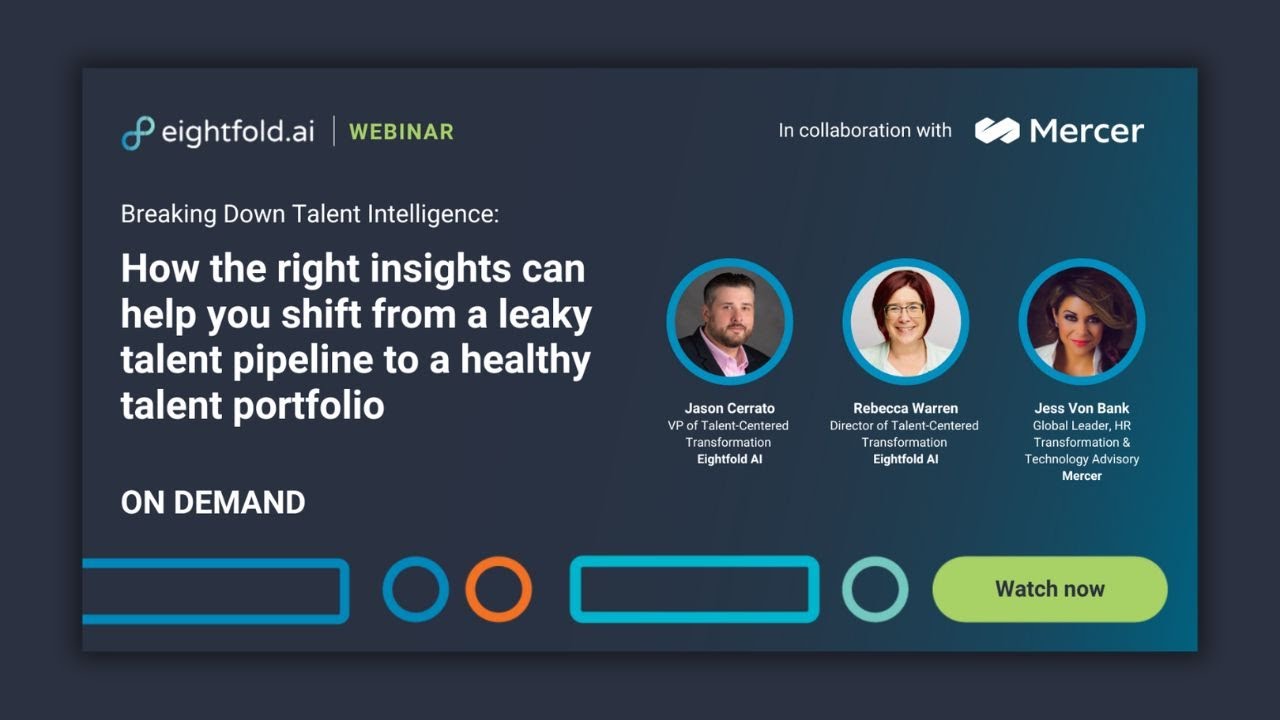
Related content: Watch the webinar “Breaking down talent intelligence: How the right insights can help you shift from a leaky talent pipeline to a healthy talent portfolio” on demand now.
Charting the course: The power of agility
To conquer new lands, businesses need teams that are built for agility—one that values skills over static job titles.
I recently joined Jess Von Bank, Global Leader, HR Transformation and Technology Advisory at Mercer, and Jason Cerrato, VP of Talent-centered Transformation at Eightfold, for a discussion on the ins and outs of building a healthy talent portfolio.
As Cerrato puts it, today’s job titles might sink beneath the waves tomorrow. That’s why it’s critical to understand not just where your people are today, but what they’re capable of and where they’re headed.
“By understanding what skills your talent has and how quickly they can learn, you’re better able to mix where they want to go with where the business is heading,” he said. “That agility allows for a greater likelihood that the two paths can potentially meet at the same place in the future.”
And let’s be real—rigidity is the real storm to avoid. Von Bank warns that jobs with overly strict requirements can act like a ship weighed down by cargo, making it harder to navigate and adapt.
“Agility denotes a more inclusive, flexible, adaptable way of thinking about people,” she said. “And guess what? People want that. They expect to be nurtured and developed so they can continue to have an impact.”
In other words, it’s time to ditch the outdated maps and start navigating toward the future.
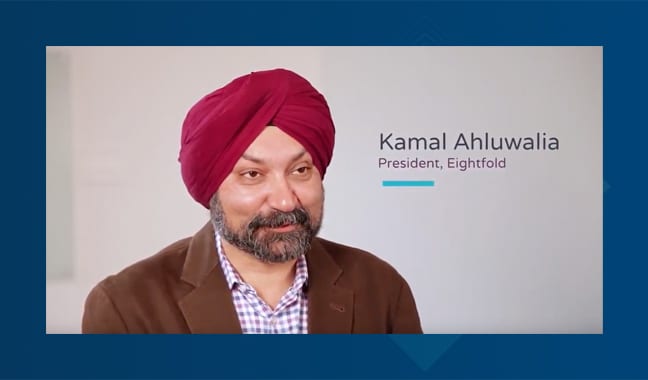
Related content: Jason Cerrato, VP of Talent-centered Transformation at Eightfold, talks about the importance of storytelling to reengage and retain employees in their current organizations.
Navigating growth: Don’t let talent drift away
Employees shouldn’t have to guess where their careers are headed.
More companies are investing in workforce development, mentorship, and skills training. But here’s the problem: Too many employees don’t even know what’s available to them.
The latest Annual Eightfold Talent Survey revealed a massive disconnect:
- 75% of HR leaders believe they have the right tools to help employees grow.
- Yet 82% of employees said they’ve looked for new jobs in the past 12-18 months—citing pay, culture, and lack of growth opportunities.
Von Bank pointed out that if people don’t know the opportunities exist, they can’t take advantage of them.
“Sometimes employees just don’t know where to find the opportunities available to them,” she said. “It’s not in the flow of their work. Maybe the message got lost in one company email, buried in an intranet, or hidden on a landing page somewhere.”
And here’s where the real battle for talent comes into play. According to recent research from Mercer:
- Executives are 1.8x more likely than frontline workers to understand career opportunities.
- They’re 2.5x more likely to see clear career paths.
- And 2.5x more likely to have access to personalized learning paths.
If employees can’t see the lighthouses guiding them forward, they’ll set sail for new opportunities elsewhere.
So what’s the solution? Better communication, better storytelling, and better accessibility.
“Good HR is good marketing,” said Von Bank. “We need to make sure employees actually hear, see, and feel the opportunities available to them. And then we need to give them permission to grow—on the job, through learning, and by developing new skills that help them advance.”

Using talent intelligence to chart the future
Every great expedition relies on intelligence—maps, stars, and scouts who could anticipate the journey ahead. The modern workforce is no different.
AI and automation are transforming the talent landscape, helping companies steer through uncharted waters with data-driven insights.
A Talent Intelligence Platform (TIP) acts like a compass for workforce strategy—collecting real-time data, spotting skill gaps, and identifying potential paths forward.
“It creates options,” said Cerrato. “It gives companies multiple paths forward—whether that’s upskilling, training, or mentorship. The data fuels smarter conversations about what’s next.”
But here’s the kicker: AI isn’t just about speed—it’s about strategy.
“It’s not just about doing things faster,” Cerrato said. “You need to redesign processes, think differently, and transform how you operate if you want to see real results.”
People are your greatest treasure—Invest in them
Without a strong crew, even the best ship is doomed.
Von Bank compared employees to valuable assets within a company’s treasury.
“Everybody wants their portfolio to increase in value,” she said. “You want appreciating assets, not depreciating ones. If you’re not closing skill gaps, creating time for learning, and giving employees room to grow, they’re depreciating.”
And the numbers don’t lie—82% of employees have recently explored other job opportunities. That’s a clear signal: They’re ready to jump ship if they don’t see a future with you.
So what’s the best strategy to keep talent on board and heading toward success?
- Engage employees. Make sure they know about career opportunities.
- Use data to inform decisions. Don’t rely on outdated maps—navigate with real-time insights.
- Design jobs that help people thrive. A motivated, growing workforce pushes the company forward.
The future of work belongs to those bold enough to explore it. The companies that embrace agility, invest in their people, and navigate change with confidence will be the ones who discover new lands of success.
Watch the webinar “Breaking down talent intelligence: How the right insights can help you shift from a leaky talent pipeline to a healthy talent portfolio” on demand now.