

Most people want to grow their careers and feel like they’re fulfilling a purpose during the workday. And today, even in an economic downturn, many still have choices about where they work.
Thanks to remote jobs, employees have more options and possibilities than ever before. And although pay is important, it’s no longer the only driving force for many people. Churn rates are still a concern as the average tenure in a position is three or four years before employees move on. If people aren’t motivated through opportunities in their work, they will find it with another employer.
As employees’ mindsets toward work change, leadership mindsets must also shift. Organizations that don’t think about transforming their talent management practices will find it increasingly difficult to find — and keep — the best talent.
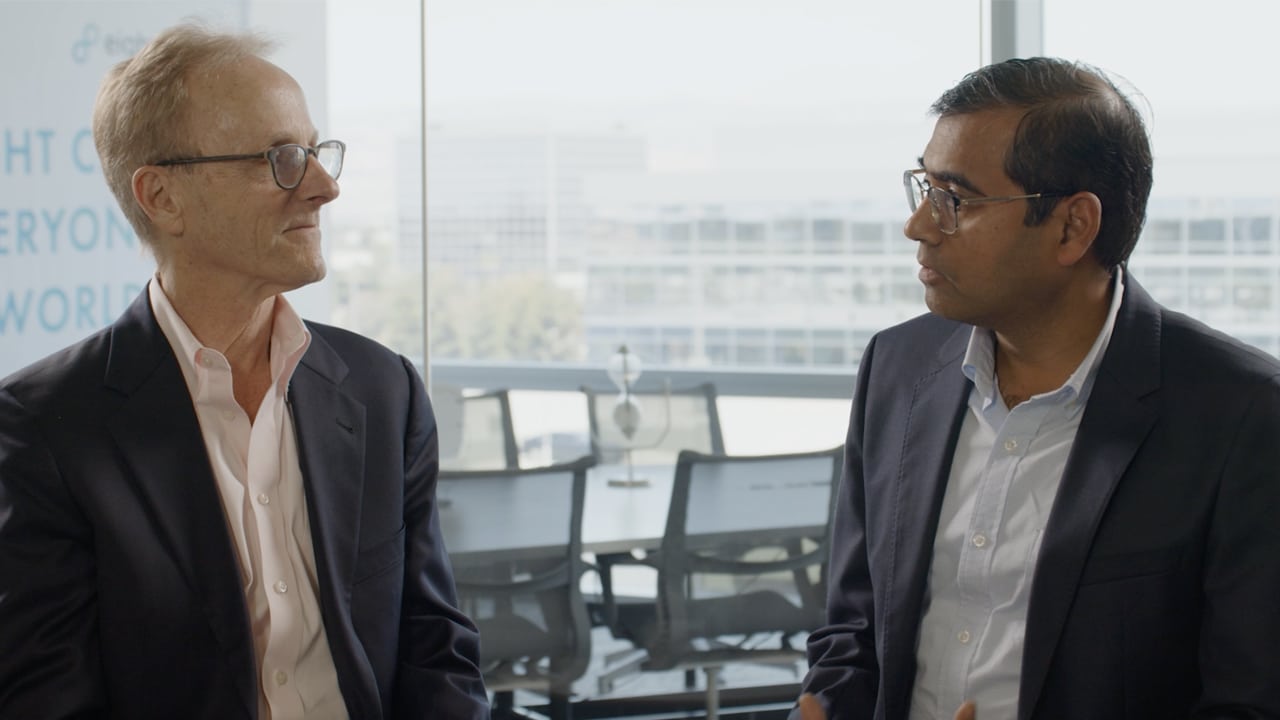
Recently, our Co-CEO & Co-Founder Ashutosh Garg joined Deloitte’s AI Ignition podcast to discuss how organizations can use AI to transform their talent management practices to be more holistic. With more than two decades of experience in AI, machine learning, and search, Garg is now using his expertise to help match people to jobs based on their skills and potential, ultimately making organizations more competitive with stronger workforces.
Garg says that talent and business leaders should continually focus on their employees’ needs to ensure they are learning and growing. And instead of only nurturing employees between start and end dates, they need to think of the talent management process beginning with the interview and continuing long after employees leave. That person will always be in the talent network, either spreading the good word about the business and recommending colleagues — or not.
Talent processes are all connected, and it’s up to talent professionals and hiring managers to connect the dots to create this holistic talent ecosystem. “AI can help us understand and hone down on what is really important for career success, make the process more transparent, and then also guide us through the decision-making process,” Garg said on the Deloitte podcast.
Here, Garg breaks down more about why the talent management experience matters in his conversation with Deloitte.
Chart a more personalized approach
It’s extremely difficult, if not impossible, to create a holistic approach to talent management using traditional or manual methods alone.
Organizations are increasingly turning to platforms built with AI to help them rethink how they source, hire, manage, and develop talent. For example, with AI, talent leaders can make more informed decisions about who to hire or move internally, reducing bias, improving transparency, and building a more diverse workforce. And while some organizations may worry that AI crosses the line into “creepy,” the right deep-learning platform actually balances privacy and engagement.
Furthermore, as the half-life of skills continues to diminish and the fundamental nature of many jobs evolves, only AI can provide the dynamic, forward-looking, skills-based insights that support individuals as they advance in their careers or explore new paths.
“There is no linear or single path from job A to job B,” Garg said. “AI can help us identify all those parts for each individual, personalize them, and work with the individual so that they stay on track.”

For example, if a software engineer wants to become a data scientist, AI helps them determine the skills they need to switch career paths. Because every person is different, AI uses individual goals and experiences to design the best path forward — including what skills they need to get there — and chart out a personalized career path in minutes or less.
Related: Ready to learn more about AI and compliance with new employment laws? Listen to our podcast featuring EEOC Commissioner Keith Sonderling on the questions he believes every talent and HR leader should ask about how they plan to use the technology — and how that can potentially reduce bias in their workplaces.
Improve organizational diversity
People inherently have biases machines don’t have, and those unconscious biases can negatively affect diversity efforts.
Degrees are one area where bias can impact a decision. A manager may be drawn to an application submitted by someone who went to MIT. They may bypass an application from someone who graduated at the top of their class from a smaller or lesser-known college. With AI, all qualified applicants enter the application process based on their skills and potential, creating a more inclusive experience and candidate pool.
AI also helps talent leaders better understand the technical and soft skills needed for a job. When he first became a CEO, Garg said he often heard that you need to be extroverted to succeed in that role. He later learned that’s not true — data shows that many influential CEOs are introverted.
When candidates and employees use AI to learn about possible career paths, they can discover their qualifications in new areas, which often improves diversity. For example, it’s common for women to only apply for a job if they believe they have all the required skills, while men are more likely to apply even if they only meet a few of those skills. If AI revealed that they were good matches for a role, more people from multiple backgrounds would be encouraged to apply.
“AI can bring transparency into how your organization is growing,” Garg said. “What are the pockets where there is more bias than others, and are we giving people the right opportunities?”
Related: Learn how British telecom Vodafone saw a 144% increase in women applicants within the first three months of using the Eightfold Talent Intelligence Platform.
Bias-free talent management for everyone
Many organizations mistakenly view AI as an add-on, using it on top of existing systems. Before adding any new technology, Garg said that organizations should start by understanding the fundamental challenges they face in their talent-management strategy.
“AI is really about understanding people, understanding jobs, and matching them,” Garg said.

He recommends that talent leaders begin by addressing their diversity goals: Where they are now and where they’d like to be. For example, women comprise roughly half of the world’s population, yet only 10 percent of Fortune 500 CEOs are women.
The gender gap isn’t a problem that can be solved one person at a time. Organizations need AI to identify and mitigate bias — and scale it across their entire workforces — if they want to successfully combat diversity issues.
But, as with many new technologies, if AI isn’t correctly and ethically used, it can create more problems instead of positive solutions.
“With any power comes great responsibility,” Garg said. “You need to understand the data and the implication of your actions. Businesses can no longer be only about shareholder value, but need to consider the bigger impact on the world. What keeps me up at night is ensuring that we are doing our best to protect, safeguard, and advance the world.”
Ready to dig into the world of ethical AI applications in HR? Listen to the entire conversation with Ashutosh Garg, Co-CEO & Co-Founder of Eightfold AI, and Beena Ammanath, Executive Director of Deloitte AI Institute, in the podcast below.