

Explosive industry growth is putting pressure on biotech companies to expand just so they can keep up.
In the US, this growth can be partly attributed to the FDA’s fast-tracking of drugs that treat serious medical conditions or fulfill an unmet medical need. Fueled by the need to bring these types of drugs to the market more quickly, and the inherent opportunities in such an environment, smaller biotechnology companies are rising up and putting further competitive pressure on industry stalwarts.
In attest to this, PriceWaterhouseCooper’s Global CEO Survey suggests that 51 percent of CEOs in the life sciences and pharmaceuticals industries are having trouble attracting and retaining the right people.
Hiring challenges for biotech companies
The growth of the industry has created some challenging obstacles for human resources departments and hiring managers at large biotech companies. One of the most pressing of those challenges is tight competition for talent.
A highly competitive market for talent recruitment
The industry has seen an exponential growth of startup biotech companies trying to capitalize on the new opportunities for drug development. Praveen Tipirneni, MD, CEO of Morphic Therapeutic Inc., postulates that the growth of these smaller companies is exacerbating the competition among biotech companies for top talent by spreading that demand more thinly.
“We’re at a moment of increasing innovation and company creation, so the demand for talent is much higher than we’ve seen before,” says Dr. Tipirneni. And it isn’t only a tug-of-war within the industry. Biotech companies are also competing with technology companies for talent.
Because of the adoption of artificial intelligence and big data analytics, the industry is making a technological shift, and employers need tech-savvy employees. This puts them in direct competition with technology companies like Apple and Google for talent, which is a battle that can be difficult to win.
Regina Barzilay, professor at MIT’s Computer Science and Artificial Intelligence Laboratory, explains that biotech companies are behind the curve when they come up against these tech giants in recruiting.
“The best machine learning people are not in pharma today,” she says. But it’s not because they aren’t trying. It’s that there is a shortage of candidates with both data and life sciences skills. So, the demand is higher than the supply.
A shortage of candidates with the skills needed
That shortage is straining hiring in the industry. “The talent shortage is acute,” says Fred Kohler, vice president of people at biotech company GRAIL.
Ian Marison, CEO of the Biofactory Competence Center, and Peter Levison, executive director of business development for Pall Biotech, note that the rise of data science, big data and machine learning approaches in the industry, as well as the use of artificial intelligence and process analytical technology in drug production, is requiring companies to hire life scientists with mathematical and computing skills.
“When you look at the skill sets required to manage biopharmaceutical manufacturing processes—in particular around engineering, data analytics and process development—the skill set shortage challenge persists,” they write.
One of the key reasons for this skills gap is the lack of practical training at the university level, note Marison and Levison. It’s difficult for educational institutions to evolve at the same rapid pace as industry, which contributes to a supply shortage of qualified candidates.

Long hiring lead times
When companies do manage to overcome the obstacles above and find the perfect employee, long lead times in the industry hamper progress. It takes a long time to fill an opening at biotech companies. Lead times of several months are common. This only ratchets up the industry pressures biotech companies are feeling.
Two areas where hiring bottlenecks: interviewing and onboarding. Dr. Andrew Chamberlain, chief economist at Glassdoor, notes that the biotech and pharmaceuticals industries have some of the longest interview processes in the country at an average of 28.1 days. Such a long lead time can be damaging not only to recruiting, but also operations.
Dr. John Sullivan, a professor of management at San Francisco State University and an HR strategist, explains that slow hiring processes cause companies to miss out on the most qualified candidates and raise hiring costs. Long lead times, then, have a direct bottom-line impact. In such a competitive industry, companies simply cannot afford those inefficiencies.
A lack of workplace diversity
The biotech sector has a diversity problem. Brady Huggett, business editor at Nature Biotech, details how the industry skews white and male, but few companies are doing enough “to dissect unconscious bias or to encourage greater participation of minorities.”
He continues: “Indeed, when contacted by Nature Biotechnology, many public biotech companies refused to discuss this issue on the record. For most of the biotech sector, race remains not just off limits—it is radio-active.”
This is especially true at the managerial and executive levels. Helen Torley, CEO of Halozyme Therapeutics, says that as recently as 2016 she was the only female CEO among the 44 CEOs of publicly traded biotech firms in San Diego. She laments that most CEOs and board chairs make high-level hires from their professional networks, which — again — skew white and male. This leaves highly qualified women, people of color and LGBTQ+ executives out of the running for these positions.

Biotech recruiting with hiring technology helps overcome these challenges
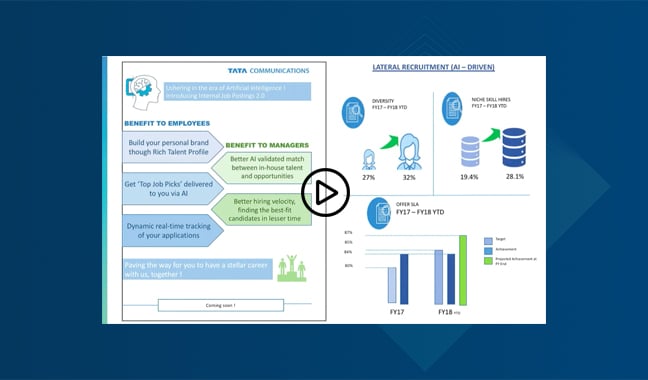
These hiring challenges are forcing biotech companies to adopt new data-based, technological hiring practices to find and recruit top talent. Artificial intelligence-supported hiring systems are quickly becoming the go-to tool for biotech companies that need to grow quickly.
AI-based hiring platforms address each of the challenges above and provide a number of different benefits to the talent acquisition process. For one, these tools improve the quality of hires by using data analytics to match the best candidates to a position. The search algorithms can narrow a field of hundreds of applicants down to a small few based on requirements for the position.
Brigitte Van Den Houte, senior vice president of HR and global talent management at Pitney Bowes, shares that the company uses AI-powered recruiting software, especially when hiring for high-volume recruitment positions. AI, she says, helps them scale efficiently without employing additional recruiters.
This also helps to reduce the time to hire for open positions. When automating processes, hiring managers or HR departments can significantly reduce the amount of time it takes to recruit, interview and onboard a candidate. AI-powered solutions can sift through data in seconds versus the hours or even days humans must spend.
In a highly competitive sector like biotech, which has companies fighting for limited human capital, AI can mean the difference between securing the best candidates or losing out on an opportunity.
Automated hiring software also helps companies eliminate inherent human biases in the hiring process, helping to diversify their teams. AI solutions return results on the best candidates based on data points only, often pulling from a more diverse pool of candidates than a human going through resumes would.
Biotechnology companies are fighting a recruiting war among themselves. The industry is growing at a rapid pace with new startups gaining ground on established companies. Companies big and small are competing against each other to hire the best people from an undersized pool of candidates. Automated hiring technology is helping recruiters and human resources departments overcome hiring challenges to find, recruit and onboard the best candidates more quickly and efficiently.
Images by: Dmitriy Shironosov/©123RF.com, Dmitriy Shironosov/©123RF.com, dolgachov/©123RF.com