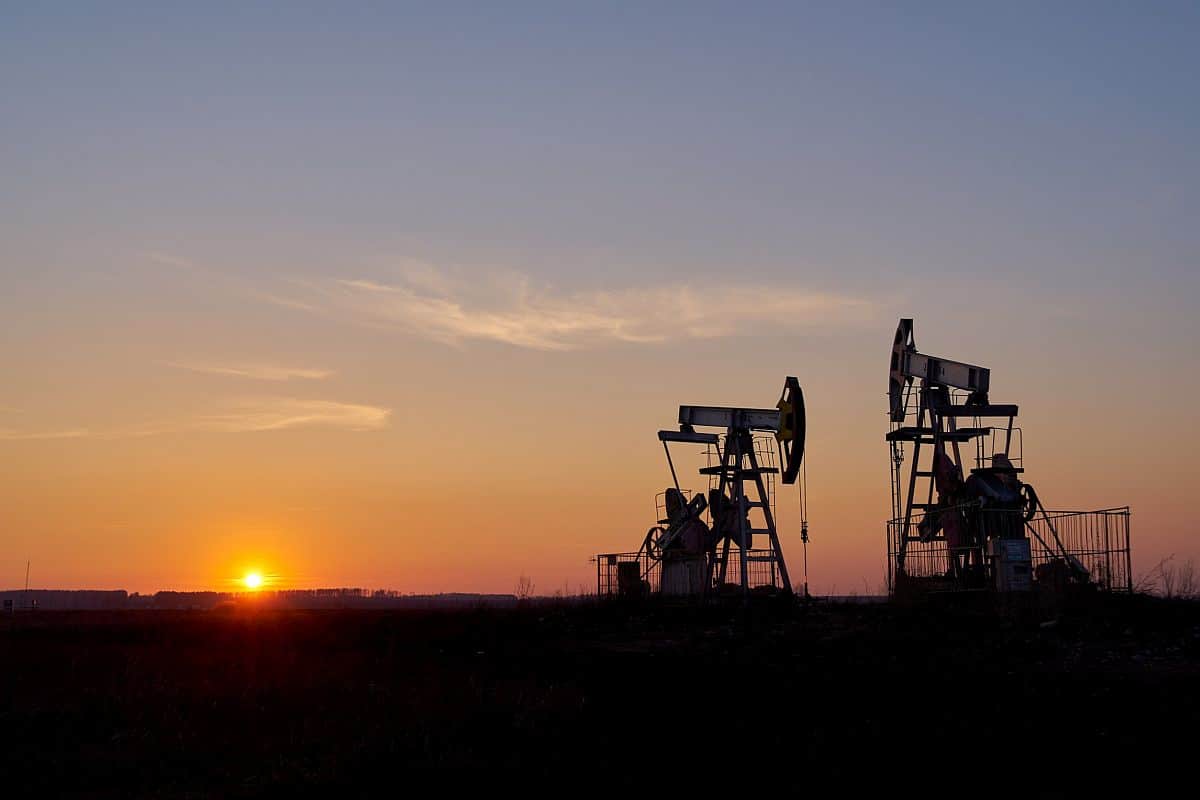


What’s on the horizon for the oil and gas industry?
To explore this question, Eightfold leveraged its Talent Intelligence Platform. We examined approximately 250,000 career profiles from the world’s top oil and gas companies. To provide a benchmark, we also looked at profiles from renewable energy companies.
The results of these efforts reveal a changing landscape for energy providers — and a number of challenges that demand an adaptable workforce. To prepare for the uncertainties ahead, oil and gas companies can take advance of three opportunities:
- Upskill and reskill existing workers.
- Calibrate roles with current and future skill sets.
- Hire for learning and growth potential.
Data-driven insights make these efforts possible and help energy companies build sustainable long-term operations.
Two major challenges facing the oil and gas industry
Oil and gas industry participants face two major challenges: the rise of renewable energy sources, and the pressure to reduce carbon emissions in the face of rapidly-changing environmental and climate conditions.
Energy demands in recent years have fluctuated due to the COVID-19 pandemic and its impact on population sizes. Yet climate data indicates that increased production of greenhouse gas emissions is not sustainable. To meet demand and maintain a livable planet, oil and gas companies are focused on finding ways to curb emissions.
“The oil and gas industry is one of the biggest contributors of greenhouse gasses globally, and organizations are being urged to bounce back from the COVID-19 pandemic more ethically and sustainably,” writes Laura Brown, marketing director at risk services provider Sigma7.
At the same time, competitors outside the industry are looking at ways to reduce emissions through the creation of renewable energy sources. Consumer interest in renewable energy has changed the way investors look at oil and gas companies, as well. Oil and gas sector stock prices continue to underperform the rest of the market, as investors seek to manage risk and regulators, and consumers consider the effects of climate change and dependence on oil and gas imports, writes energy strategist Kingsmill Bond.
Renewable energy companies are an industry competitor, but they aren’t yet prepared to help shoulder the burden of energy demand. “The U.S. Energy Information Administration projects the electricity generation from natural gas to stay relatively flat at around 38 percent until 2050, resulting in the need for natural gas production to continue at current levels,” says Jennifer Miskiminis, head of the petroleum engineering department at the Colorado School of Mines.

The state of the workforce in the oil and gas industry
Many jobs in the oil and gas industry have remained stable for many years. Today, core engineering and operations roles continue to remain stable — except where they are slowly losing prevalence.
The oil and gas industry has long relied on cyclical hiring. New workers are hired when an energy source demands development, then laid off when that source is exhausted, only to be encouraged to reapply when a new source is found. This pattern helped oil and gas companies control hiring costs in the short term. In the long term, it has led to the slow, consistent undermining of skills in the industry, as well as to reputational damage.
“The cyclical hiring and laying off of employees adversely affecting the industry’s reputation as a reliable employer, and a tenured, aging workforce is reducing the available talent pool,” explain Amy Chronis and Kate Hardin at Deloitte.
Job security is one of the top reasons energy company employees choose the industry, write Milan Taylor and Dan Blobaum in a Mercer report. Yet energy companies imperil their own hiring by being largely unaware of this fact. The Mercer study finds that most human resources leaders at oil and gas companies think their employees are attracted by the company’s brand or reputation. This misunderstanding, based on a lack of communication, also costs the industry skilled talent.
Oil and gas industry companies face pressure from renewable energy competitors too. This pressure doesn’t come merely from having a competitor who also provides energy, however. Our data indicates that renewable energy companies are outflanking traditional oil and gas companies in two key skill areas:
- Digital and analytics skills.
- Renewable energy skills and knowledge.
Both of these skill areas represent a draw for energy industry candidates. A KPMG study found that 56 percent of workers in oil and gas jobs said they’d consider switching to work with a renewable energy company, write Raad Alkadiri, Regina Mayor, and Stefano Moritsch. Without an incentive to learn and expand their careers with their oil and gas employers, these workers are at risk of joining competitors, including renewable energy companies.
The data indicates that merely maintaining engineering and operations skills isn’t enough. As technology and global needs continue to change, so will the skills profile that indicates success in key oil and gas industry roles.
To prepare for the changing future, oil and gas industry participants will need a future-ready workforce — which means they’ll need a greater focus on skills, including the ability to learn.

Three ways to prepare for the future
To keep pace with renewable energy competitors and address the challenge of reducing carbon emissions, oil and gas companies must rethink the way they approach their workforce. Three options present themselves:
- Upskill and reskill oil and gas workers to keep their knowledge in the industry.
- Match roles to current and future skills.
- Hire candidates with the ability and drive to learn new skills throughout their careers.
All three of these options can and should be implemented together.
Rather than continuing to undermine their reputation and available skill sets, oil and gas companies can benefit from understanding how skill sets are shifting and responding to those changes with career-building upskilling and reskilling options for their workers.
Our research, for example, found that the top research and engineering role, that of drilling engineer, is declining, while roles like process and mechanical engineers are surging. Demand for software engineers and business analysts is high, while IT and systems analysts are falling behind. Demand for administrative assistants and customer service representatives is also dropping.
Workers in declining roles nevertheless have valuable skills. Often, these skills can translate to a similar role. Matching roles to current and future skills requires oil and gas companies to understand how skill profiles are changing. While certain existing skills will continue to be in demand to face major challenges, the industry also requires an influx of new skills.
Among these are stronger soft skills, including communication, collaboration, and innovation, explains William Maloney, director at Trident Energy and ATX Energy.
To hire for skills and shape career paths, oil and gas companies will need access to insights built on deep data access. Using AI-enabled digital tools can help oil and gas companies meet these three goals simultaneously, while also offering deep insights into the skills that drive success in industry roles.
Images by: iakov/©123RF.com, lzflzf/©123RF.com, cppzoe/©123RF.com