

- Agentic AI delivers powerful and efficient ways to accomplish more in HR, including faster hiring, deeper workforce intelligence planning, and greater output.
- As more organizations move to adopt agentic AI, CIOs and CTOs have an opportunity to lead the way in redefining how work gets done.
- Architecting a collaborative human and machine workforce can boost productivity and fill talent gaps — but before employees adopt the technology they must trust the organization’s leadership and their motivations for investing in AI.
For decades, we believed organizations could potentially move at the speed of technology. Today, however, technology is evolving so quickly that humans and organizations are running to catch up.
CIOs and CTOs need to be prepared to help lead the way in redefining how work gets done.
“We’re in an era where technology is no longer the barrier,” Greg Vert, Human Capital Applied AI Leader at Deloitte, said in a recent webinar co-hosted with Jason Cerrato, former VP, Talent-centered Transformation leader at Eightfold “Adoption is moving at the pace of organizational change, not at the speed of technology.”
Vert shared his thoughts on agentic AI’s pending impact on HR in a recent webinar, “From automation to transformation: How AI is reshaping the way we work.”
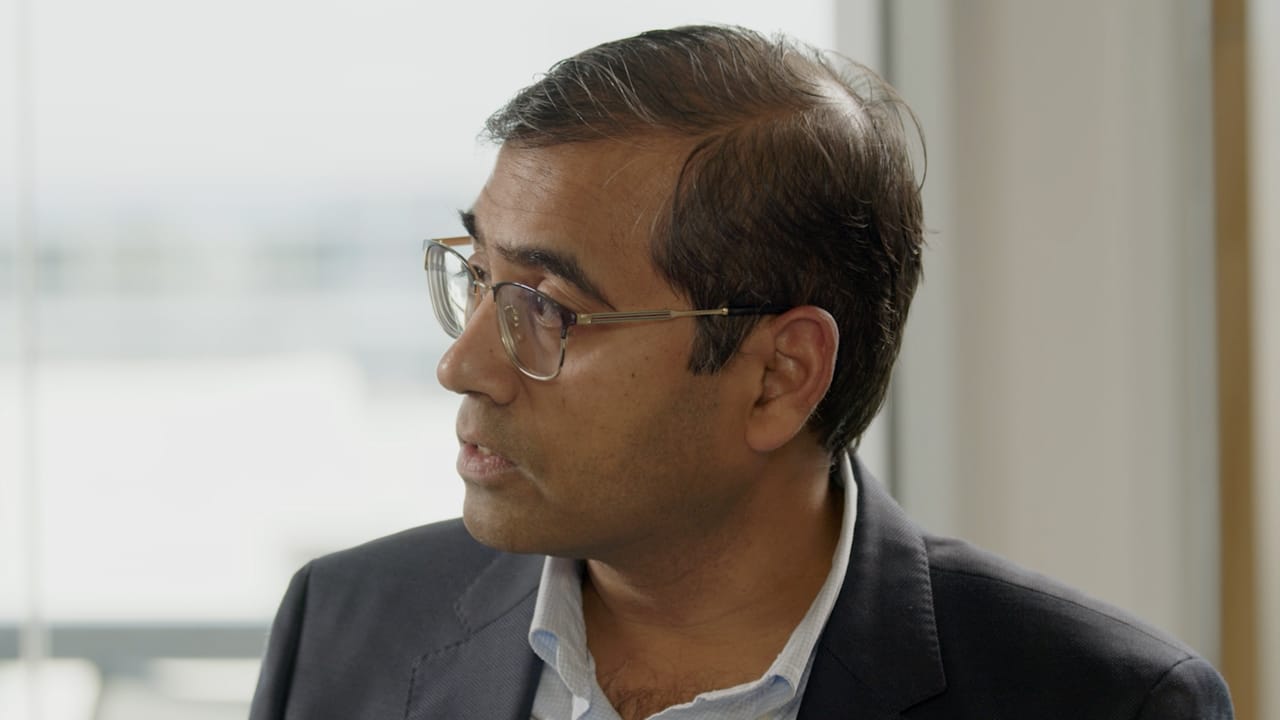
Related content: Agentic AI can learn and adapt based on real world interactions, says Deloitte’s Greg Vert in this clip from his recent webinar, “From automation to transformation: How AI is reshaping the way we work.”
The next evolution of AI
With the launch of ChatGPT, AI has become a part of the mainstream dialogue. Vert says that we’re about to see the same thing happen with agentic — the next evolution of AI.
“It is about autonomous agents that can perform tasks with little to no human intervention, or where we can design very specifically where that human intervention should take place,” Vert said. “Agentic AI is all about boosting productivity, and it’s going to drive the redistribution of human resources, financial resources, facilities, you name it.”
A recent Deloitte survey found that 26% of business leaders are already exploring autonomous agent development to a large extent and 42% to some extent. Looking ahead, CIOs and CTOs have an opportunity to shepherd organizations in its adoption and lead the way in redefining how work gets done.
Vert believes we’re in the early stages of the “largest work redesign since the Industrial Revolution,” and it’s largely being fueled by AI.
The pace, he said, will be fast, and organizations must be ready: “We have to be really proactive and have a bias toward action in order to navigate the transformation transition.”
Along the way, business leaders must find the right balance in how machines and people collaborate, enhance their workforce planning and intelligence to map work to skills in a strategic way, and, importantly, build and maintain a culture of trust.
Related content: Agentic AI will change roles, says Deloitte’s Greg Vert, but it also gives HR opportunity to boost efficiency and shift expertise around in your organization.
Agentic AI is disrupting and reinventing HR
Agentic AI delivers powerful and efficient ways to get more done in HR, and it’s not just about automating tasks and accelerating workflows. It can contribute strategic decisions that drive business value.
“Agentic AI is quickly becoming essential to HR if you want to streamline processes, find best-fit talent quickly, and grow your business,” Sachit Kamat, Eightfold AI Chief Product Officer, wrote in a recent blog post, backing up points Vert made in his webinar on rethinking talent tech.
Kamat added that agentic AI can improve operations in three fundamental ways:
- Boosting efficiency: Agentic AI can take over repetitive, manual tasks such as scheduling, allowing HR to focus on higher-value, consultative, strategic work.
- Improving accuracy and quality: Because agentic AI understands context and decision impact, it enables better hiring and workforce decisions.
- Scalability: AI agents allow you to do more with less, enabling you to scale recruitment and workforce management without additional HR hires.
Further, Kamat said organizations using agentic AI in HR can reduce time to hire by 10 times, while also lowering HR costs and improving hiring accuracy as the system continuously learns as it works.
Overall, as the workforce landscape shifts, agentic AI can help HR make better, faster decisions that drive business impact.
People + AI = increased productivity
The move toward agentic AI is not about replacing human workers, — it’s about augmenting their work.
“The goal is to automate 80% of your workload — handling the repetitive, time-consuming work while keeping the critical 20% in your hands,” Vineet Abraham, former Chief Development Officer at Eightfold AI, wrote in this blog post, also echoing findings Vert shared in his webinar.
AI agents are automated assistants that can reason through actions, adapt and make decisions in the face of unexpected scenarios, all while helping talent teams with time-consuming recruiting tasks, such as conducting pre-screening interviews; verifying job location preferences, salary expectations, and availability; and evaluating technical and functional competencies.
This, in turn, frees up time for HR teams for more complex tasks, and what Vert refers to as enduring human capabilities: critical thinking, curiosity, empathy, and creativity will be highly valued in an AI-driven world.
“You can imagine certain HR scenarios require a level of human empathy that AI can’t replicate, and the right service delivery model or the right experience design is for a worker to get connected directly with that HR expert,” Vert said.
As tasks are passed back and forth as needed between AI agents and human experts, work will get done more quickly, at a greater scale and with better output. At the same time, as people and AI are reorganized to work together, it will create more capacity to reinvest in employees unlocking their full potential.
Vert says that architecting the right human and machine workforce and redesigning the work that people do to achieve the organization’s goals is going to be one of the greatest challenges for HR to solve. That’s happening now among software developers and engineers — roles where there’s historically been talent scarcity.
“Now organizations can figure out a way to combine that human and machine workforce where it offsets talent gaps they may have had and that have been impacting their ability to progress against their digital ambitions,” Vert says. “It makes sense to prioritize work redesign in that space, and the ways that engineers and developers partner with AI to code, test, and deliver solutions is going to change pretty significantly over the next 12 to 18 months.”
In the age of AI, skills still matter — and so does agility
Last year, a Deloitte survey on the state of generative AI found that 78% of organizations do not believe their talent is highly or very highly prepared to adopt gen AI tools. According to Vert, that’s something that’s going to need to quickly change.
“The dependency on adoption to create or realize value from AI investments is going to be a big focus for organizations in the next 12 to 18 months,” he said. “It will require a lot of this rapid and unprecedented training and education to increase the fluency and proficiency of the workforce.”
But skills aren’t just important for people.
Now that organizations have digital agents in their midst, skills will also be important in the realm of technology because those agents can apply intelligence to deconstructing different aspects of work and map it to skills to enhance strategic workforce planning.
“Certain skills in your organization that you may have a lot of today, you may not need as much in the future, so you’ve got a skills surplus — how do you rationalize and reconcile that?” Vert said. “In other areas you may find that you have a skills deficit, and your needs are bigger than what you have. Then it becomes a conversation of how do you address that skills deficit through a combination of humans and AI as you progress?”
When an organization has the skills it needs to meet its strategic objectives, it also benefits from organizational agility — something that Vert says will be essential in the future as we move towards a post-knowledge economy.
Before AI adoption comes a culture of trust
As we transform the workforce of the future, we can’t lose sight of the most important requirement when it comes to agentic AI: driving adoption and engagement.
“People have to be open to and look for ways to use AI in their day-to-day work,” Vert said. “Without adoption, the rest of this stuff sort of doesn’t matter.”
That all starts with building an organizational culture that values innovation and encourages experimentation.
It’s also a culture of trust. Employees must trust their leadership, and they must trust their leaderships’ incentives and motivations for investing in AI, “not as a replacement of human workers,” Vert said, “but to augment human workers and to really unlock human potential.”
To that end, he adds that it’s important to pair business outcomes with worker outcomes. Organizations should pursue opportunities in AI that benefit the enterprise, benefit the workforce, benefit society, and benefit customers.
“If you can balance all three of those, that’s going to be a winning strategy for your AI program,” he said.
Watching a paradigm shift
The organization of tomorrow looks vastly different than the organization of today. Agentic AI will transform the way we look at productivity, organizational design, and work design.
CIOs and CTOs are in a powerful position to lead the re-architecture of their workforces and operating models, as they strategize the ways that humans and machines can work together to achieve ever more.
The shift that’s before us will be profound, and it will be swift, says Ashutosh Garg, Co-CEO and Co-founder of Eightfold AI.
“Enterprises will soon operate with a seamless blend of human expertise and AI-driven execution, unlocking new levels of productivity and innovation,” Garg wrote in this blog post. “This shift is not just an incremental improvement. It is a paradigm shift that will redefine industries, reshape business strategies, and challenge our fundamental understanding of AI’s role in society.”
Learn more about what agentic AI in HR looks like. Download our latest guide.