

[Ed note: This post originally appeared in Amber Grewal’s Talent Transformed newsletter on LinkedIn.]
Across every function I interact with, a new type of professional is emerging. They think differently. They structure work differently. They produce at a level that’s hard to explain to anyone who hasn’t seen it.
I’ve started calling them AI-native employees and understanding what makes them different is the most important career conversation happening right now.
Why this conversation is urgent
Recently, Matt Shumer published an essay titled “Something Big Is Happening” that’s now been viewed over 100 million times.
His argument: AI hasn’t improved incrementally. It has crossed a threshold, not just as a tool but as a capable operator.
His advice: Stop using AI as a search engine, and push it into your actual work.
At the same time, UC Berkeley researchers published a study in HBR after spending eight months embedded at a 200-person tech company. Employees using AI worked faster, took on broader scopes, and expanded their hours voluntarily.
But here’s what most people miss: they also reported feeling more motivated. AI doesn’t reduce effort. It multiplies leverage, and the people who know how to harness that leverage are pulling away from everyone else.
Leaders I talk to describe their most AI-fluent people as delivering 10–20x the output of peers who haven’t made the leap. That’s not a productivity improvement. That’s a different category of employee.
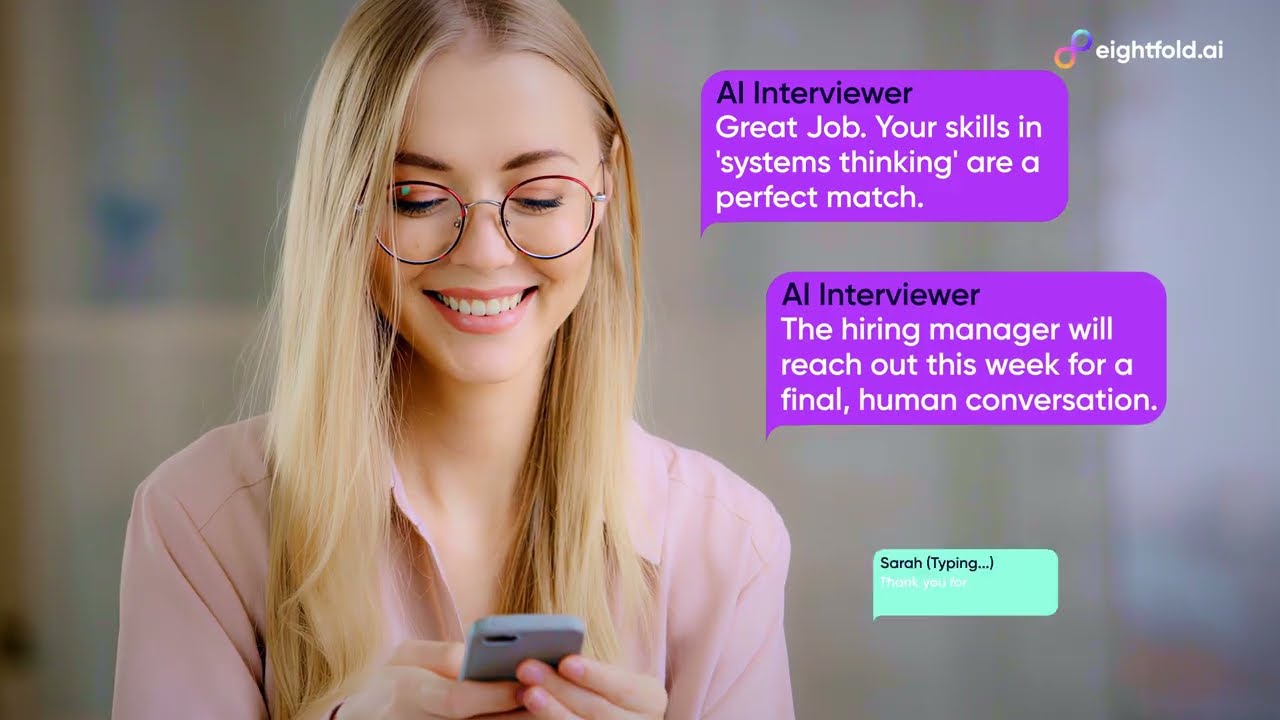
Learn how our AI Interviewer is multiplying leverage for high-volume hiring.
AI doesn’t replace effort, it multiplies leverage
The biggest misunderstanding in the AI debate is that productivity tools reduce labor. In reality, they increase ambition. When AI removes friction, you take on more scope, move into strategy faster, and attempt bigger problems.
This is not automation of work. It is the acceleration of impact. But only for those who know how to operate this way.
What makes an AI-native employee different?
An AI-native employee is not someone who uses ChatGPT. That’s AI-curious.
An AI-native employee has fundamentally reorganized how they think, work, and create around AI as a partner, a tool, and an infrastructure layer.
Here’s what distinguishes them:
1. They think in leverage, not tasks.
The traditional employee asks: What do I need to complete? The AI-native employee asks: What should I do myself, what should my agent handle, and what should we do together?
They don’t just produce output. They design how output gets produced. It’s the single biggest mindset shift separating AI-native from everyone else.
2. They architect their own workflows.
They break work into components, build repeatable agent instructions, create reusable “skills,” and orchestrate multi-step systems. They maintain subscriptions to multiple AI models Claude for deep analysis, ChatGPT for rapid iteration, Perplexity for research, specialized models for code or images, local models for sensitive work, and know which one excels at what. They’ve customized each tool with persistent context so the AI already understands their role, company, and preferences before a single prompt is typed.
In many organizations, this capability doesn’t even have a title yet. It’s closer to what I’d call a work architect — someone who designs how work flows between humans and AI.
3. They build and manage AI agents.
This is the defining leap. AI-native employees have moved beyond one-off conversations with chatbots to building persistent AI agents that do real work autonomously. They create persistent AI personas with their own Slack accounts, email access, and CRM connections.
These agents handle recurring tasks: daily research summaries, competitive monitoring, pipeline analysis, content repurposing, reporting. Some AI-native employees have built meta-agents an orchestration layer that manages their other agents, checks quality, and surfaces what matters.
They’re not just using AI. They’re managing a hybrid team.
4. They are comfortable with recursion.
In AI-native work, things don’t move linearly. They loop: draft, AI critique, AI improve, refine, optimize.
AI-native employees aren’t threatened by this. They expect their work to be challenged and refined. They build feedback loops where one agent evaluates another’s output, where nightly processes review the day’s work and generate improvement recommendations. The system gets smarter while they sleep.
This compounds over weeks and months in ways that are impossible to replicate through human effort alone.
5. They understand governance and data responsibility.
Here’s where the conversation gets serious. AI creates real risks: data leakage, intellectual property exposure, security vulnerabilities, and agent trace transparency issues.
When employees use public AI endpoints to interrogate strategy documents, proprietary models, or confidential data, that information flows back to the model providers. There’s growing legal scrutiny including recent rulings suggesting that content processed through cloud AI tools may not retain attorney-client privilege.
AI-native doesn’t mean reckless experimentation. It means knowing what can go to a public endpoint and what requires enterprise control.
6. They manage their energy, not just their output.
AI amplifies output, but it can also amplify exhaustion. The UC Berkeley study found that 62 percent of associates and entry-level workers reported burnout from AI-intensified work, compared to 38 percent of C-suite leaders.
AI makes it easy to start more, take on more, and blur the boundaries between work and life.
The AI-native employee treats energy management as a core capability, not an afterthought. They build systems that work while they don’t, so they can protect their cognitive resources for the judgment calls, creative leaps, and human connections that AI can’t replace. They know that sustainable leverage beats unsustainable intensity every time.
7. They own the decisions.
This may be the most important trait of all.
As AI takes on more of the execution, the human’s role shifts decisively toward judgment, decision-making, and accountability. AI can generate options, surface patterns, draft recommendations, and run scenarios at a speed no human can match.
But it cannot own the outcome. It cannot take responsibility for a bad call. It cannot weigh competing stakeholder interests with the nuance that comes from lived experience, organizational context, and ethical reasoning.
AI-native employees understand this distinction instinctively. They use AI to expand their information landscape and accelerate their analysis but they never outsource the decision itself.
In a world where AI can generate a persuasive case for almost any position, the ability to exercise sound judgment to know when the data is incomplete, when the model is biased, when the recommendation feels right on paper but wrong in practice becomes the ultimate competitive advantage.
Accountability doesn’t get automated. It gets elevated.
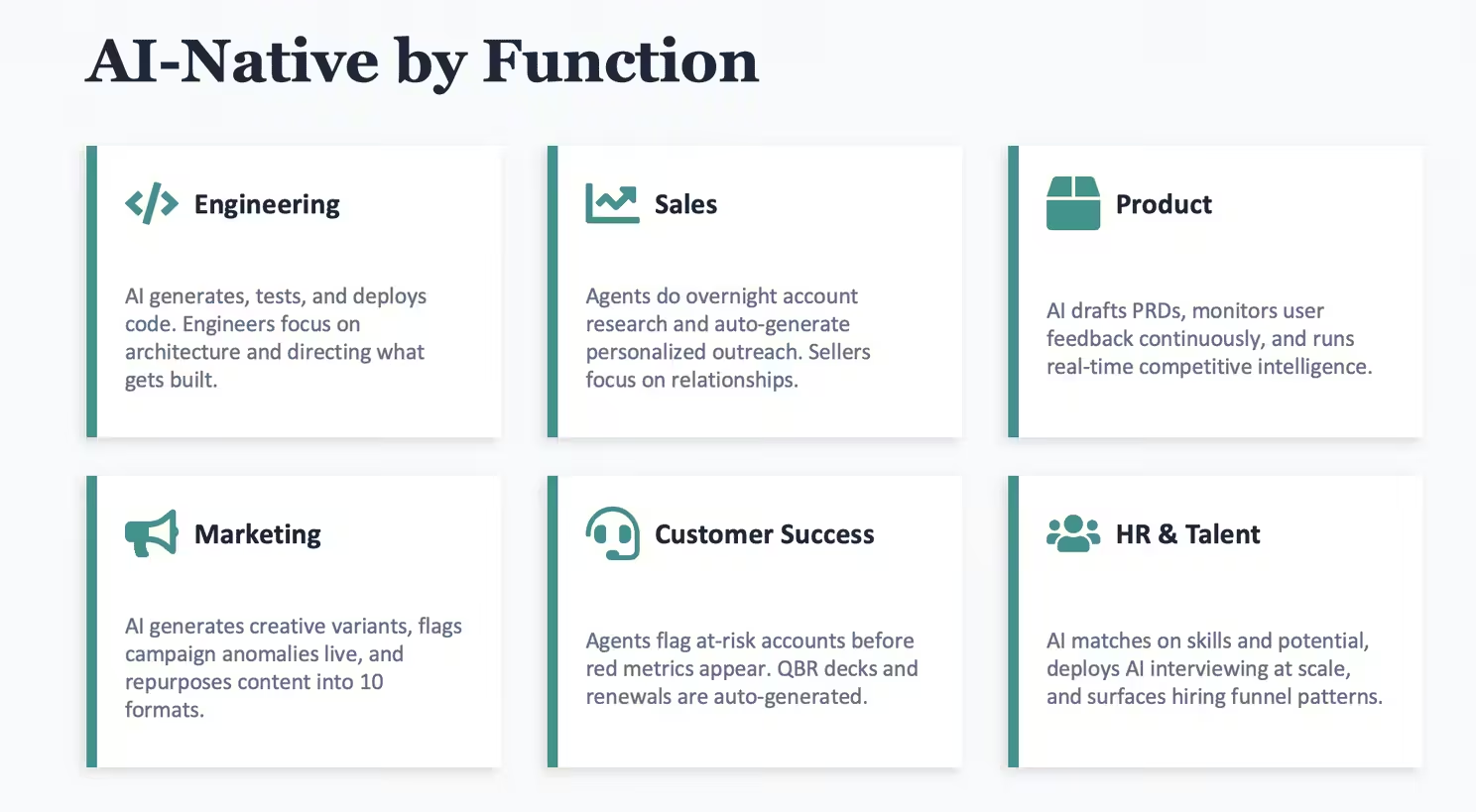
The curiosity engine: Why AI-native employees work more and love it
Here’s what the burnout narrative misses. Yes, AI-native employees work more. But they’re not grinding out of obligation. They’re leaning in because their work has become more interesting.
When you offload the mechanical, repetitive parts to AI, what’s left is the work that actually matters: strategic thinking, creative problem-solving, the questions you never had time to explore.
I see this in myself. I now work across more topics, go deeper on each one, and move from question to insight to action faster than at any point in my career because the friction between curiosity and results has collapsed.
Before AI, I might have had an idea about a competitive positioning shift or a new go-to-market approach, and it would sit in a notebook for weeks waiting for bandwidth. Now, I can explore it in an afternoon — research the market, draft a framework, pressure-test it against data, and share a working proposal with my team.
The bottleneck isn’t capacity anymore. It’s imagination.
The tool itself creates a virtuous cycle: the more you use AI, the more you discover what’s possible, the more curious you get, the more you explore, and the more productive you become. This creates a workforce that is inherently adaptive exactly what every organization says it wants but struggles to build through traditional L&D programs.
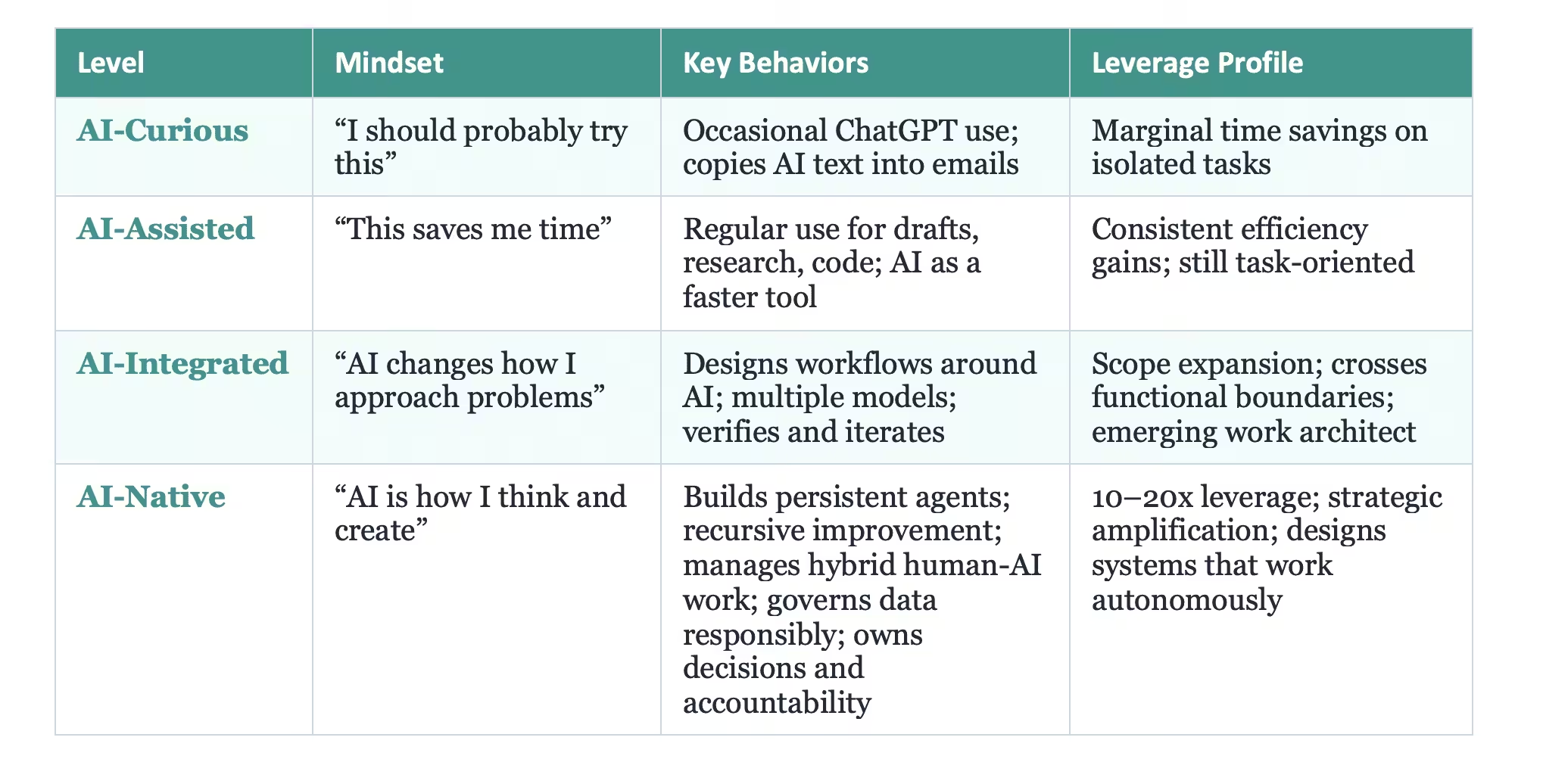
Where are you on the AI-native curve?
Not everyone needs to be deploying meta-agents tomorrow, but everyone should know where they stand and be actively moving forward.
Most professionals today sit between AI-Curious and AI-Assisted. The opportunity is to move toward AI-Integrated and AI-Native with intention and structure because the performance gap between levels isn’t linear. It’s exponential.
The talent implication
Organizations talk about AI transformation, but very few are asking the right question: Are we building AI-native talent?
AI adoption from the top down will be slow policy, procurement, and RFP cycles. Meanwhile, early adopters inside companies are quietly redesigning their workflows from the bottom up, making the change a fait accompli while the official strategy is still being debated.
The organizations that win won’t just deploy AI platforms. They’ll identify AI-native employees, reward leverage thinking over task completion, and upskill their workforce in orchestration and judgment, not just tool usage.
The real shift
We are moving from task-based jobs to leverage-based work. The future knowledge worker isn’t defined by how much they can do. They’re defined by how much they can amplify.
The AI-native employee is already the person in your next meeting who delivers in two hours what everyone else thought would take two days. They’re the colleague who built an automated competitive intelligence pipeline over a weekend. They’re the new hire who manages a team of AI agents before they’ve finished onboarding.
And yes something big is happening. But it isn’t just technological. It’s human.
The question isn’t whether this shift is coming. It’s whether you’ll be the one leading it.
Want to go deeper on what the AI-native workforce actually looks like in practice? Our new Infinite Workforce ebook is your next read.