

- Superworkers are employees whose skills are enhanced by AI, enabling them to help organizations grow faster and achieve more.
- Research from The Josh Bersin Company shows that leading organizations across all industries tap into these “Superworkers” and prioritize skills velocity, which is essential in this era of rapid transformation.
- This transition to AI-driven productivity demands a cultural shift, and HR teams can play a valuable role in fostering curiosity and enabling an evolution in mindset.
At the start of 2025, The Josh Bersin Company introduced us to “Superworkers.”
It’s a term coined by the organization describing employees whose talents are enhanced by AI in ways that empower them to help organizations grow faster and achieve more than ever before.
Creating Superworker workforces is possible for organizations everywhere — with the right technology, the right leadership, and the right culture.
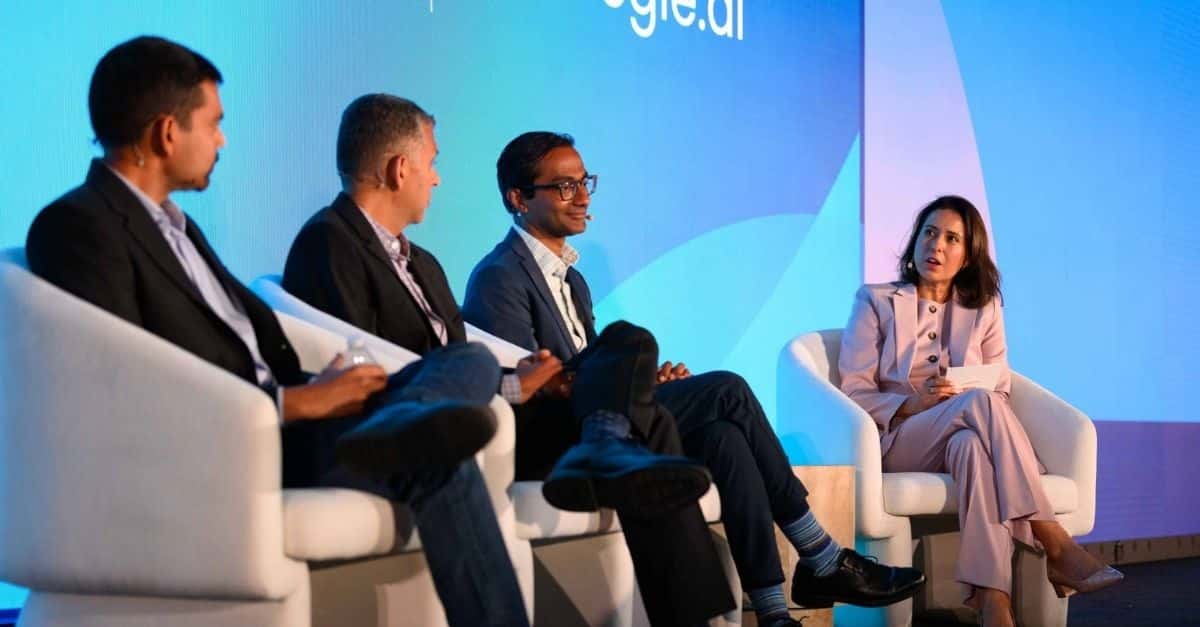
Recently Rebecca Warren, Director of Talent-centered Transformation at Eightfold, sat down with Kathi Enderes, SVP of Research and Global Industry Analyst at The Josh Bersin Company, to discuss research on successful strategies of high-performing organizations, and in enabling the rise of the Superworker.
Here are some of the highlights from their conversation.
Rebecca Warren, Director of Talent-centered Transformation at Eightfold, and Kathi Enderes, SVP of Research and Global Industry Analyst at the Josh Bersin Company, discuss how AI and humans working together is the best way to embrace AI.
Rebecca Warren: I’d love to start with talking about the Superworker. Can you tell us — what does that even look like?
Kathi Enderes: There are two ways to think about AI transformation: AI is replacing humans or AI is enhancing humans. The Superworker concept, which we introduced last year, embraces the latter by acknowledging that AI and humans are actually not good at the same things.
AI is much better than people at certain things, and people are much better than AI at certain things. If you provide every employee in the organization with AI — from the front-line to mid-level managers to executives — you can broaden your reach and grow much faster. If they’re doing 10 times more work, you’re getting 10 times more value for the organization
Every organization already has Superworkers. They’re the people that experiment with AI and try to use AI to get rid of the work that they don’t love, and do more of the work that they do love. We’re seeing that the highest-performing organizations, which we call Pacesetters, actually tap the energy of these Superworkers, and it helps take the organization forward in new ways.
R.W.: Let’s talk more about Pacesetters. Can you define what a Pacesetter is, and share how these enterprises are investing in AI to boost productivity and human potential?
K.E.: With our Global Workforce Intelligence Project, we partnered with Eightfold and sought to understand what skills are rising and declining in different industries. As part of that, we also identified the leading companies in each industry, which we call the Pacesetters. Our research really looked at the skills data and talent data sets and asked what are these Pacesetters doing differently in terms of AI transformation?
The overarching theme that we saw is they’re not just focusing on skills depth or skills availability, but what we call skills velocity, or how quickly they enable people to learn new skills and to move people around in a human-centered way to put them on the most important initiatives and projects in the organization based on these skills. The focus on skills velocity is an important concept. With AI transformation, skills and needs are changing quickly in every industry.
Warren and Enderes discuss the importance of identifying skills potential, not just existing skills, to continue growing in the age of AI.
R.W.: Skills velocity is so interesting when you think about it that way. So, how do we start to rethink roles and workflows in these different stages of AI adoption?
K.E.: When we think about AI transformation, we generally see organizations at one of four stages. The first stage is basically using AI assistance to make your job a little bit better and easier. So you might use a copilot or chatbot to draft better communication or maybe improve your slide content. And you may have 2-3% of employees who act like Superworkers, and have really taken the AI tools and significantly changed how they do their work.
In stage two, employees have access to the AI tools to significantly automate some parts of the job. So if you’re a recruiter, you might use AI to automate scheduling interviews, which gives you more time to have conversations with candidates or hiring managers.
Stage three would be using multi-functional, cross-functional agents that pull different parts of the organization together. For example, you could have an agent that does interview scheduling on the recruiting side, and also connects with the learning agent to say “we need to train people from the inside as well as hire from the outside in order to fill a certain skills need in the organization.” That stage really requires people to think outside of their job.
And in stage four, you have fully autonomous agents that the human oversees. They orchestrate everything and are capable of analysis. In that stage, the roles change significantly, and the productivity increase is much higher.
R.W.: What are the challenges organizations face in getting to stage four?
K.E.: It’s really a mindset shift, and a challenge of people and culture within an organization. People are intimidated by these technologies. They don’t know how to use it and they think they’re going to break it.

So it’s a matter of change agility — how quickly can we adopt these things? That part is exciting, because it really amplifies the role that we have in HR to support all of this. It’s not an IT thing. It’s a change in culture and people prioritization, and that’s the kind of exercise that we need to lead to help the organization through.
R.W.: Yes, it truly is about helping people move from fear to curiosity and shifting that mindset in the organization to a learning culture. For folks who want to start applying these principles, what step should they take to start building a Superworker organization?
K.E.: I think that one of the biggest shifts really is that mindset shift. So thinking about AI not just as cost-cutting, but as a growth opportunity. Think about how it can amplify the growth of your organization, how you can access new markets, design new products, identify new opportunities and build upon what humans can do and what the organization can do.
The question to ask throughout the enterprise is, “How can I use the tools that I already have to do more of the stuff that I like to do, and less of the stuff that I don’t like to do?” That’s really the Superworker mindset.
Watch this full conversation in the webinar, Beyond automation: How Superworker organizations are redefining productivity with AI, now available on demand.