

Talent leaders must feel confident that their workforce decisions are setting them up for success — and that requires insights backed by data.
In 2023, workforce planning can’t happen in a talent data silo. Instead, organizations need a deeper understanding of which skills they have in current employees, and which skills are trending in the market and with their competitors to fully grasp the evolution of roles and skills they’ll need to stay competitive.
Skills-driven workforce planning will require organizations to rethink how they approach their most fundamental talent programs across the entire employee life cycle. For example, when talent teams focus too much on filling vacant positions one-to-one with external candidates, it can leave them scrambling to close critical skills gaps. This makes planning for future workforce needs tricky.
“The problem is that job frameworks may be too rigid for companies operating in unpredictable or rapidly changing skills environments,” writes Marion Devine, Senior Researcher in Human Capital Management at The Conference Board.
Organizations must be more agile with talent strategies to adapt quickly to changing economic conditions.
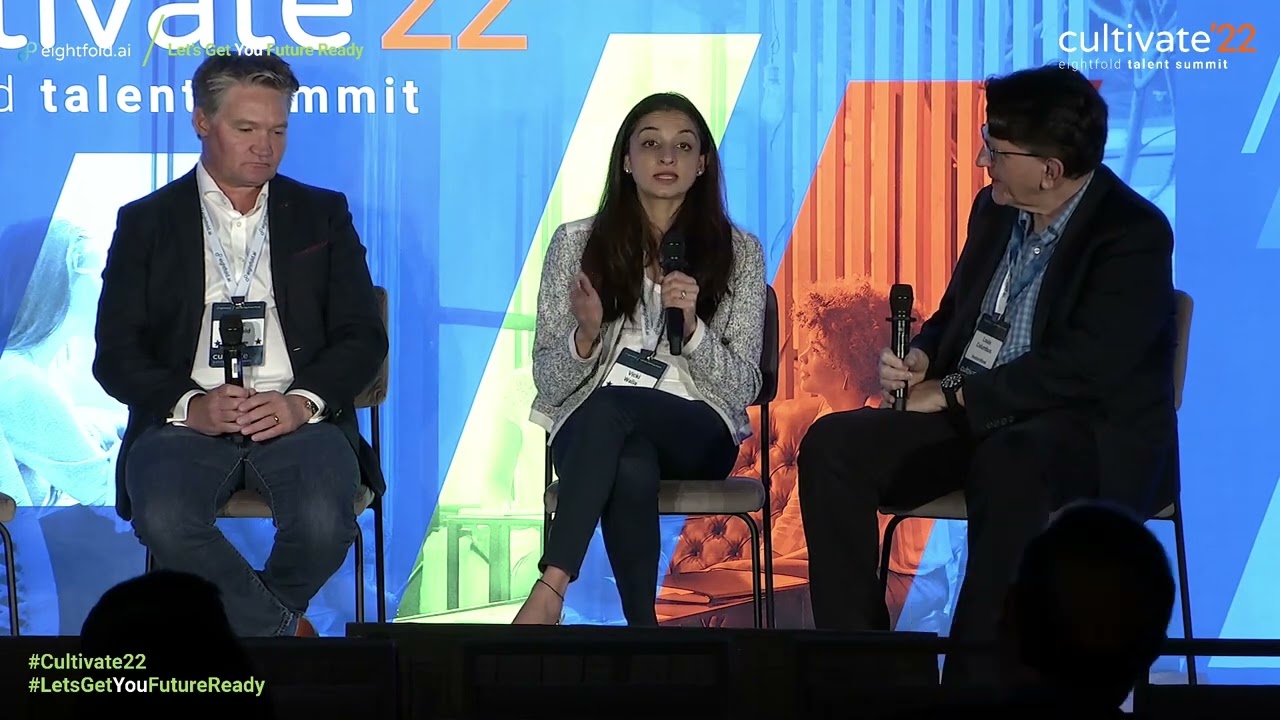
Related: Talent leaders at Vodafone and Prudential talk about their unique approaches to upskilling, internal mobility, and encouraging employees to use skills in meaningful ways.
This pivot from traditional job-based to skills-based workforce planning lets organizations be proactive instead of reactive when managing workforces. This also gives them a competitive advantage in uncertain economic climates.
But making that transition isn’t simple. It requires changes across organizations, not just in HR departments. Here’s how to break work down into skills, incorporate upskilling into a total talent strategy, and use holistic skills intelligence to your advantage.
Break work down into skills
The first — and possibly most critical — change employers need to make as they shift to a skills-based talent strategy is learning to deconstruct work down to the skills level.
Subjective job descriptions present hiring managers with an ideal “perfect candidate” based on a particular combination of skills and experience. In theory, that doesn’t sound so bad, but the problem is when the available talent pool cannot meet all of the requirements for a role, the job remains open.
It’s time to reframe how work gets done so organizations can identify which skills they need, said Jason Cerrato, Director of Product Marketing at Eightfold AI. For example, it may be that a project team of multiple people with different skill sets is better suited to tackle the responsibilities of a role on a per-project basis than one person on a full-time basis.
The deconstruction of roles into skills enables talent teams to better identify business needs, skills gaps, and creative solutions for getting work done with fewer people.
“Taking a skills-based view of talent opens many doors for business,” said Manpreet Randhawa, CMO at Insight222. It lets employers tap into talent outside and inside the organization, which is often overlooked in role-based talent strategies.
Balance upskilling and reskilling with recruiting
Skills-driven workforce planning provides employers with a new framework to solve persistent talent issues, like labor shortages and budget cuts.
“Employers realize they cannot recruit their way out of the deficit they face,” said Michael Watson, Head of Customer Advocacy at Eightfold AI. It’s becoming increasingly essential to find a balanced talent strategy that recruits external talent and upskills current employees to fill skills gaps.
But few employers have a “good understanding of the current skills and experiences within their virtual walls,” said Fran Maxwell, Managing Director of Workforce and Organizational Transformation at Protiviti. “Leaders must start thinking beyond whether a team member or candidate has the skill set today to do a job. They need to have their eye on the future and assess whether candidates or team members can learn the new skill sets of the future.”

This requires organizations to understand the concept of learning agility, said Alexandra Levit, journalist and author of several books on careers, the future of work, and human-machine collaboration, in an Eightfold podcast. Rather than “insist that a candidate must have the exact combination of skills and experiences that are ideal for a role, you can really just look for a couple, and one of those is learning agility,” she said.
Organizations also need to have opportunities for employees to upskill in place. That could include online courses, mentorships, or “learn-by-doing” projects.
Manage change to enable skills-first practices
Becoming a skills-first organization requires changing processes and mindsets to meet skill needs differently.
Andrea Shiah, Head of Talent Strategy and Transformation at Eightfold AI, said this is an opportunity for HR to lead the change-management process, even if it’s not their area of expertise.
To help talent teams get started on this journey, Deloitte researchers advise the following:
- Think of the transformation as an evolution, not a revolution. It’s best to start small and expand the practice to different areas as it becomes more widely accepted after initial successes.
- Explain “why” first when seeking buy-in from others. The transition involves change at a systemic level in people processes. Start by defining the value proposition and business case to support the investment.
- Target organizational pain points. Identify where a solid business case exists for looking beyond traditional one-to-one hiring as a skills-gap solution. For example, talent leaders could indicate a need for more women in engineering-leadership positions to see how redesigning the job, and upskilling existing employees could improve representation.
Josh Bellis, Global Head of Talent Acquisition Programs at technology firm PTC, shared his team’s approach to global change management.
“It’s important to do that global story, and then it’s important to bring it down to that individual level,” Bellis said. “This will help you host conversations about succession planning and have data points behind you. For DEI, you’ll have access to a diversity dashboard showing you where the talent is coming in from and where they’re getting hired. It’s going to better each part of the organization and each one of the major stakeholders.”
As skills-driven decision-making grows, team leaders can build career paths for employees with skills at the foundation. This includes their current skills and how they will keep the organization relevant and competitive.
Let data drive the transition
It may fall to HR teams to lead their companies through this skills-based evolution. The good news is that AI-powered talent intelligence tools can inform every step. “Analytics has become a key strategic enabler and a critical partner to HR as talent teams navigate the new world of work,” said Carly Ackerman, Director of Customer Experience at Eightfold AI.
Talent intelligence makes practical sense of complex data. It can help HR leaders assess current employees’ skills, predict skills they’ll need in the future, and identify available skills in the market. Finally, this data-informed approach will empower HR leaders to make more informed, strategic talent decisions.
To do this, talent teams will also need to acquire the skills that enable them to use data for solving business problems. That’s why upskilling and reskilling have become essential for all employees, including HR teams. “This doesn’t require HR leaders to transform themselves into data scientists necessarily, but they must be able to collect and analyze data,” writes Phil Albinus, HR Tech Editor at Human Resource Executive.

With the right skills to capitalize on the power of talent intelligence tools, HR leaders can equip themselves with the skills to effectively guide their organizations through this evolution.
“Not only does this system unleash workforce capacity now, but it also accelerates the cultivation of new skills needed for tomorrow,” according to this article from Deloitte. By focusing on skills instead of roles, “organizations can more easily morph into becoming workforce ecosystems that seamlessly access skills inside or outside of the organization.” In 2023, HR leaders who use skills intelligence will have the greatest advantage to inform a total talent strategy to better weather any storm.