
- HR and recruiting teams are evolving to help businesses think strategically about hiring practices and strategies.
- An agile workforce makes an organization more resilient to change.
- Skills-based hiring centers a business around finding talent — not just filling jobs.
Change is a given in workplaces of all shapes and sizes. An agile workforce is crucial for responding productively to change, whether it’s planned or unexpected.
Of course, agility isn’t a skill you can command. Building teams that can adapt and respond as the enterprise evolves takes time, planning, training, and communication.
That’s where strategy-minded HR leaders come in.
To build dexterous teams, talent professionals can share data-driven insights that identify the skills an organization needs, assess which employees already have those skills, and devise a talent strategy to bring on new workers — whether they’re employees or independent contractors — who can help reach business goals.
Recently, I led a discussion on how to design the right talent strategy. Joined by Kevin Blair, Global Head of Talent Acquisition at Ericsson, and Ben Broomfield, Head of Content for HR Grapevine, we had an energetic exchange about the evolving role of HR and shared insights on how to find the right skills to build teams that perform well.
Read on for our top observations on how to incorporate this approach in your business.
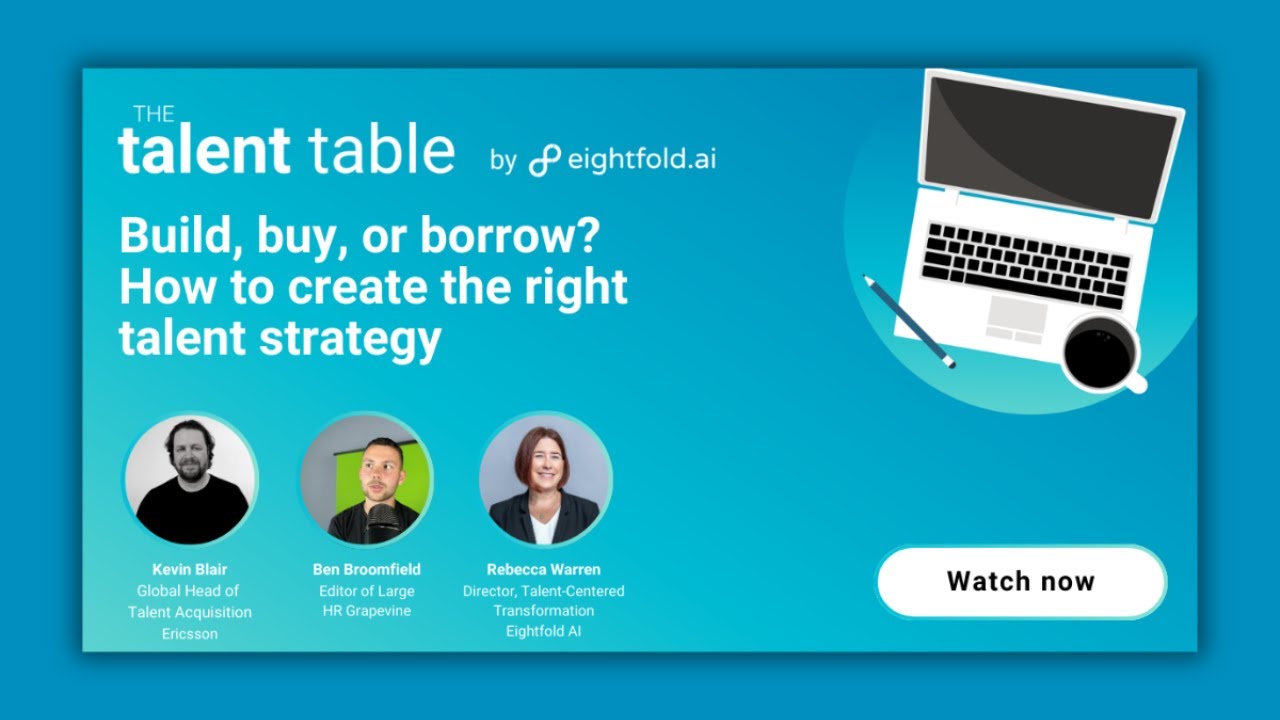
Related content: Watch the webinar “Build, buy, or borrow? Creating the right talent strategy” on demand now.
Prioritize sustainable recruiting practices
During the pandemic, many organizations went on a hiring blitz, often dedicating extraordinary resources to attracting top talent. Broomfield said that talent leaders were all too eager to facilitate that growth.
Fast forward to today, and many businesses are grappling with where some employees fit in.
“We had to turn around and say, ‘Hang on, we basically just said yes [to all the hiring] … rather than saying, ‘Is that going to be the right thing to do for the business?’ ” Broomfield said.
To avoid these challenges in the future, Broomfield advised HR leaders to act as strategic partners when making hiring decisions rather than simply carrying out orders to recruit more talent.
Blair said there’s a name for that measured approach — sustainable recruiting.
“Leaders and talent leaders have never, historically, been asked to think about sustainable recruiting practices,” Blair said. “It’s like the business needs to grow, let’s grow, grow, grow, grow. The business is in a bit of trouble, or the markets [are] in a bit of trouble, retrench … layoff, redundancies, whatever.”
By offering strategic insights into hiring, such as advising managers to “borrow talent” — meaning work with independent contractors instead of hiring more employees or asking what business objective each hire ties to — HR can showcase its capability to guide organizations in hiring the right people at the right time.
Hire for potential, not credentials
Skills-based hiring is a hot topic in HR because it prioritizes the whole person you’re recruiting and their potential versus past accomplishments, like their education and competencies.
Blair said he uses hiring assessments that focus on learning agility, cognitive intelligence, and other “human” skills as opposed to their past work experiences.
“If someone’s been at one of our competitors writing Java for the last four years, how much do I need to assess whether they can write Java versus what else they are capable of bringing to our company?” Blair said. “Let’s focus on the person we’re bringing in and the development opportunity we have as a company by bringing them forward.”
Knowing that businesses will inevitably change, it’s far more valuable to understand how talent can grow with the company and potentially contribute to roles that may not even exist today.
Yet, the skills-based approach, which centers the business around talent rather than just filling jobs, is a significant departure from past hiring practices. However, its adaptability to changing business needs reassures us that it is a strategy for the future, albeit one that will require an overall shift in culture.
For that reason, hiring someone with room to grow is essential.
‘I’m looking for the perfect person’ is a common phrase among talent acquisition teams. But in truth, searching for a candidate with 100% of the skills and experience you’re seeking comes with challenges. Namely, it could take an excessively long time, and that person will inevitably need to be untrained on what they’ve learned if they’re accustomed to different processes.
Instead, look for motivated team members with potential instead of fixating on particular keywords. They’ll have room to grow and will bring you along with them.
Related content: Learn how Chevron is taking a skills-based approach to talent management with AI in this blog post.

Show leadership the benefits of skills-based hiring
It’s a given that training is a part of workforce development. Every day, team members train in sales, technology, and communication. And yet, when it comes to hiring and developing a team, managers are expected to know how to do it.
“A hire is a critical business decision because you wouldn’t have the role if it wasn’t key if it didn’t add value,” Blair said. “But then we just expect people to do it. We direct and we point and we criticize, but we don’t enable.”
Like anything, these skills can and should be taught. When managers understand good recruitment and the importance of skills-based hiring for their team and the overall business, they’re more likely to adopt and commit to the approach.
“If you’re going all-in to a change like this, that’s a major undertaking,” Broomfield said. “The organization and everyone within it has to understand why you are making that change, what the benefit to them is, why it’s worth their time, why it’s worth their listening to.”
Related content: The government of Puerto Rico adopted talent intelligence to solve big hiring challenges. Learn more in this episode of The New Talent Code.
Hire with a growth mindset
Talent teams should ask prospective employees about their goals when it comes to learning and development.
Enquire about things like, “What training are you looking to get?” “What experiences do you hope to have?” as early as those first interviews.
This can unlock powerful insights into how a person wants to grow and develop, which can then present exciting opportunities for career mobility.
“When we look at this skills-based approach and how companies can be more agile, it comes down to how they can really think about the skills that they have within the organization and how they can be best deployed,” Broomfield said.
Before a valued employee starts searching for jobs elsewhere, HR knows their goals and their skills and may be able to keep them engaged by offering them new and different opportunities internally.
“It’s always better to retain those skills within the business,” he added, “even if you’re losing them from that specific team.”
Watch the webinar “Build, buy, or borrow? Creating the right talent strategy,” on demand now.
Rebecca Warren is a Director with our Talent-centered Transformation Team. Before joining Eightfold, she held multiple talent leadership roles with large CPG, agri-biz, restaurant and retail organizations.