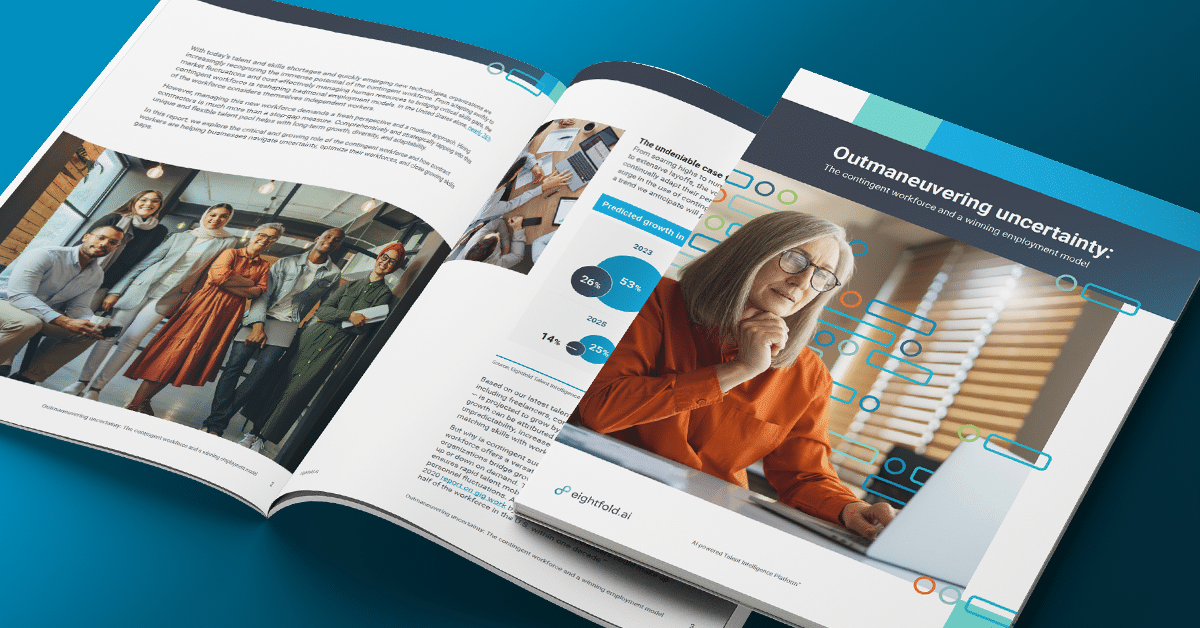

Contingent workers and contingent positions have both exploded in the past decade. During the pandemic, a Gartner study found that 32 percent of organizations, or nearly one in three, had replaced full-time employees with contingent workers in order to save money, says Brian Kropp, Gartner’s group vice president and chief of HR research.
Contingent work may become the new normal among workers, writes Marcin Zgola, founder of community-driven marketplace app Wage. Yet contingent work poses a number of new challenges for businesses, whose current workforce strategies are a poor fit for both the nature of contingent work and the factors that drive contingent workers’ decisions.
We sat down with Kevin Akeroyd, David Francis, and Aashir Shroff at Cultivate ‘22 to discuss the mismatch between business’s strategies and contingent workers’ decisions — and the role technology plays in bridging the gap.
Why businesses struggle to understand contingent workers
The shift to contingent work is both a cause and an effect of fundamental transformation among the workforce. Contingent work changes how workers work — and in so doing, it changes how workers understand the nature of work, the relationship between business and the worker, and their own identities as people who perform work.
These new ways of thinking about work drive new behaviors and choices by workers. Companies whose metrics and strategies fail to account for these new choices and the fundamental shifts that drive them will be left behind, write Jeff Schwartz and fellow researchers at Deloitte.
Yet there is hope.
“Business intelligence enables organizations to move beyond short-term mindsets that can limit talent retention and stunt global growth initiatives,” writes Kevin Akeroyd, CEO at integrated workforce management platform PRO Unlimited. By pairing a strategic approach with up-to-date technology, companies can make better predictions about the workforce, reach more informed business decisions, and weather transformation for long-term growth.

How to engage the contingent workforce
According to Antonio Barraza in HR Daily Advisor, four best practices underlie successful engagement of contingent workers:
- Communicate aspects of the work that reflect contingent workers’ preferences.
- Create value for contingent workers that gives them a reason to choose your organization.
- Understand how other companies in your industry use contingent workers and how these choices affect their ability to compete.
- Know that contingent workers are always looking ahead — and do the same.
Each of these best practices require a foundation of information, analysis, and insight. As workers’ fundamental understanding of and approach to work changes, companies need new sources of information to analyze and consider.
Advanced analytics provide an answer. By applying artificial intelligence and machine learning to a deep pool of worker- and industry-related data, CHROs and their teams can:
- Understand what drives contingent workers by identifying patterns in workers’ choice of tasks, roles, and companies.
- Identify opportunities for skill growth and advancement within your organization and industry, and connect contingent workers with these options.
- Analyze the use of contingent workers across your industry and the workforce as a whole in order to spot patterns, make predictions, and create an informed strategy.
- Use predictive analytics to inform future decision making.
The COVID-19 pandemic, the drive toward remote work, and the increase in contingent workers and contingent roles have fundamentally changed how workers think about their careers, their lives, their skill growth, and their job advancement. Companies that use technology to understand these patterns can more easily communicate with contingent workers — drawing these skilled individuals into the organization and building a mutually beneficial relationship.
“The post-pandemic shift toward a more flexible workforce is a welcome development for contingent workers, but it makes the jobs of those doing the hiring more competitive than ever,” writes CEIPAL founder and CEO Sameer Penakalapati. Technology can help CHROs and their teams align their hiring practices with the needs and drivers of contingent workers.
Images by: Magda Ehlers, Dmitry Demidov