
Most organizations treat interviewing as an operational task — a logistical step in moving candidates through a pipeline. Schedule the interview, fill the slot, send the feedback form.
But here’s the strategic reality: when there aren’t enough qualified interviewers to keep pace with hiring demand, the consequences extend far beyond a slower process. They ripple outward into retention rates, employer brand, competitive positioning, and the organization’s ability to execute on its growth agenda.
Interviewer capacity is a workforce risk. It belongs in the same conversation as labor market tightness, skills gaps, and succession planning — not buried in a recruiting ops report. The sooner HR leadership names it as such, the sooner they can bring real solutions to the table.
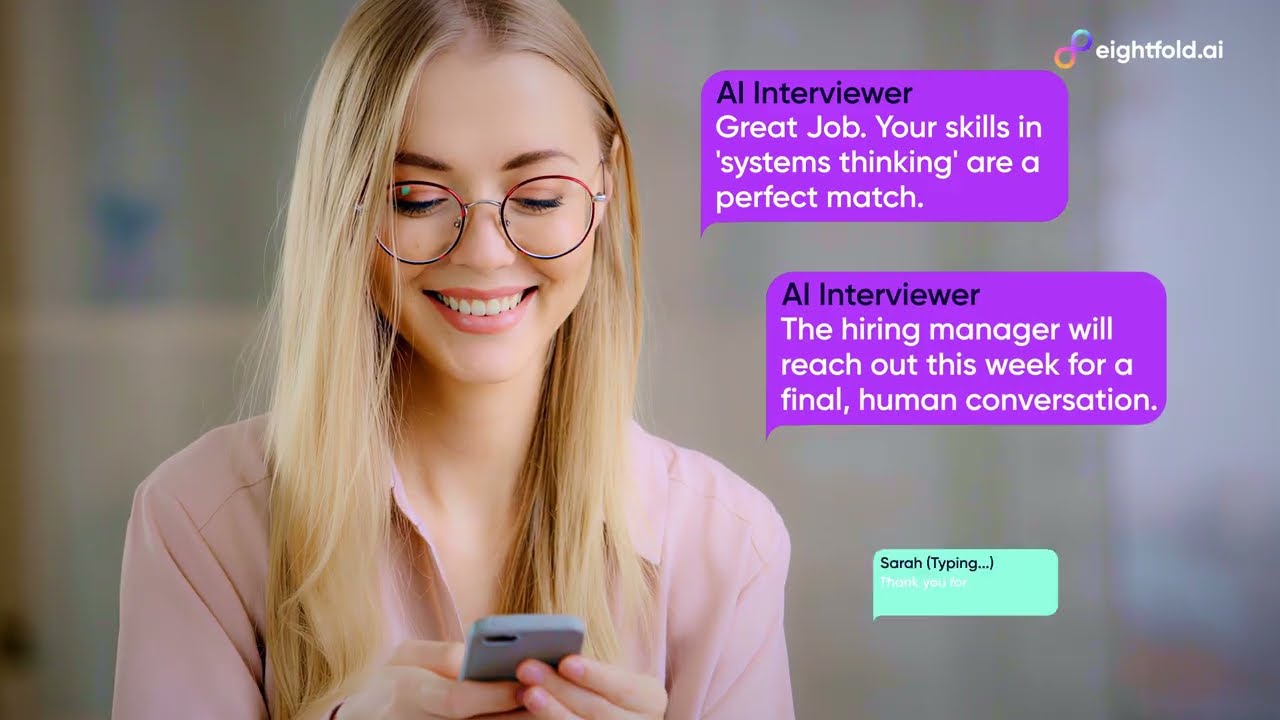
Learn how AI Interviewer can help solve your interviewer capacity problem.
The interviewer capacity problem
Let’s start with the math: who actually conducts interviews in most organizations?
Senior contributors and managers — the same people accountable for team output, project delivery, and their own performance targets. Interviewing is rarely their primary job. It’s something they do in addition to everything else.
When hiring volume increases during a growth phase, a product launch, or a reorganization, their availability doesn’t scale with it. The number of hours in the day stays fixed.
The result is a structural mismatch between demand and supply that plays out in predictable ways:
- Pipelines slow down as candidates wait days or weeks for scheduling.
- Interview quality becomes inconsistent, varying by who’s available rather than who’s best suited.
- Candidates drop off — strong ones, who have other options, simply move on.
- The people doing the interviewing burn out, which degrades the quality of the evaluation and the experience they’re creating for candidates.
None of this is new. HR leaders have known about interviewer fatigue and scheduling bottlenecks for years.
What’s changed is the scale. In a tight labor market, with distributed workforces and global hiring needs, the capacity gap has grown from a friction point to a genuine strategic constraint.
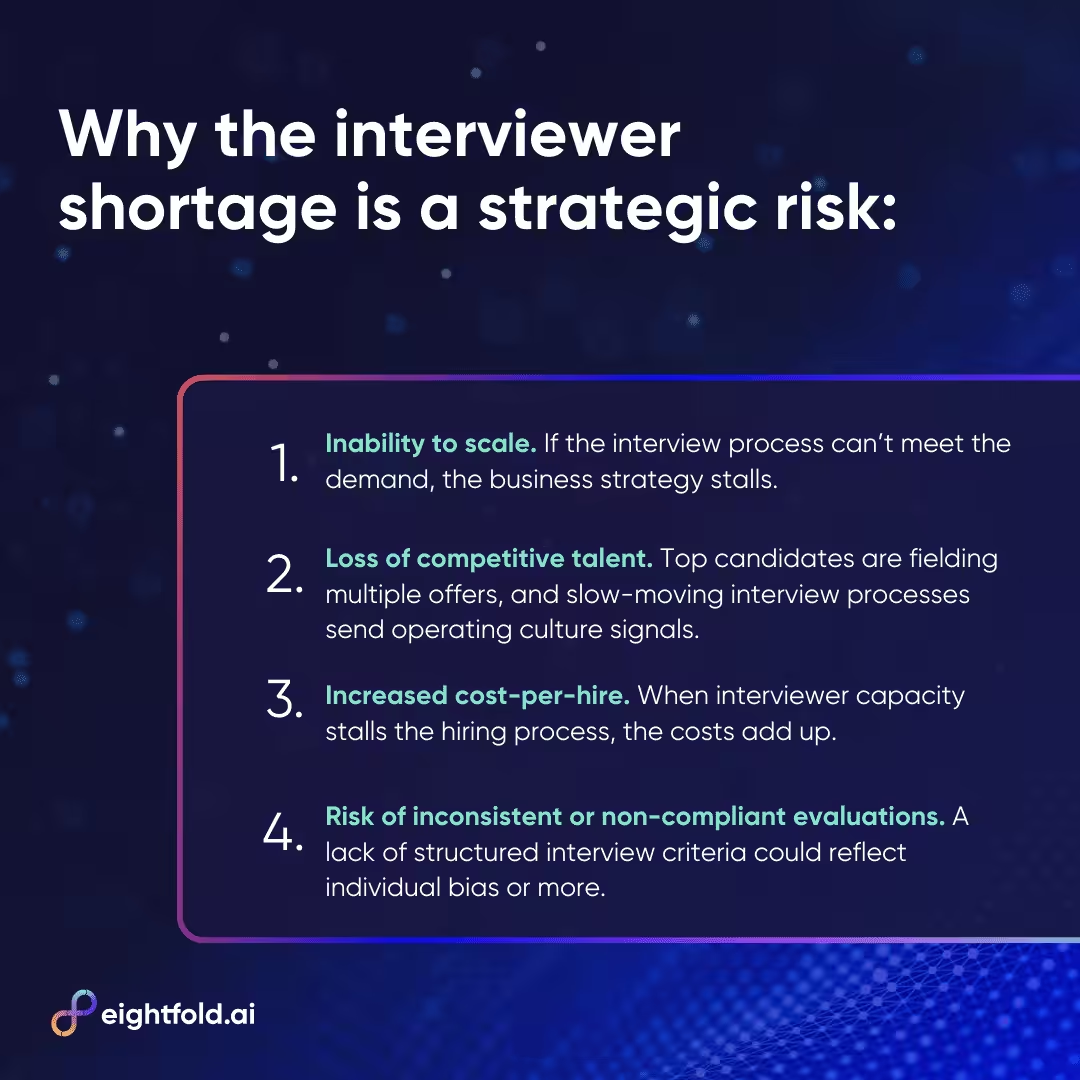
Why this is a strategic risk, not just an inconvenience
When a CHRO walks into a leadership meeting, they’re expected to connect people strategy to business outcomes.
Here’s how interviewer shortage does exactly that — and why it deserves a seat at that table.
Inability to scale during growth phases.
When the business decides to expand, launch into a new market, or stand up a new capability, hiring is the execution mechanism. If the interview process can’t scale to meet that demand, the business strategy stalls at the talent bottleneck. Growth plans don’t fail because the vision is wrong — they fail because the organization can’t hire fast enough.
Loss of competitive talent to faster-moving organizations.
Top candidates are not waiting. In high-demand roles — technical, leadership, specialized — the best people are fielding multiple offers. A slow, friction-filled interview process doesn’t just inconvenience them; it signals something about the organization’s operating culture. When a faster-moving competitor makes an offer first, the talent gap compounds.
Increased cost-per-hire at scale.
Every week a role stays open has a cost — in lost productivity, in recruiting resources, in manager time spent re-screening candidates who have already gone elsewhere. When interviewer capacity is the binding constraint, time-to-fill stretches, and those costs accumulate across the portfolio of open roles.
Risk of inconsistent or non-compliant evaluations.
When different interviewers assess similar candidates without structured criteria, the result is evaluations that reflect individual bias and inconsistency rather than role requirements. In regulated industries — or in jurisdictions with evolving AI and hiring compliance laws — this is not just a quality problem. It’s a legal and reputational exposure.
The traditional fixes and why they fall short
The standard playbook for interviewer capacity includes a few familiar moves. Train more interviewers. Reduce the number of interview rounds. Add recruiting head count. In isolation, each of these helps at the margin — and none of them are wrong.
Training more interviewers takes time and resources, and the moment those individuals take on leadership or delivery responsibilities, their interview availability shrinks again. Reducing rounds can accelerate timelines but often at the cost of confidence in the hire, leading to second-guessing and re-openers. Adding recruiting head count shifts the coordination burden but doesn’t address who is actually conducting the interviews.
The fundamental constraint remains: there will always be more demand for interviews than there are qualified, available people to conduct them.
This is not a training problem or a head count problem. It’s a structural capacity problem, and structural problems require structural solutions.
Related content: Why an AI interviewer might be the most candidate-friendly hire you ever make.
AI interviewing as a capacity multiplier
The strategic value of AI interviewing is not that it replaces human judgment. It’s that it extends the organization’s interviewing capacity without adding head count — and does so at a quality level that structured human screening often can’t consistently match.
Our AI Interviewer operates fully autonomously, 24 hours a day, across 22+ languages. Candidates can interview the moment they apply — no scheduling, no delays. Thousands of candidates can move through a structured, consistent screening process in parallel, without any recruiter involvement at that stage.
The system runs STAR-based functional interviews, coding assessments with real-time reasoning checks, and CEFR-based language proficiency evaluations — all grounded in our Talent Intelligence Engine, which is built on 1.6 billion real-world career trajectories.
What this frees up is equally important. Human interviewers — your senior contributors, your hiring managers, your functional leaders — can redirect their time to the conversations that actually require their judgment: final-round interviews, culture and leadership assessments, high-stakes evaluations where nuance and relationship matter.
The AI handles volume. Humans handle depth.
Critically, the evaluation is content-based: candidates are assessed on what they say, their experiences, and their demonstrated capabilities — not facial expressions, tone of voice, or any biometric signal. This design not only advances fairness and compliance with regulations like New York City’s Local Law 144 and Illinois’ BIPA, it also produces more consistent data for hiring decision-makers.
What this looks like for the business
When AI interviewing is deployed as a strategic capacity layer, the business outcomes are direct and measurable.
- Faster time-to-fill across the organization. Our AI Interviewer compresses hiring cycles to as few as 1.3 days, reducing time-to-fill by 33%. Candidates who apply today can complete a structured screening interview today.
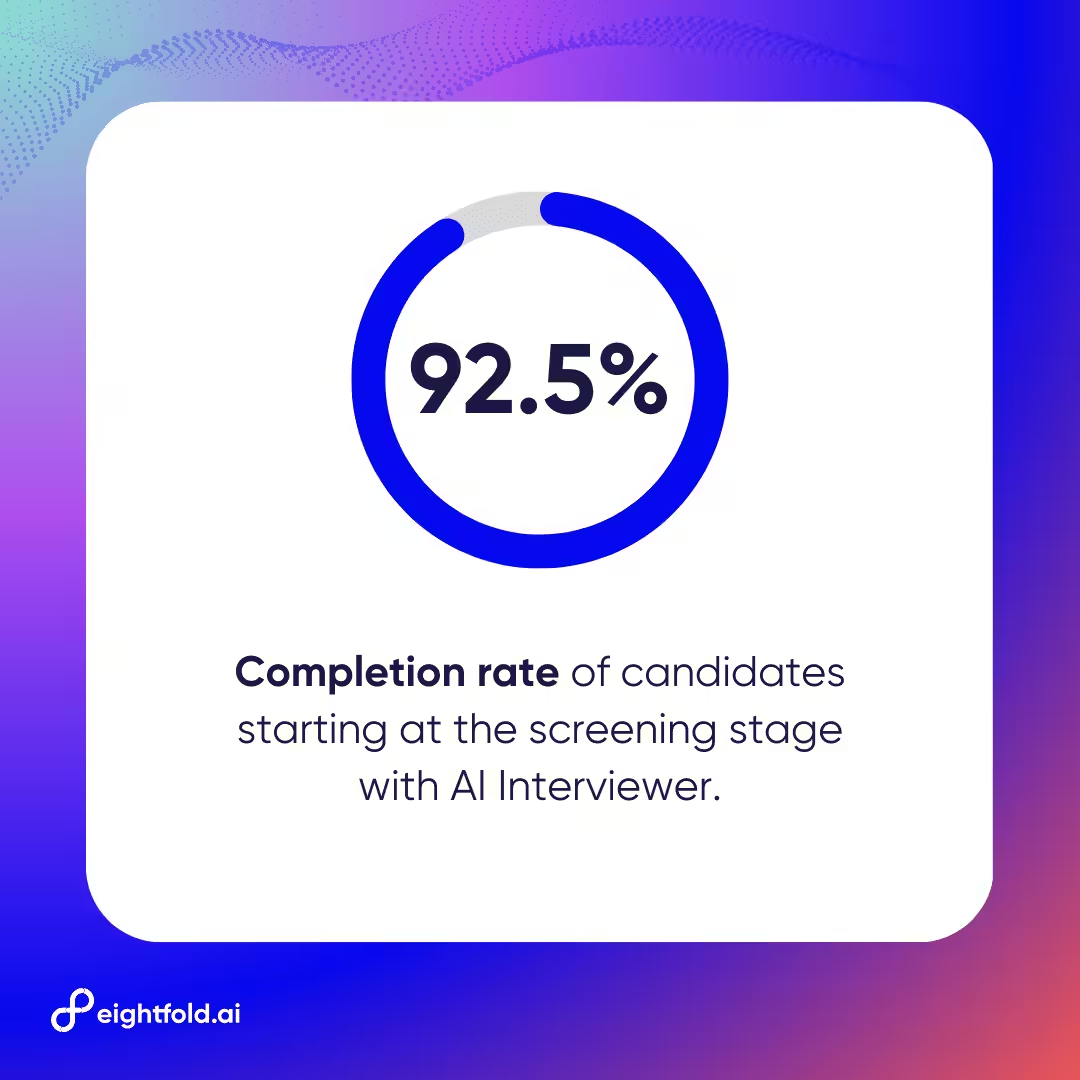
- More consistent candidate evaluation. Every candidate at the screening stage receives the same structured interview, evaluated against the same criteria. The result is a 92.5% interview completion rate and structured evaluation reports that give hiring teams comparable, defensible data.
- Reduced burden on managers and senior contributors. Automating up to 80% of manual recruiter work means the people doing the most valuable interviews are doing fewer of the least valuable ones. Their time is protected for conversations that actually require their expertise.
- Better candidate experience. Candidates interview on their own schedule, in their own language, with clear and fair conversations. The result is a 93% candidate NPS score — a measurable advantage in winning top talent in an increasingly competitive market.
- Lower cost-per-hire at scale. Fewer open roles sitting unfilled, less time from managers pulled into early-stage screening, and faster pipelines translate directly to reduced recruiting cost across the portfolio.
The interviewer shortage is solvable — if you treat it seriously
The interviewer shortage is not a scheduling problem that better calendar tools will fix. It is a structural capacity constraint that limits an organization’s ability to hire, grow, and compete — and it will continue to worsen as hiring volumes grow and the expectations of top candidates rise.
Treating it as the strategic risk it actually is means bringing the same rigor and investment to interview capacity that organizations bring to other workforce constraints. That means moving beyond incremental fixes and building a scalable infrastructure for interviewing — one that extends human capability rather than simply taxing it.
AI Interviewer is that infrastructure. It doesn’t replace the human conversations that matter most. It makes sure those conversations happen faster, more fairly, and without burning out the people your organization depends on.
If you’re ready to explore what this could look like for your organization, we’d welcome the conversation. Connect with our team to see a live demonstration, review a relevant customer case study, or get an executive briefing tailored to your hiring context.
See how Eightfold AI Interviewer can expand your hiring capacity.