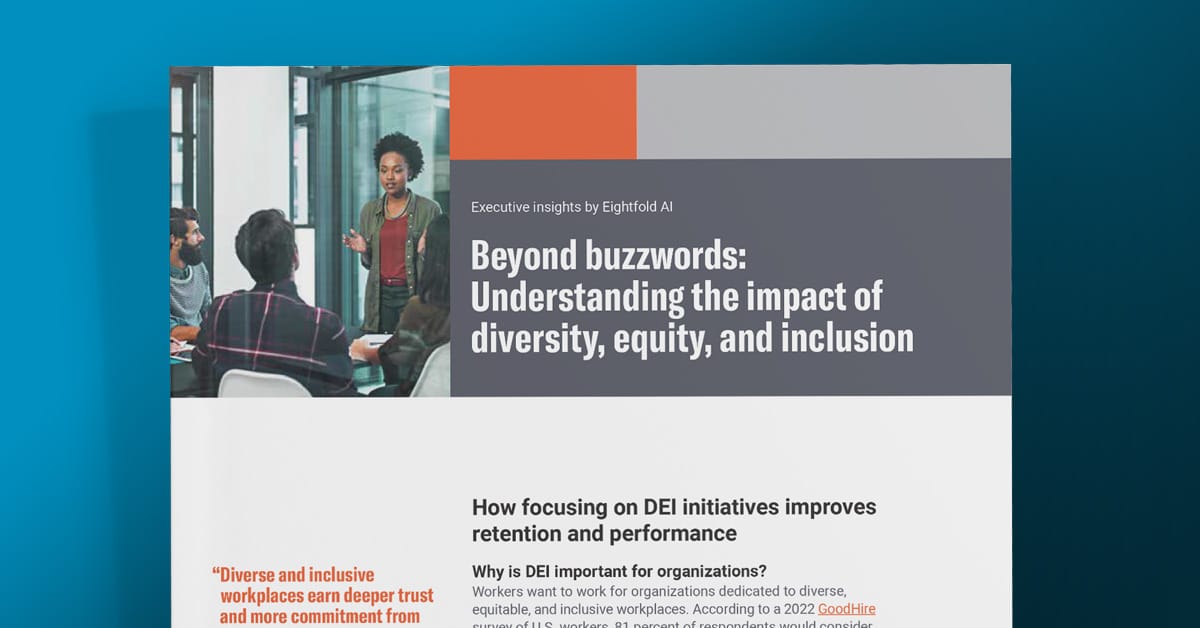


Improving diversity, equity, and inclusion (DEI) has become a top priority for most organizations, with good reason. Not only is it the right thing to do, but it is quickly becoming non-negotiable for companies that want to compete in today’s economic and talent marketplaces.
“DE&I is a strategic imperative to win the battle for talent amid the Great Attrition, better service clients and customers, and stay ahead of fierce competition,” write Diana Ellsworth, Drew Goldstein, and Vidya Mahadevan at McKinsey. In other words, DEI is playing an increasingly crucial role in the long-term survivability of companies.
Recognizing this, executive teams at companies like risk and benefits solutions provider Sedgwick are being very intentional about their DEI efforts. “We’re focused on ensuring that DEI isn’t a standalone function that operates independently in the business,” says Global Chief People Officer Michelle Hay. “It has to exist solely to solve business problems.”
The organizations that are successfully implementing DEI initiatives have three things in common:
- They consider DEI a critical element in the business strategy.
- They let the data drive DEI efforts.
- They implement technology that moves DEI forward.
Here’s a deeper dive into each of these key features of positive diversity, equity, and inclusion leadership.
Embed DEI in the business strategy
The organizations tackling DEI issues the right way don’t just do it because they think they have to. The leaders understand it can’t be another talking point or lofty HR goal that looks good on paper. Rather, it must be woven into the fabric of the company. These companies infuse DEI into their business strategy because it is essential to improving every aspect of the business.
Take talent management for example. At a time when the labor market is so competitive, employee retention becomes critical. Organizations can’t afford to lose their talent to the competition. “When you have a revolving door of employees, that impacts the bottom line,” says Gloria Puentes, director of global diversity and inclusion at quality of life services provider Sodexo.
So how do you keep employees? Data indicates they are more likely to stay if the company they work for makes a genuine effort to improve diversity, equity, and inclusion.
Results from a McKinsey survey show that employees “who feel very included in their organizations are nearly three times more likely than their peers to feel excited by and committed to their organizations.” Further, employees say “they have taken organizations’ inclusiveness into account when making career decisions.”
But it isn’t just HR. Every department and function stands to benefit from DEI improvements. “The best innovations can only come if our people reflect the world’s full diversity of individuals, opinions, and approaches,” says Alex Gorsky, executive chair at Johnson & Johnson.
The business leaders that recognize this have made DEI “a core ingredient in the design and execution of business strategy and embedded in the activities of the organization day in, day out,” write Gena Cox and David Lancefield at Harvard Business Review. These companies understand that if their DEI efforts don’t become an integral business capability, their organizations could suffer the consequences over the long run.

Take a data-driven approach to DEI
Another key feature of successful DEI efforts is the use of data to build a foundation based on facts and reality, not suppositions and perceptions. It’s important that leaders know and understand what the data says about their current state and future opportunities for diversity, equity, and inclusivity before they launch any new DEI initiatives.
“Being able to hone in on what’s really the opportunity for your organization is critical,” says Angela Berg, global diversity, equity and inclusion consulting leader at Mercer, when speaking at Cultivate ‘22: Eightfold Talent Summit. “And that’s where your data comes in.”
“Data is the critical compass that can lead your organization to a safer, more welcoming, more representative and more participatory place,” write Harvard Business Review Analytic Services researchers in their report on creating a DEI culture.
Data can be particularly useful in overcoming resistance to the changes that inevitably accompany DEI strategies. Through the data, leaders can tell stories about diversity and have constructive conversations about equity and inclusivity that are rooted in facts to encourage company-wide support.
Use data to have conversations about DEI
Communication is critical to the success of DEI initiatives. Universal buy-in from everyone in the organization is key to the success of these initiatives, which is why leaders need to have conversations about how diversity, equity, and inclusion benefits the business and how everyone plays a role.
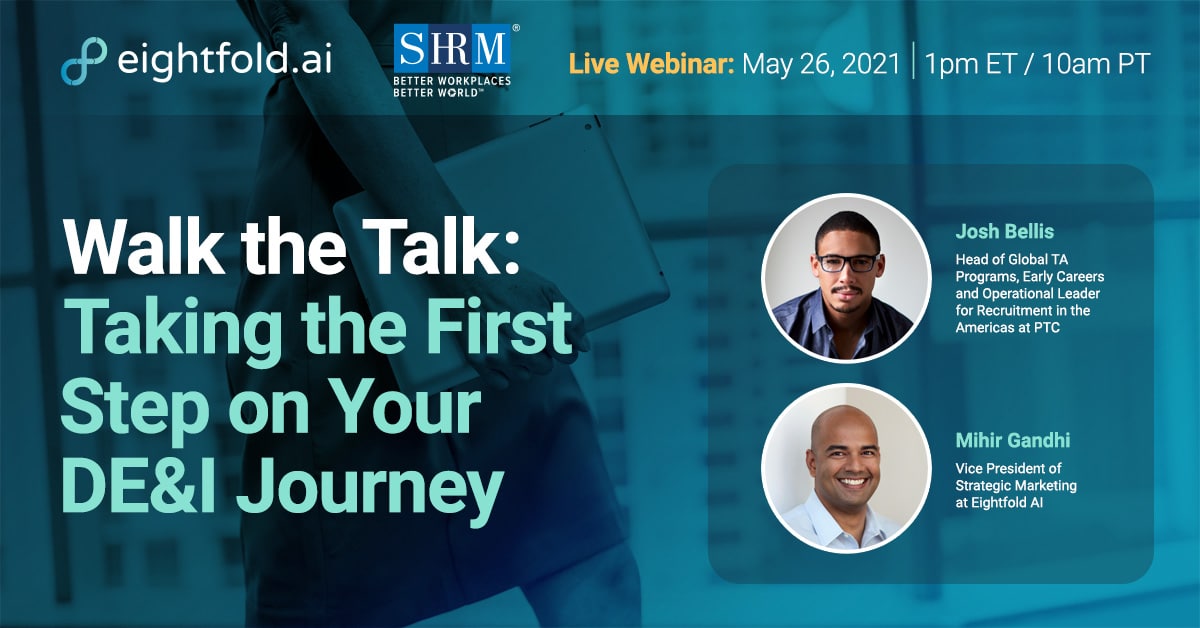
But those conversations can’t be about the hypothetical. They have to communicate the true DEI stories of the company, which is why leaders must use evidence to start the conversations, Joshua Bellis, global talent acquisition and DEI strategist at PTC, explains at the Eightfold Summit.
In HR, for instance, talent acquisition teams should be looking at data points regarding the kinds of requirements the company puts on roles and whether or not they are actually needed, says Bellis. This can lead to conversations about reevaluating what skills are really required for roles as well as honest talks about biases in talent acquisition processes that may be keeping the organization from building more diverse and inclusive workforces.
These may not be easy conversations to have and new ideas may be met with resistance, but when backed by data, they will have more impact.

Use technology to advance your DEI strategy
Large organizations that have made progress with diversity, equity, and inclusion acknowledge the need for technology to advance their DEI strategies.
“Technology can be an enabler of greater diversity and inclusion,” writes Rachel Osikoya, director, head of diversity and inclusion at container logistics company Maersk Group. “It provides data-driven insights and scalable solutions that can challenge our thinking, influence processes and ultimately change behaviours.”
For example, when it comes to hiring, many hiring managers’ first instinct is to go out and find an external hire that checks the boxes to increase the diversity of their workforces. But this may, in fact, weaken DEI efforts because “it’s a three-part equation for sustainable diversity: hiring, promotion, and retention,” says Berg. “And the tech must support them all.”
A platform like Eightfold does this by identifying candidates from both external and internal talent pools who have the skills to succeed in different roles. Anonymous searches and predictive analytics are some of the key capabilities of AI-powered talent intelligence tools that enable talent management teams to find the right person for the job based solely on skills and potential.
But as companies build their tech stacks to support DEI, diversity, equity, and inclusion must be embedded into the fibers of an organization. As Bellis explains, “There are so many technologies out there that can drive you forward, but if you don’t have a good process system in place and you don’t have a good culture that is ready to accept that, it’s going to be really hard” to make the technology work for the company.
Implementing DEI throughout an organization isn’t a one-time action item on a quarterly agenda. It has to be an ongoing, strategic effort that not only impacts the diversity, equity, and inclusivity of an organization but the entire company culture.
Leaders at large organizations that are setting the example understand this. They ensure that DEI is a core component of their business strategy and that they have the right technology in place to fuel data-driven conversations and decisions around diversity, equity, and inclusion. In doing so, they have put their companies in a better position to outperform competitors who are behind in their DEI efforts.
Images by: dmitrydemidovich/©123RF.com, rawpixel/©123RF.com, pitinan/©123RF.com