State and local governments have long relied on job-based recruiting, which emphasizes hiring candidates based on specific titles and predefined qualifications. But a transformative shift is occurring toward skills-based recruiting, which focuses on candidates’ competencies and skills, not their job titles or traditional qualifications.
This paradigm shift offers several benefits and significant impacts for the public sector, though it also presents certain challenges that must be thoughtfully navigated.
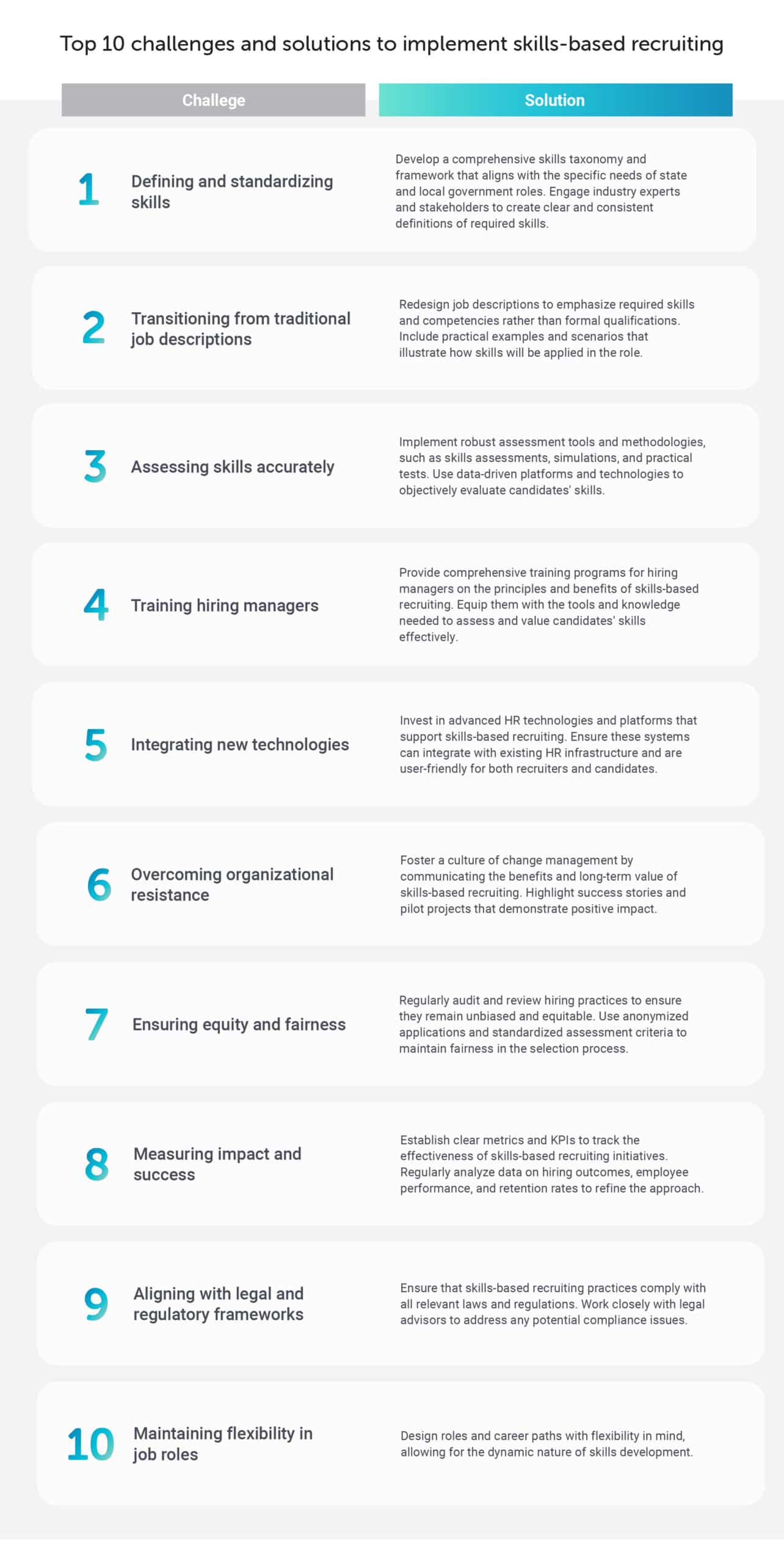
As a new partner to Eightfold, The Groove works with public sector clients to align their workforce needs to the best solutions on the market. I wrote this article to outline the five biggest benefits of skills-based recruiting in the public sector, and the top 10 challenges and solutions when implementing this approach.
Related content: See how AI-native talent intelligence can give any organization, including the public sector, a skills-based advantage.
Benefits and impact of skills-based recruiting
1. Enhanced talent pool diversity
Skills-based recruiting broadens the talent pool by valuing diverse experiences and backgrounds. Candidates who might have been overlooked due to non-traditional career paths or lack of formal qualifications can now be considered based on their skills and competencies.
For example, Eightfold’s AI-native Talent Intelligence Platform can identify and highlight candidates with the right skills regardless of their résumé gaps or unconventional career trajectories. This inclusivity results in a more diverse and dynamic workforce, which can drive innovation and better problem-solving within organizations.
2. Improved job performance and innovation
Hiring based on skills ensures that candidates are well-matched to job requirements, leading to better job performance. Eightfold’s advanced algorithms can accurately predict which candidates are likely to excel in specific roles based on their skill sets and previous performance.
This precise matching enhances job performance and fosters innovation as employees bring varied skill sets and perspectives to their roles, driving creative solutions to challenges.
3. Increased workforce agility
Skills-based recruiting creates a more adaptable workforce. Employees with transferable skills can be redeployed across different departments and roles as needs evolve, enhancing the government’s ability to respond to changing circumstances and priorities.
Eightfold’s platform can map out skill adjacencies and career paths, making it easier to identify internal candidates who can seamlessly transition into new roles. This adaptability is crucial for maintaining operational efficiency and continuity, especially in dynamic environments.
4. Reduced hiring bias
Focusing on skills rather than credentials helps mitigate unconscious bias in hiring processes. This approach ensures a fairer evaluation of candidates, promoting equity and inclusion within government agencies.
Eightfold’s AI can further reduce bias by anonymizing applications during initial screening phases and using objective criteria to evaluate candidates. The City of San Francisco benefitted from the platform’s skills-based approach to diversify where it looked for data analytics talent and found a nontraditional resource that was self-taught and would typically have been overlooked. He became an integral part of the organization and led to developing innovative strategies for public health issues.
Related content: Read our guide to Responsible AI and how it helps mitigate bias.
5. Enhanced employee retention
When employees’ skills align well with their job roles, job satisfaction increases, leading to higher retention rates. Skills-based recruiting helps ensure a better fit between job requirements and employee capabilities, reducing turnover.
Eightfold’s platform continually assesses employee satisfaction and skills, providing insights into potential career development opportunities that keep employees engaged and committed. Lowering turnover greatly reduces costs and increases constituent satisfaction with services supported by knowledgeable staff.
By focusing on candidates’ skills and competencies, governments can build more diverse, innovative, and agile workforces. This approach also enables state and local governments to unlock new potential, drive innovation, and build a more resilient public workforce, prepared to tackle the challenges of tomorrow.
It’s time to consider taking on the transformative powers of AI in your organization. Working with dedicated partners, like The Groove and Eightfold, can help answer questions, ease deployment, and guide you through implementation.
Manish Patel, Chief Strategy Officer of The Groove, is a strategic executive who has helped several companies grow from near startup to goliath competitors in the professional services space. He has built and managed teams of over 100 people across the globe and built strong partnerships with key players in the software industry. Manish previously served as the Chief Revenue Officer at Collaborative and most recently as the Chief Client Officer at Crosslake technologies.